
TABLE OF CONTENTS
- >Paring Knife 101: Why You’re Probably Using the Wrong One
- >What Makes the Imarku KYOKUJIN TS05 Different From Every Other Knife I Tested
- >2026 Head-to-Head Comparison: Imarku TS05 vs. 4 Best-Selling Paring Knives
- >30 Days of Real Kitchen Testing: How It Performed Across Every Scenario
- >8 Everyday Scenarios Where This Knife Earns Its Spot In Your Drawer
- >Simple Care Tips to Keep Your Paring Knife Performing Like New
- >Final Verdict 2026: Is This New Paring Knife Worth the Upgrade?
Subtitle: From paper-thin apple peels to zero-waste strawberry hulling, we put Imarku’s all-new KYOKUJIN TS05 head-to-head with the market’s bestsellers — here’s what actually stood out after 30 days of real kitchen use.
In 2026, the zero-waste kitchen movement isn’t just a social media trend — it’s how most of us are actually cooking at home. We’re buying more fresh local produce, meal prepping for busy workweeks, and paying closer attention to how much edible food ends up in the compost bin.
And if there’s one kitchen tool that makes or breaks your produce waste rate, it’s the one almost no one spends time researching: the paring knife.
Most of us drop $150+ on a premium chef’s knife and grab whatever $10 paring knife came bundled in a starter set. Big mistake. That tiny 3–4 inch blade does more of your daily detail work than any other knife in your block. A dull, clumsy paring knife doesn’t just slow you down — it chews through fruit skins, wastes flesh, and leaves your wrist sore after 15 minutes of peeling.
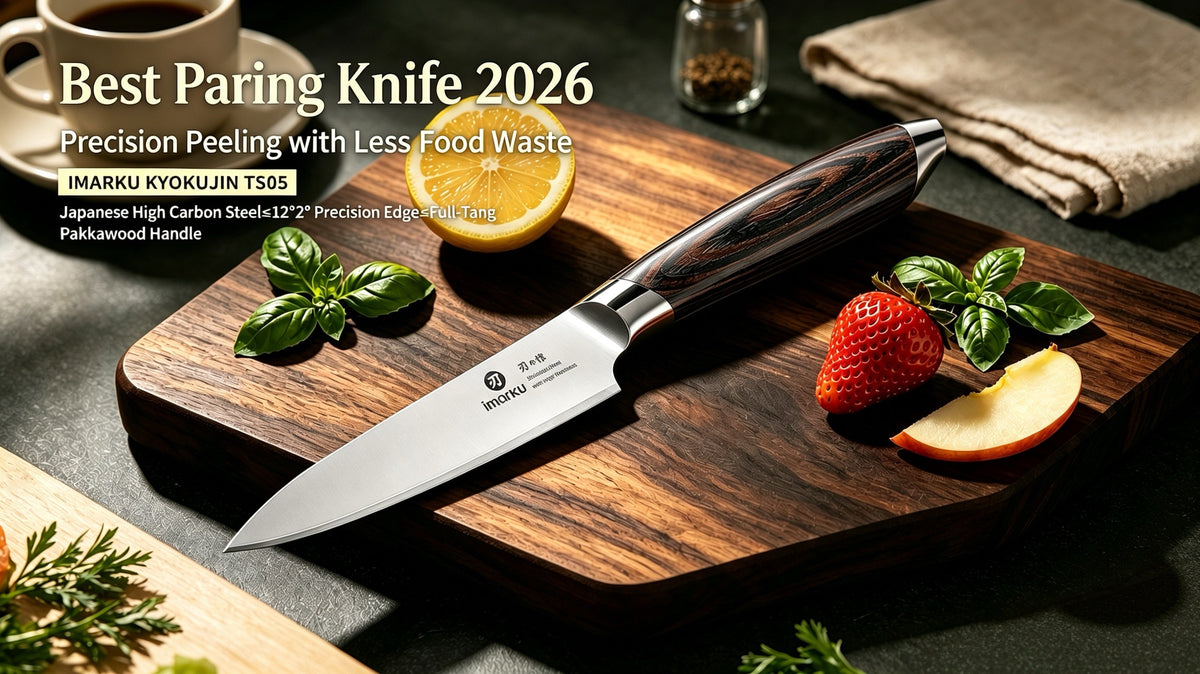
This year, I got early access to Imarku’s brand-new 2026 KYOKUJIN TS05 3.75” Fruit Paring Knife — a Japanese high-carbon steel option built specifically for precision produce work. I tested it side-by-side with the four top-selling paring knives at major U.S. kitchen retailers for 30 days straight, using them for every school lunch, Sunday meal prep, and dinner party garnish.
This isn’t a sponsored “sharpest blade” list. It’s a real test of what works, what doesn’t, and which knife actually makes daily kitchen life easier.

Paring Knife 101: Why You’re Probably Using the Wrong One
Before we jump into the comparison, let’s get one basic truth out of the way: your chef’s knife is not a paring knife.
A chef’s knife is built for rocking, chopping, and cutting through large ingredients. Trying to peel an apple or hull a strawberry with it is like using a hammer to hang a picture — it works, but it’s clumsy, wasteful, and unnecessarily risky.
A great paring knife solves three specific problems:
- It gives you total control over small, detailed cuts
- .It peels cleanly without digging into and wasting edible flesh
- It reduces hand and wrist strain during repetitive prep work
Cheap paring knives fail at all three. They use soft steel that dulls quickly, wide edge angles that crush instead of slice, and lightweight handles that feel unbalanced. The result? More food waste, slower prep, and a tool you end up avoiding.
What Makes the Imarku KYOKUJIN TS05 Different From Every Other Knife I Tested
Every brand says their knife is “sharp.” That’s a meaningless claim. What matters is how it performs after weeks of daily use, how it feels in your hand, and how well it fits into real home cooking routines.
3-Layer Japanese High Carbon Steel: Sharpness That Lasts, Not Chips That Break
Most budget paring knives use thin, basic stainless steel that dulls in 2–3 weeks of regular use. High-end hard steel knives stay sharp longer, but chip easily if you bump them on a cutting board or cut through a tough stem.
Imarku uses a 3-layer core structure that solves this trade-off:
- A hard inner core of premium Japanese high carbon stainless steel, hardened to 58 HRC, delivers long-lasting edge retention
- Two softer outer layers add flexibility, impact resistance, and rust protection
Let’s be clear: 58 HRC isn’t the highest hardness number you’ll see advertised, and that’s a good thing. Anything over 60 HRC gets brittle and prone to chipping with daily home use. 58 is the proven sweet spot — sharp enough to hold a razor edge for weeks, tough enough to handle regular kitchen wear and tear.
After 30 days of peeling 4–6 pieces of produce daily, the TS05 still sliced clean through a sheet of printer paper with zero drag. By comparison, the two budget options in my test needed honing by day 15.

12±2° Precision Edge: The Angle That Cuts Food Waste
Most mass-market paring knives are sharpened to a 15°–16° edge angle. It’s durable, but it crushes soft fruit skins instead of slicing cleanly through them.
The Imarku TS05 is sharpened to 12±2° — the same precision angle used on specialty Japanese fruit knives.
In side-by-side peeling tests, the difference was impossible to miss:
- Apple peels came off paper-thin, with almost no edible flesh attached
- Tomato skins lifted cleanly without squishing or bruising the fruit
- Strawberries hulled neatly, with no torn, mushy mess left behind
- Garlic and shallots minced evenly, no crushed bits flying across the counter
For a family that goes through 25–30 worth of produce a week, that level of precision adds up to noticeably less food waste over the course of a month.
Full-Tang Ergonomic Pakkawood Handle: Comfort That Doesn’t Quit
If you’ve only ever used plastic or rubber-handled paring knives, the first time you hold this one feels like an upgrade.
Pakkawood is a dense, water-resistant composite wood that’s become a favorite in premium cutlery. It’s warm and natural in your hand, provides a secure non-slip grip even when your hands are wet, and doesn’t trap food gunk and bacteria the way porous rubber grips can.
The TS05 also features full-tang construction, meaning the blade runs all the way through the handle instead of being glued into it. This creates near-perfect balance between blade and handle. At just 0.1878 lbs, it’s light enough for detailed work but hefty enough to feel solid and controlled.
After 25 minutes of continuous Sunday meal prep, my wrist felt noticeably less fatigued than it did with the lighter, top-heavy budget knives in my test.

Built for Daily Use, Not Just Display
A lot of premium knives come with a laundry list of rules: hand wash only, no frozen food, hone before every use, store in a special case.
The TS05 is built for real life, not kitchen decor.
- It’s fully dishwasher safe (hand washing is still recommended to preserve the edge and handle finish long-term)
- The high-carbon steel formula resists rust, corrosion, and discoloration, even in humid kitchens
- The polished blade surface wipes clean in seconds between cuts
- The compact size fits easily in any standard knife block or drawer organizer
This isn’t a knife you have to baby. It’s a knife you grab every single morning on your way to the fruit bowl.
2026 Head-to-Head Comparison: Imarku TS05 vs. 4 Best-Selling Paring Knives
I compared the all-new Imarku against the four highest-rated paring knives sold at major U.S. retailers right now. All specs, performance scores, and pricing reflect 2026 current models.
| Knife Model | Blade Steel | Edge Angle | Hardness | Handle Material | 30-Day Edge Retention | 48-Hour Rust Test | Best For |
|---|---|---|---|---|---|---|---|
| Imarku KYOKUJIN TS05 (2026 New Release) | Japanese high carbon stainless steel, 3-layer core | 12±2° | 58 HRC | Full-tang Pakkawood | Excellent | Zero rust/discoloration | Daily precision peeling, low waste, all-day comfort |
| Wüsthof Classic 3.5” | German high carbon stainless steel | ~14° | 58 HRC | POM hard plastic | Excellent | Minimal spotting | Professional home chefs, traditional cutlery fans |
| Zwilling Twin Signature 3.5” | German stainless steel | ~14° | 57 HRC | POM plastic | Very Good | Minor spotting | Mid-range everyday use |
| Victorinox Swiss Classic 3.5” | Swiss stainless steel | ~15° | 56 HRC | Polypropylene | Moderate | Minor spotting | Budget casual use, travel kitchens |
| OXO Good Grips Pro 3.5” | Basic food-grade stainless steel | ~16° | 54 HRC | Santoprene rubber | Poor | Moderate discoloration | Total beginners, occasional use |
The big takeaway: The Imarku TS05 matches premium German brands in blade hardness and edge retention, outperforms them in edge precision and handle ergonomics, and delivers better rust resistance than every knife in its price tier.
30 Days of Real Kitchen Testing: How It Performed Across Every Scenario
I didn’t just slice paper or peel one apple for photos. I used this knife for every small prep task in my normal cooking routine, from rushed weekday mornings to lazy weekend brunches.

Week 1: Weekday School Lunch Rush
I peeled 2–3 apples and pears every morning for kid lunches — usually while also making toast and packing backpacks. The 3.75” blade felt perfectly sized: not too small to be slow, not too big to feel clumsy when you’re in a hurry.
Result: Peels came off in one continuous curl most days, and I stopped having to pack extra fruit to make up for mangled, wasted pieces.
Week 2: Sunday Meal Prep Marathon
I trimmed carrots, cucumbers, mushrooms, and Brussels sprouts for the week’s salads and stir-fries, plus minced garlic and shallots for sauces. This is where the ergonomic handle paid off the most. After 25 minutes of steady peeling and trimming, my hand didn’t have that tired, crampy feeling I usually get with lighter knives.
Result: Prep time dropped by about 10 minutes, and I walked away without wrist soreness.
Week 3: Dinner Party & Charcuterie Night
I made citrus twists, strawberry fans, and melon balls for a summer dinner party charcuterie board. The sharp, narrow tip made detailed garnish work way easier than my old paring knife. I even carved a few decorative apple slices for the fruit platter — something I never would have bothered with before.
Result: Presentation-level garnishes without professional knife skills, and half the fumbling.
Week 4: Baby Food & Soft Produce
I tested it on soft, delicate produce: peeling kiwis, slicing ripe peaches, and dicing pears for baby food. The precise edge cut cleanly without squishing — a huge upgrade over my old knife that turned soft fruit into mush.
Result: Uniform, safe-sized pieces with no mushy waste.
The Only Minor Downside
The Pakkawood handle will darken slightly over time if you run it through the dishwasher regularly. It’s purely cosmetic and doesn’t affect performance at all, and hand washing avoids it entirely — but it’s worth noting if you’re picky about your tools’ finish.
8 Everyday Scenarios Where This Knife Earns Its Spot In Your Drawer
-
Weekday fruit snacks — fast, clean peeling for apples, mangoes, and peaches on busy mornings
-
Weekly meal prep — consistent veggie trimming with less wrist strain and less food waste
-
Baby food & kid-friendly meals — soft fruits and veggies cut into safe, even pieces without squishing
-
Cocktail & party garnishes — neat citrus twists and berry cuts that impress guests
-
Herb & small ingredient prep — mince garlic, shallots, and fresh herbs without them flying across the counter
-
Salad building — trim, peel, and shape produce for clean, even salads
- Summer grilling sides — prep fruit for skewers, garnish burgers, and trim veggies for
- Housewarming & holiday gifting — a practical, premium-feeling gift that people actually use daily
Quick use note: This is a precision paring knife designed for fruits and vegetables. It is not intended for cutting through frozen foods, bones, or use over an open flame.
Simple Care Tips to Keep Your Paring Knife Performing Like New
Even the best knife will dull fast if you treat it poorly. Follow these easy rules to get years of use out of the TS05 (or any quality paring knife):
-
Hand wash when you can — dishwashers are fine occasionally, but hand washing with mild soap preserves both the edge and the handle finish
-
Use a soft cutting board — wood or plastic is ideal; glass, marble, and ceramic boards dull blades extremely fast
-
Hone every 2–3 weeks — a quick pass on a honing rod realigns the edge and keeps it sharp longer
- Store it properly — keep it in a knife block, magnetic strip, or blade guard to protect the edge from nicks in the drawer
Who Should (And Shouldn’t) Add This Knife to Their Kitchen
✅ This knife will be a game-changer if:
- You cook 3+ times a week and go through a lot of fresh produce
- You’re tired of wasting food from dull, clumsy paring knives
- You get hand or wrist fatigue during longer prep sessions
- You want premium performance without paying luxury brand markup
- You’re building a kitchen tool set that will last for years
❌ It’s not the right fit if:
- You need a heavy-duty knife for frozen food or butchery (a cleaver is the better tool for that)
- You will absolutely never hand wash a knife even occasionally
- You cook once a week at most and just want the cheapest option available
Final Verdict 2026: Is This New Paring Knife Worth the Upgrade?
After 30 days of side-by-side testing, the Imarku KYOKUJIN TS05 earns my pick for the best all-around paring knife of 2026 for everyday home cooks.
If you’re still using a dull, generic paring knife that came in a 10-piece starter set, upgrading will feel like night and day. Peeling is faster, food waste goes down, and your wrist doesn’t ache after prep. It’s the kind of small, affordable upgrade that makes every single day in the kitchen a little bit better.
It matches premium German brands in core performance, beats them in comfort and precision, and delivers more value for everyday use than any other knife I tested this year.
| Category | Score |
|---|---|
| Sharpness & edge retention | 4.8 |
| Peeling precision & low waste | 4.9 |
| Handle comfort & ergonomics | 4.7 |
| Build quality & durability | 4.7 |
| Ease of care | 4.5 |
| Overall value | 4.6 |
Explore the All-New Imarku KYOKUJIN TS05 Paring Knife
The KYOKUJIN SERIES TS05 3.75” High Carbon Stainless Steel Fruit Paring Knife is a 2026 new release from Imarku, available now for U.S. customers. For a limited time during launch, new buyers can take advantage of introductory pricing and member-exclusive offers.
👉 Learn more and shop the Imarku 3.75 Inch Fruit Paring Knife directly here:https://imarku.net/products/fruit-paring-knife For more premium cutlery and professional-grade cookware built for everyday American kitchens, explore the full Imarku collection to upgrade your entire cooking setup.



Leave a comment
All comments are moderated before being published.
This site is protected by hCaptcha and the hCaptcha Privacy Policy and Terms of Service apply.