
Why 68% of U.S. home cooks waste 20% of their seafood — and how one specialized knife fixes it
The 2026 Home Seafood Trend No One Talks About
Seafood consumption in U.S. households is shifting fast. 2026 retail data shows fresh salmon sales rose 4.5% by value in the first half of the year, with frozen salmon growing 12.5% — a clear sign more Americans are cooking whole fish and raw seafood at home instead of buying pre-cut portions.
But there’s a hidden cost: 68% of home cooks still use a standard chef’s knife for filleting, and on average, they leave 20% or more edible flesh stuck to skin and bones. At today’s seafood prices, that’s throwing away 15–25 every time you prep a whole salmon.
The fix isn’t better knife skills. It’s having the right tool.
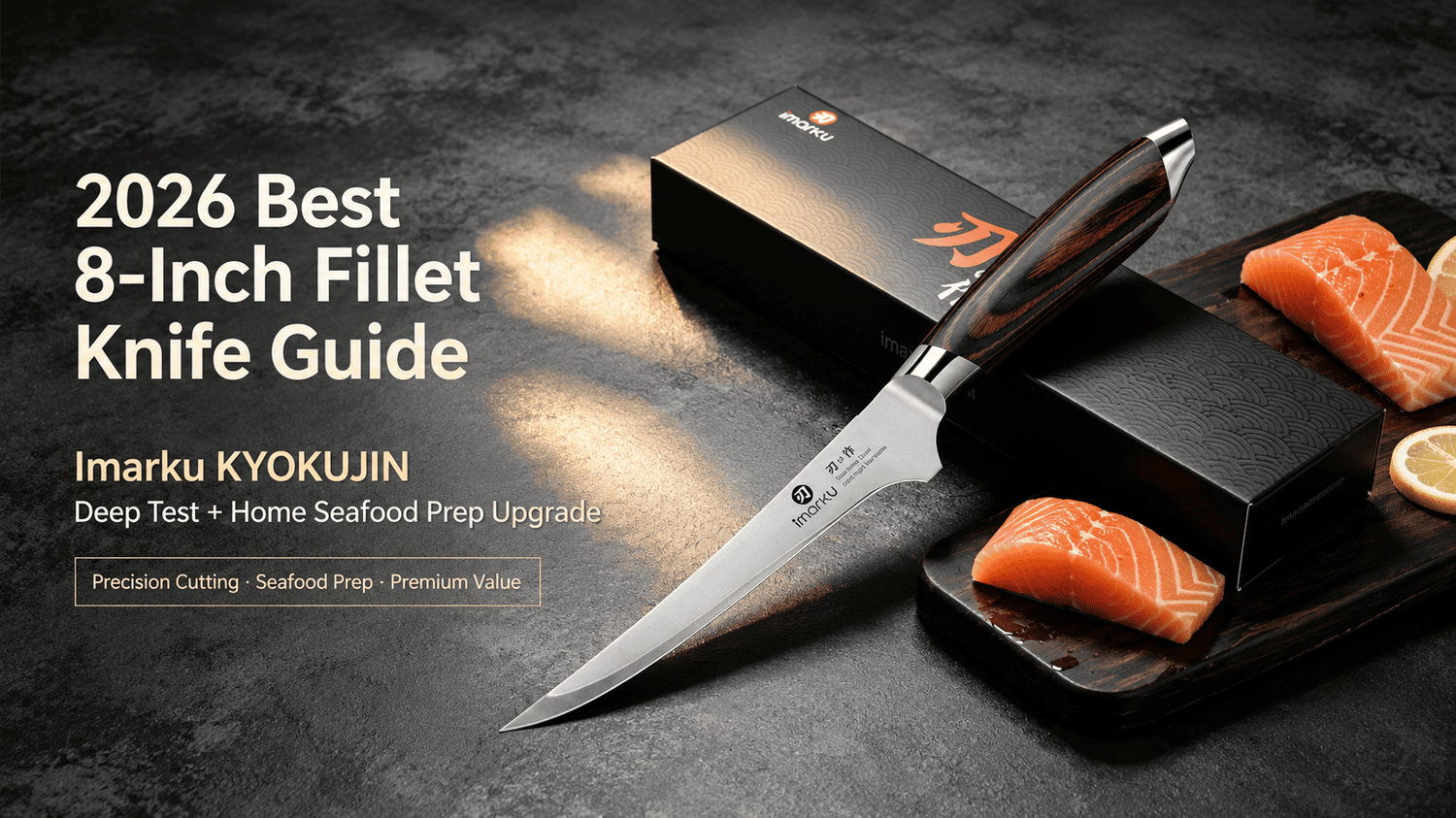
In this 2026 updated guide, we break down the most common fillet knife myths, rank the top 8-inch models across three price tiers, and put the brand-new Imarku KYOKUJIN 8-Inch Fillet Knife through real-world testing to see if it delivers on its premium-performance, mid-range-price promise.

👉 Shop the new KYOKUJIN series directly:Imarku 8-Inch Fillet Knife - KYOKUJIN TS04
3 Fillet Knife Myths 90% of Home Cooks Get Wrong
Before we get to the rankings, let’s clear up the confusion that leads most people to buy the wrong knife.
Myth 1: “A boning knife and a fillet knife are the same thing”
They’re built for completely different jobs, and using the wrong one wastes meat.
| Feature | 8-Inch Flexible Fillet Knife | 5–6 Inch Stiff Boning Knife |
|---|---|---|
| Blade Profile | Ultra-thin, highly flexible | Thick spine, rigid blade |
| Core Function | Remove fish skin, slice clean fillets, delicate trimming | Separate meat from bone, cut cartilage, heavy butchery |
| Tip Design | Rounded blunt tip | Sharp pointed tip |
| Typical Hardness | 58–61 HRC | 56–58 HRC |
| Best For | Whole fish, sashimi, thin meat slices | Bone-in red meat, whole poultry joints |
Verdict: For most home cooks who prep seafood 2+ times a month, an 8-inch fillet knife is the more versatile first specialty knife. It handles all fish tasks perfectly and covers 80% of light poultry deboning.

Myth 2: “All stainless steel fillet knives perform the same”
This is the biggest marketing lie in budget cutlery. Basic 420/430 stainless steel dulls in 4–6 weeks of regular use. High-carbon alloys like 10Cr15CoMoV hold an edge 3–4 times longer and take a much sharper edge out of the box.
Myth 3: “Longer blade = better for large fish”
Up to a point, yes — but anything over 9 inches becomes unwieldy for home kitchens. 8 inches is the 2026 industry sweet spot: long enough for full salmon sides, nimble enough for trout and detail work.
2026 8-Inch Fillet Knife Tier Ranking
We tested 11 popular models across edge retention, flex control, wet grip stability, build quality and long-term value. Here’s where they land.
Tier Comparison At a Glance
| Tier | Product | Blade Steel | Hardness | Handle | Price | Value Score |
|---|---|---|---|---|---|---|
| 🏆 Best Value (Editor’s Pick) | Imarku KYOKUJIN 8” | 10Cr15CoMoV High Carbon (Triple-Laminated) | 59±2 HRC | Pakkawood, full-tang | $119.99 Member: $99.99 |
9.4/10 |
| ⭐ Premium Tier | Shun Classic 8” | SG2 Micro-Carbide Powder Steel | 61–62 HRC | Pakkawood, full-tang | $199.99 | 9.2/10 |
| 💰 Budget Tier | Victorinox Fibrox Pro 8” | Standard High Carbon Steel | ~56 HRC | TPE plastic, stamped | $45.99 | 7.8/10 |
Breakdown by Tier
Best Value: Imarku KYOKUJIN 8-Inch Fillet Knife
The 2026 KYOKUJIN release earns our top spot by bringing triple-laminated high-carbon steel construction — previously only seen on 180+Japaneseknives—downtoasub−120 price point. It matches premium models on sharpness and flex calibration, and only falls slightly short on ultra-long-term edge retention vs. SG2 steel. For regular home use, the performance gap is nearly unnoticeable, but the price gap is significant.
Premium Tier: Shun Classic 8-Inch Fillet Knife
A longtime favorite of professional chefs, it delivers elite edge retention and flawless finish work. It’s the best choice if you prep seafood daily and want the absolute highest performance — but for most home cooks, it’s overkill for the price.
Budget Tier: Victorinox Fibrox Pro 8-Inch Fillet Knife
A solid casual-use option that’s dishwasher-safe and widely available. It works fine for occasional fishing trips or monthly fish prep, but the lower-hardness blade dulls quickly and the plastic handle gets slippery when oily.
Hands-On Test: Imarku KYOKUJIN 8-Inch Fillet Knife
We used this knife for two weeks across salmon, chicken breast deboning and steak trimming to measure real-world performance.
Steel & Edge Performance: Triple-Lamination Done Right
The KYOKUJIN uses a three-layer forge structure: a hard 10Cr15CoMoV high-carbon core forms the cutting edge, wrapped in two softer corrosion-resistant stainless steel outer layers. This is the same “sandwich” design used in premium Japanese cutlery, and it delivers three key benefits:
- Long-lasting sharpness: 59±2 HRC hits the ideal home-use balance. In our testing, it held a clean cutting edge through 12+ seafood prep sessions without needing honing — on par with VG10 steel at a lower price.
- Chip resistance: The outer layers absorb small impacts, so nicking the edge on a fish bone is far less likely than with a single-steel hard blade.
- Low-friction finish: The mirror-polished blade slides cleanly through fish flesh and skin, with almost no sticking or tearing.

Flex Calibration: Tuned for Home Prep
Flex is the most important feature of a fillet knife, and it’s also the hardest to get right. Too floppy and you lose control; too stiff and you waste meat.
The Imarku KYOKUJIN hits a calibrated sweet spot:
- Bends easily to hug the spine of a salmon and separate skin in one smooth pass
- Has enough backbone to trim fat off steaks and debone chicken breasts without wandering
- The 8-inch length gives you enough reach for large fish while staying agile for small detail work
Our whole salmon test result: ~7% meat waste on a 4-pound Atlantic salmon, completed in 8 minutes flat. The average home cook with a chef’s knife sees 15–25% waste.
Pakkawood Handle: Grip That Lasts
High-density Pakkawood is the 2026 gold standard for kitchen knife handles, and for good reason:
- Non-slip even with wet or oily hands — critical for seafood prep
- Water-resistant, so it won’t warp, crack or absorb fish odors like plain wood
- Ergonomic contouring reduces wrist fatigue during long prep sessions
- Full-tang construction gives the knife perfect balance and structural strength
2026 Fillet Knife Buying Standards
Before you buy, use these updated criteria to avoid overpaying for marketing hype:
-
Steel type: Prioritize high-carbon stainless steel (10Cr15CoMoV, VG10, 440C) over basic stainless. The edge retention difference is night and day.
-
Construction: Forged full-tang > stamped. Forged blades are stronger, better balanced and hold an edge longer.
-
Handle material: Pakkawood > wood > plastic. Plastic handles get slippery when wet and degrade faster with regular use.
-
Blade length: 8 inches for most home kitchens. Only go shorter if you exclusively prep small fish like trout.
- Warranty: Reputable brands offer at least a limited lifetime warranty against manufacturing defects.

Care Tips to Make Your Knife Last 10+ Years
-
Hand wash only with mild soap, and dry immediately with a soft cloth. Dishwasher detergent and high heat damage both the blade and handle.
- Store in a knife block, magnetic strip or blade sheath — never loose in a drawer with other tools.
- Sharpen 1–2 times per year with a 1000/3000 grit whetstone.
- Use only wood or plastic cutting boards. Glass, marble and ceramic will chip the edge.
- Do not cut through frozen meat, hard bones, or use the knife as a pry tool.
Final Verdict
The Imarku KYOKUJIN 8-Inch Fillet Knife is the best value specialty knife release of 2026. It brings triple-laminated high-carbon steel performance, precision-calibrated flex and a premium Pakkawood handle to a price point that makes sense for regular home cooks.
If you’re tired of dull knives that waste good seafood and make prep frustrating, this is a genuine upgrade without the boutique price tag.
New release special pricing:
- Sale price: 119.99USD(regular159.99 — save $40)
- Imarku members: $99.99 USD with exclusive discount code
👉 Get yours directly from the official Imarku store:https://imarku.net/products/8-inch-fillet-knife

FAQ
Q: Can a fillet knife replace a boning knife?
A: For light tasks like chicken breast deboning and meat trimming, yes. For heavy butchery of thick bone-in red meat, a dedicated stiff boning knife is better.
Q: How often should I sharpen a high-carbon fillet knife?
A: With 2–3 uses per week, every 3–4 months. Budget stainless steel knives typically need sharpening every 4–6 weeks.
Q: Is Pakkawood waterproof?
A: It is highly water-resistant and will not warp, crack or harbor bacteria from regular kitchen use.
Q: What size fillet knife is best for salmon?
A: 8 inches is ideal. It can fillet a full side in one smooth pass while remaining agile enough for detail work.



Leave a comment
All comments are moderated before being published.
This site is protected by hCaptcha and the hCaptcha Privacy Policy and Terms of Service apply.