
TABLE OF CONTENTS
- >1. What Is a Damascus Chef Knife?
- >2. Why Does 67-Layer Damascus Steel Matter?
- >3. VG-10 Steel: What Makes It Worth Considering?
- >4. Why Choose an 8-Inch Chef Knife?
- >5. Blade Hardness and Edge Angle: Specifications That Matter
- >6. Full Tang Handle Design and Comfortable Handling
- >7. How to Care for a Damascus Chef Knife
- >8. Is a 67-Layer Damascus Chef Knife Worth Buying?
- >9. Discover the imarku Kumo Series KM03 Damascus Chef Knife
- >Frequently Asked Questions
A great chef's knife can change the way you approach everyday cooking. From preparing vegetables for a weeknight dinner to slicing boneless meat and mincing fresh herbs, the right knife makes kitchen preparation more comfortable, controlled, and efficient. Among the many options available, a Damascus chef knife stands out for its distinctive blade patterns, layered steel construction, and combination of traditional craftsmanship and modern materials.
But is a Damascus knife actually worth buying? Does a higher layer count automatically mean better cutting performance? And what should you look for when comparing different models?
The answer involves more than appearance. Steel composition, hardness, edge geometry, handle construction, and intended use all contribute to the overall experience. This guide explains the features that matter when choosing a Damascus chef knife and explores how a well-designed 8-inch model can become a versatile tool for everyday cooking.
1. What Is a Damascus Chef Knife?
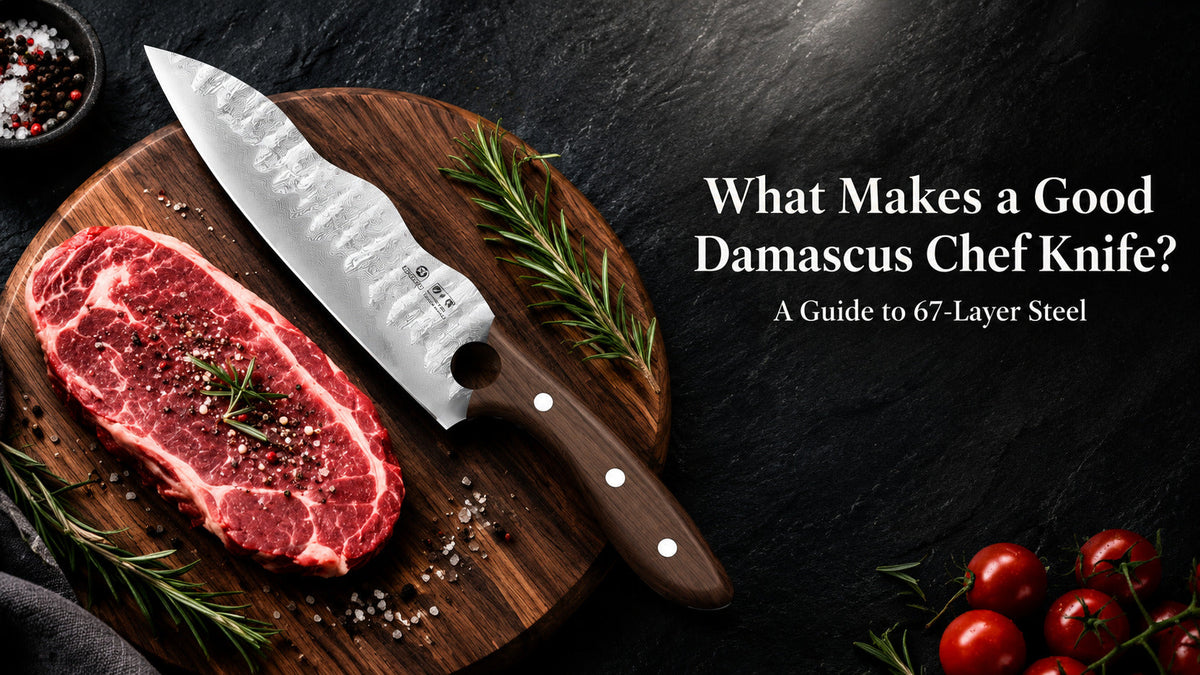
A Damascus chef knife is recognized by its distinctive patterned blade, traditionally associated with layered steel construction. Modern Damascus-style kitchen knives often combine multiple layers of steel around a central cutting core.
This construction allows manufacturers to combine a functional cutting edge with a visually distinctive blade. The layered pattern is one of the most recognizable characteristics of Damascus knives, although appearance alone does not determine cutting quality.
When shopping for one, it is important to look beyond the pattern. Consider the type of steel used in the core, the blade's hardness, its edge geometry, and how the handle feels in your hand.
A knife with clearly specified materials and construction details gives you a better understanding of what you are purchasing than one marketed primarily around an attractive blade pattern.
2. Why Does 67-Layer Damascus Steel Matter?
Layer count is one of the first specifications shoppers notice when comparing Damascus knives. You may encounter products described as 33-layer, 67-layer, or even higher-layer Damascus steel.
A 67-layer blade typically refers to a layered construction consisting of a central steel core and additional layers surrounding it. In the case of the imarku Kumo Series KM03, the blade features a Japanese VG-10 high-carbon stainless steel core with 66 additional layers of Damascus steel.
Understanding the Steel Core
The core is especially important because it forms the primary cutting edge. Its material and heat treatment influence characteristics such as edge retention, hardness, and sharpening requirements.
For shoppers comparing Damascus chef knives, understanding the core material is often more useful than simply choosing the knife with the highest advertised layer count.
Does More Layers Mean a Better Knife?
Not necessarily. A higher layer count does not automatically guarantee sharper cutting performance, better edge retention, or greater durability.
Instead, consider the complete construction. The core steel, heat treatment, blade geometry, and finishing process all contribute to how a knife performs.
The advantage of a well-specified 67-layer Damascus knife is that it combines an identifiable cutting core with a distinctive layered appearance, making it an appealing choice for shoppers who appreciate both practical kitchen tools and detailed blade craftsmanship.
3. VG-10 Steel: What Makes It Worth Considering?
VG-10 is a Japanese high-carbon stainless steel commonly used in quality kitchen knives. It is an important specification to consider when evaluating a Damascus chef knife because the cutting core plays a central role in the blade's performance.
For home cooks, choosing a knife with a clearly identified steel core makes it easier to compare products and understand their intended characteristics.
When evaluating a VG-10 chef knife, consider three factors:
- Hardness: Hardness influences how a blade responds to cutting and how well its edge can maintain its shape under normal use.
- Edge Geometry: The angle and profile of the cutting edge influence how the knife moves through ingredients.
- Heat Treatment: Proper heat treatment is an important part of developing the intended characteristics of the steel.
The imarku Kumo Series KM03 uses a Japanese VG-10 high-carbon stainless steel core with a specified hardness of 59 ± 2 HRC. Its manufacturing specifications also include vacuum oil-quenching and tempering.
These details give buyers a more concrete basis for evaluating the knife than a general claim about premium steel alone.
4. Why Choose an 8-Inch Chef Knife?
Blade length is another important consideration. For many home kitchens, an 8-inch chef knife offers a practical balance between cutting space and everyday handling.
It provides enough blade length for common preparation tasks without requiring the additional space or handling adjustments that some larger knives may involve.
Everyday Kitchen Applications
An 8-inch chef knife can handle a wide range of routine food preparation tasks, including:
- Slicing Vegetables: Prepare onions, zucchini, cucumbers, bell peppers, and other everyday ingredients.
- Chopping Herbs: Mince parsley, cilantro, basil, and other fresh herbs for cooking.
- Cutting Fruit: Slice apples, pears, and other suitable fruits for snacks or recipes.
- Preparing Boneless Meat: Slice and portion boneless chicken, beef, and other proteins.
- Dicing Ingredients: Prepare ingredients into consistent pieces for stir-fries, soups, and other dishes.
Instead of switching between several specialized knives for every small task, an 8-inch chef knife can serve as a dependable everyday option for many home cooks.
Of course, it is not intended for every cutting job. Frozen foods, bones, and other hard materials require appropriate tools rather than a standard chef knife.
5. Blade Hardness and Edge Angle: Specifications That Matter
Two specifications worth comparing when shopping for a chef knife are hardness and edge geometry.
Understanding HRC Hardness
HRC refers to the Rockwell hardness scale used to measure a material's resistance to indentation. In kitchen knives, hardness is one factor that influences edge characteristics and maintenance requirements.
The imarku KM03 has a specified hardness of 59 ± 2 HRC. This provides buyers with a measurable reference when comparing its steel specifications with other kitchen knives.
However, hardness should not be considered in isolation. Heat treatment, steel composition, blade thickness, and edge geometry also matter.
Understanding the Cutting Edge
Edge geometry influences how a knife contacts and moves through food. A double-bevel edge has two sharpened sides, making it a familiar configuration for many home cooks.
The KM03 features a hand-sharpened double-bevel edge with a total angle of 24° ± 2°. This is an important specification for shoppers who want to understand the actual edge design rather than relying on general sharpness claims.
6. Full Tang Handle Design and Comfortable Handling
A chef knife should feel comfortable and controlled throughout food preparation. Even a blade with attractive steel construction may not be the right choice if the handle does not suit your grip.
Full tang construction is a feature many buyers consider when comparing kitchen knives. In general, a full tang design extends the blade's tang through the handle, providing a continuous structural connection between the blade and handle assembly.
When evaluating a knife, pay attention to the handle material, construction, grip, and overall balance. These details influence how the knife feels during everyday cutting tasks.
Why Handle Material Matters
Wood handles offer a different appearance and tactile character compared with synthetic alternatives. They can also complement the traditional look of a Damascus blade.
The imarku Kumo Series KM03 features a dark brown carbonized ash wood handle. Its full-handle design and wood handle scales create a distinctive appearance that pairs naturally with the patterned steel blade.
Weighing 8.5 ounces, the knife offers a specific weight reference for buyers who prefer to compare handling characteristics before purchasing.
As with any kitchen knife, comfort is personal. If possible, consider how the handle dimensions, weight, and grip style match your own cooking habits.
7. How to Care for a Damascus Chef Knife
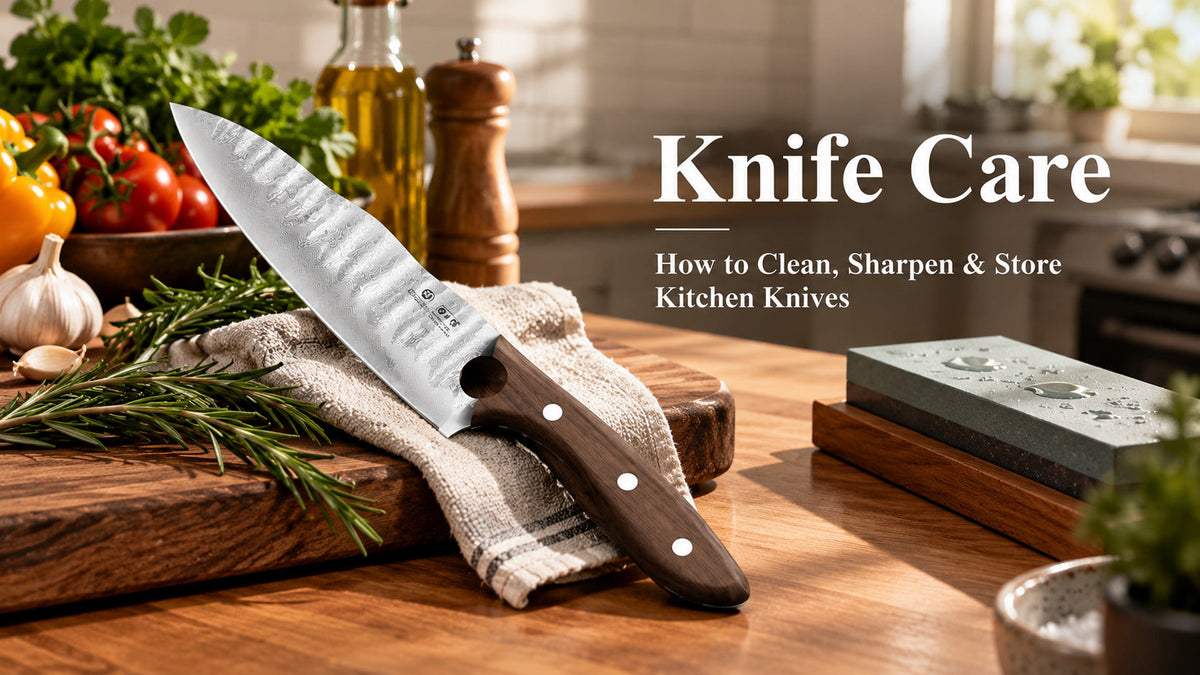
Proper care helps maintain your knife's appearance and condition over time. Although stainless steel offers corrosion resistance, it does not mean a knife should be left wet or neglected after use.
Follow these simple care practices:
- Wash After Use: Clean the blade with water and mild soap after preparing food.
- Dry Thoroughly: Use a soft towel to remove moisture from the blade and handle before storage.
- Avoid Prolonged Moisture: Do not leave the knife soaking in a sink or sitting in a wet environment.
- Use an Appropriate Cutting Surface: Wooden or suitable plastic cutting boards are preferable to hard surfaces such as glass or stone.
- Store Safely: Keep the blade protected in an appropriate knife holder, sheath, or storage solution.
- Maintain the Edge: Use suitable sharpening tools and techniques when the knife begins to lose its cutting performance.
Although the KM03 is listed as dishwasher safe, hand washing is recommended. This is particularly worth considering for a knife with a natural wood handle, as regular exposure to heat, moisture, and detergents can affect its long-term condition.
8. Is a 67-Layer Damascus Chef Knife Worth Buying?
Whether a Damascus chef knife is worth buying depends on what you value in a kitchen tool.
If you simply need an inexpensive knife for occasional food preparation, a basic stainless steel chef knife may be sufficient. However, if you appreciate identifiable steel specifications, distinctive blade craftsmanship, and a thoughtfully designed handle, a Damascus chef knife may be a more appealing option.
Before making a purchase, consider the following questions:
- Does the manufacturer identify the blade's core steel?
- Are the layer count and construction clearly explained?
- Is the hardness specification available?
- Does the knife have an edge geometry suitable for your cooking needs?
- Is the handle comfortable and appropriate for regular kitchen use?
- Are the care instructions and warranty clearly provided?
Looking at these factors together helps you evaluate the overall value of a knife rather than making a decision based on appearance or layer count alone.
9. Discover the imarku Kumo Series KM03 Damascus Chef Knife
For home cooks looking for an 8-inch Damascus chef knife that combines identifiable steel specifications with a distinctive natural handle, the imarku Kumo Series KM03 is worth exploring.
Its Japanese VG-10 high-carbon stainless steel core is surrounded by 66 additional layers of Damascus steel, creating a 67-layer blade with a hammered, mirror-polished finish. The knife is specified at 59 ± 2 HRC and features a hand-sharpened double-bevel edge with a total angle of 24° ± 2°.
The dark brown carbonized ash wood handle complements the patterned blade, while its 8.5-ounce weight provides a useful reference for everyday kitchen handling.
Designed for slicing, dicing, chopping, and mincing, the KM03 is intended to handle many common food preparation tasks. It also arrives in a premium gift box with a soft flannel interior, making it an attractive option for weddings, housewarmings, birthdays, and other special occasions.
Rather than choosing a knife based on appearance alone, consider the combination of steel composition, blade specifications, handle construction, and intended use. These are the details that make a difference when selecting a kitchen knife you will enjoy using.
Explore the imarku 8-Inch Damascus Steel Chef Knife and discover the Kumo Series KM03 for your kitchen.
Frequently Asked Questions
Is a 67-layer Damascus chef knife better than a regular chef knife?
Not automatically. A 67-layer Damascus knife offers distinctive layered construction and appearance, but overall quality also depends on the core steel, heat treatment, blade geometry, and handle design.
What is the benefit of VG-10 steel in a chef knife?
VG-10 is a Japanese high-carbon stainless steel commonly used in kitchen knives. Its characteristics, combined with appropriate heat treatment and edge geometry, make it a material worth considering when comparing chef knives.
Is an 8-inch chef knife good for everyday cooking?
Yes. An 8-inch chef knife is a versatile option for many home cooks. It can be used for slicing, chopping, dicing, and mincing common ingredients such as vegetables, fruits, herbs, and boneless meat.
What does 59 ± 2 HRC mean for a Damascus knife?
It refers to the knife's Rockwell hardness specification. Hardness helps describe the steel's resistance to indentation and is one factor to consider when evaluating a blade's characteristics.
How should you clean a Damascus steel chef knife?
Wash it with mild soap and water, then dry it thoroughly before storage. Hand washing is recommended for the imarku KM03, even though the product is listed as dishwasher safe.
Is a Damascus chef knife a good gift?
It can be an excellent gift for someone who enjoys cooking. Its distinctive blade pattern, practical kitchen use, and attractive presentation make it suitable for weddings, housewarmings, birthdays, and holidays.




Leave a comment
All comments are moderated before being published.
This site is protected by hCaptcha and the hCaptcha Privacy Policy and Terms of Service apply.