
TABLE OF CONTENTS
- >1. What Makes the Best Titanium Pans?
- >2. Titanium vs. Traditional Nonstick vs. Stainless Steel
- >3. Are Titanium Frying Pans Worth the Investment?
- >4. Is the imarku Titanium Frying Pan a Good Choice for Everyday Cooking?
- >5. How to Get Better Results from a Titanium Frying Pan
- >6. Frequently Asked Questions About Titanium Pans
- >Final Thoughts: Choosing the Right Titanium Frying Pan
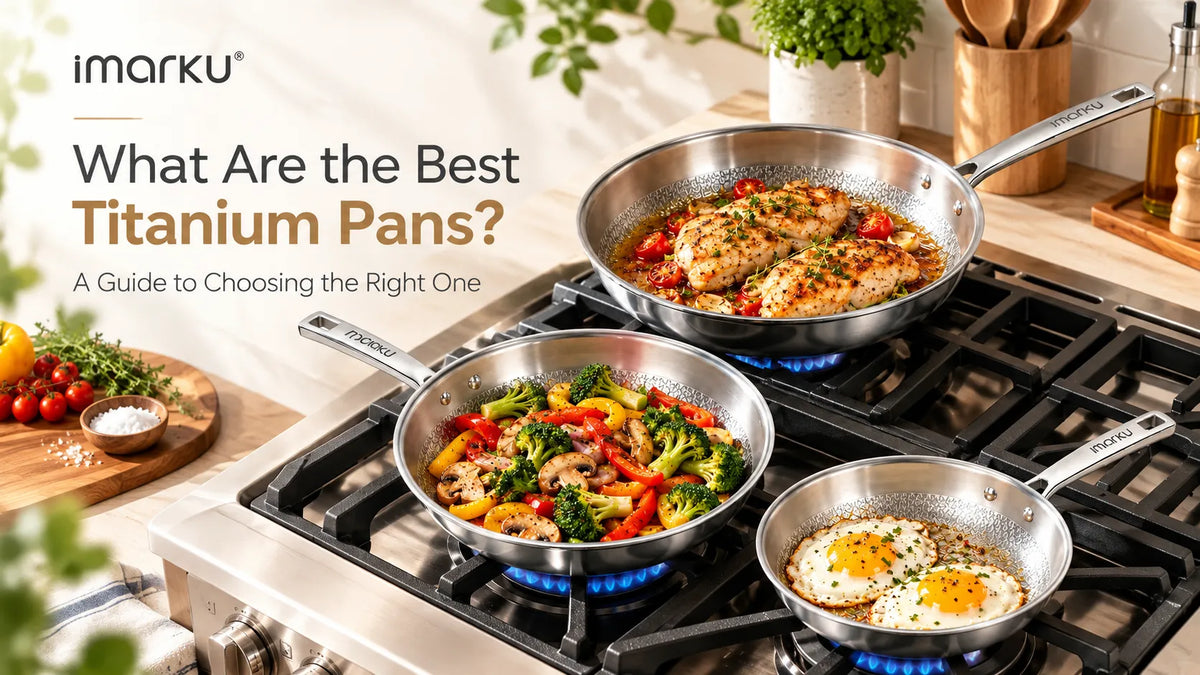
What are the best titanium pans for everyday cooking? The best choice is not necessarily the most expensive pan or the one with the most impressive product claims. Instead, look for cookware with a well-designed cooking surface, reliable heat distribution, practical construction, and features that match the way you prepare meals.
Titanium cookware has become an interesting option for home cooks who want an alternative to conventional nonstick pans. Some modern titanium frying pans feature coating-free interiors, heat-conductive cores, and designs made for different stovetops and cooking tasks.
However, not all titanium pans are constructed the same way. Some use titanium as part of the cooking surface, while others combine it with materials such as aluminum to improve heat performance. Understanding these differences can help you make a more informed purchase.
In this guide, we will explore what makes a titanium frying pan worth considering, compare titanium with other popular cookware materials, and explain which features to prioritize before investing in a new pan.
1. What Makes the Best Titanium Pans?
A good titanium frying pan should do more than carry the word "titanium" in its product name. Its actual construction, cooking surface, heat distribution, and compatibility with your kitchen appliances are what determine whether it is a practical choice.
When comparing the best titanium pans, start with these five considerations.
1. A Clearly Defined Cooking Surface
The cooking surface is one of the most important features to investigate. Traditional nonstick pans generally rely on a surface coating to help food release easily. However, some shoppers prefer cookware that does not use conventional nonstick coatings.
For these buyers, a titanium pan with a coating-free interior may be worth exploring. Check the manufacturer's specifications to understand exactly what the cooking surface is made of and whether it contains conventional nonstick coatings.
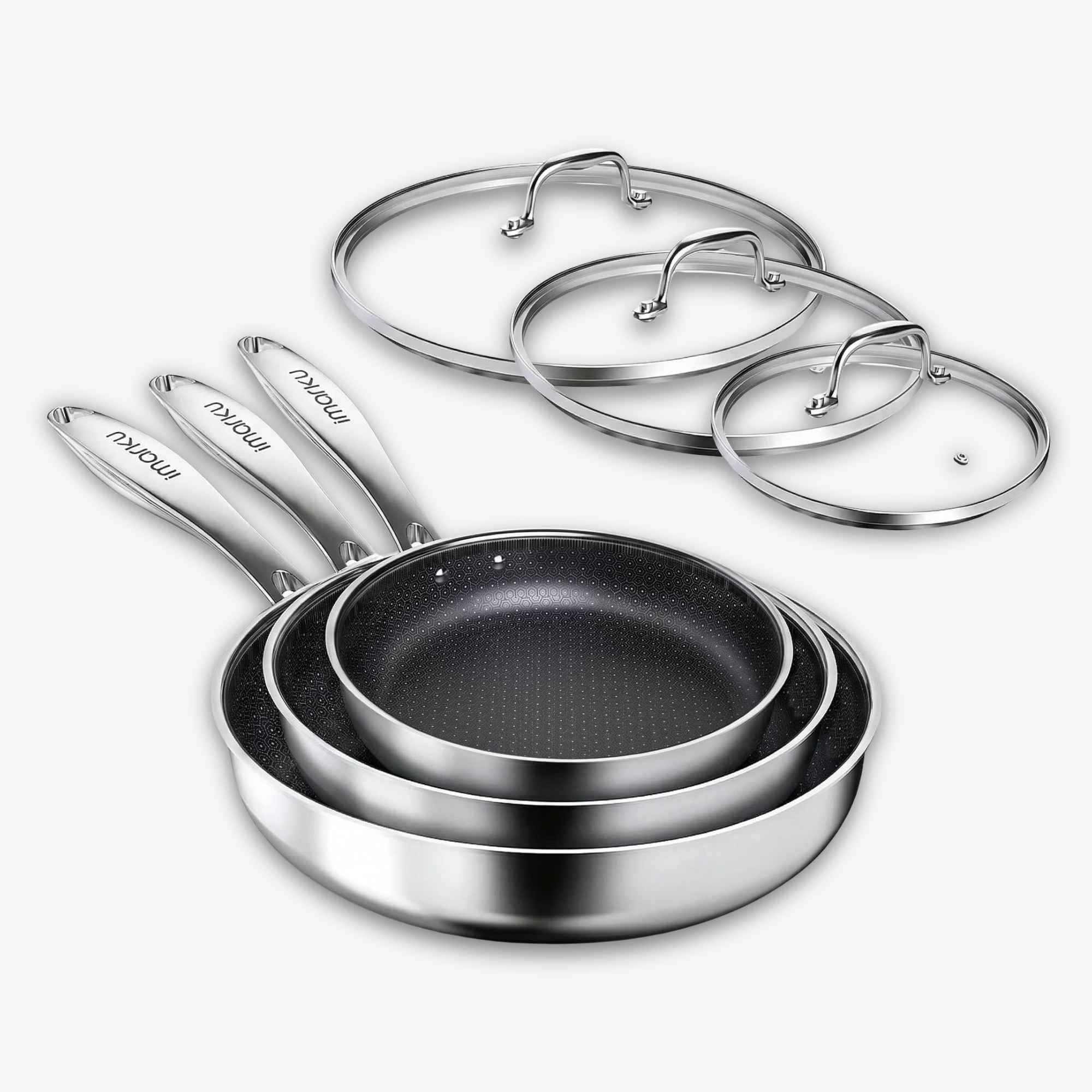
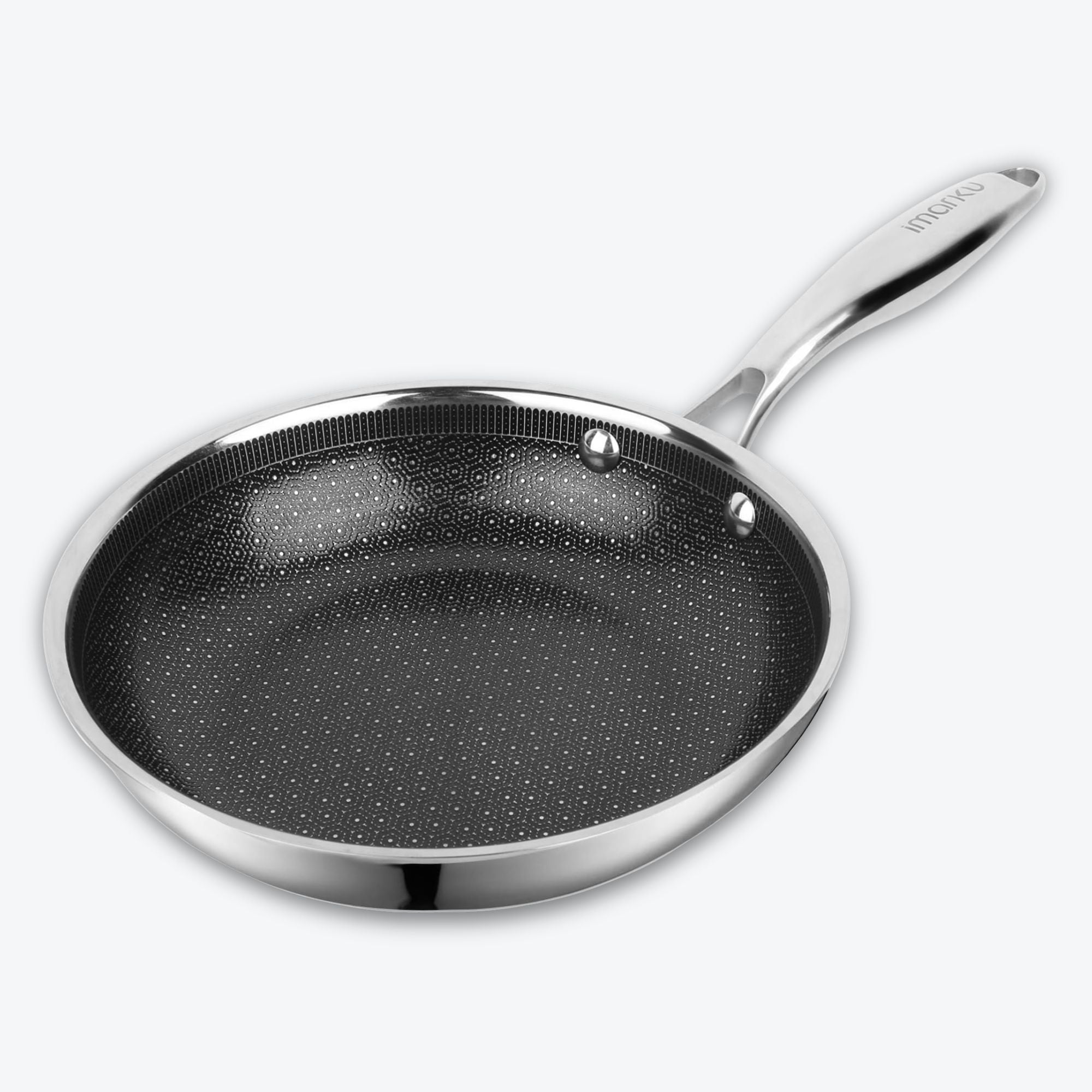
For example, the imarku Titanium Frying Pan features a patented coating-free interior and is specified as PFAS-free, PFOA-free, and PTFE-free.
One important distinction: coating-free does not automatically mean food will never stick. Preheating, temperature control, cooking oil, and the type of ingredients still influence food release.
2. Efficient Heat Distribution
Have you ever cooked chicken only to find that one side of the pan browns faster than the other? Uneven heating can make everyday cooking frustrating and lead to inconsistent results.
This is why the material beneath the cooking surface matters. Aluminum is frequently used in cookware construction because it conducts heat efficiently and responds relatively quickly to temperature changes.
A titanium pan incorporating an aluminum core can combine different material properties in one design. The imarku Titanium Frying Pan uses an aluminum core to support heat distribution, making it suitable for everyday cooking tasks such as frying, sautéing, and preparing family meals.
3. Practical Size Options
The right pan size depends on how many people you usually cook for and what you prepare most often.
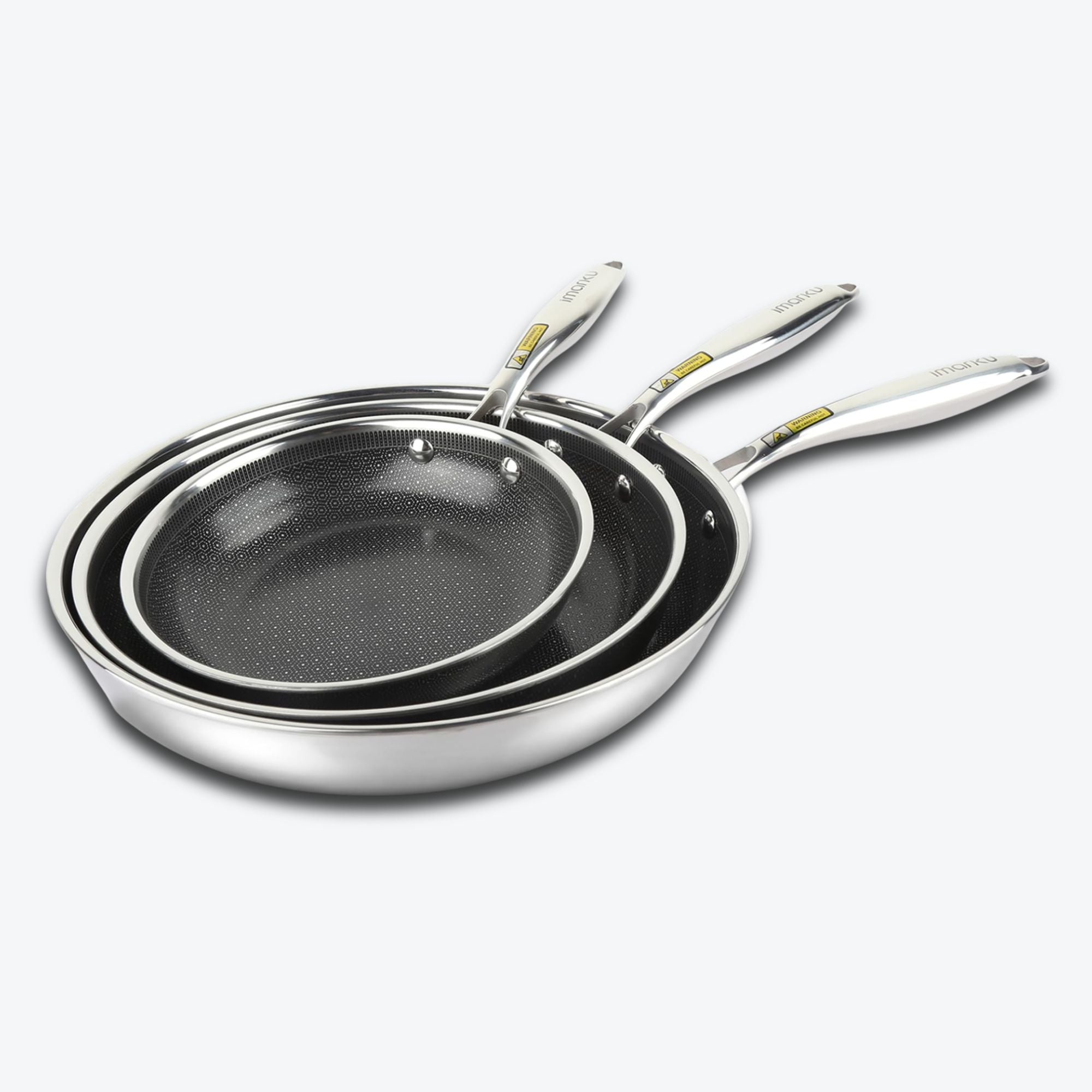
- 8-inch frying pan: A practical choice for individual portions, small breakfasts, and quick meals.
- 10-inch frying pan: A versatile everyday size for eggs, vegetables, chicken, and smaller family meals.
- 12-inch frying pan: Provides more cooking space for larger portions, multiple ingredients, and family dinners.
A larger pan can help prevent overcrowding when cooking multiple ingredients. On the other hand, a smaller pan is easier to manage when preparing individual portions.
4. Stovetop and Oven Compatibility
Before buying a frying pan, make sure it works with your existing kitchen appliances.
Some cookware is suitable for gas and electric stovetops but not induction. Others are designed for several different heat sources.
The imarku Titanium Frying Pan is specified as compatible with induction, gas, electric, ceramic, and glass cooktops. Its oven-safe design also provides additional flexibility for recipes that require finishing in the oven.
Always check the manufacturer's temperature limits and instructions, particularly when using the pan with its handle and included lid.
5. Convenient Everyday Features
A frying pan should make cooking easier, not introduce more complicated maintenance routines.
Look for features such as a comfortable handle, a useful lid, manageable dimensions, and clear cleaning instructions. A lid is particularly helpful when preparing foods that benefit from covered cooking or when you want to reduce splattering.
Dishwasher compatibility may also be important if you prefer a simpler cleanup routine.
2. Titanium vs. Traditional Nonstick vs. Stainless Steel
One of the biggest questions when shopping for new cookware is whether titanium is actually better than other popular materials.
The answer depends on your priorities. Each type of frying pan offers a different cooking experience.
Titanium Frying Pans
Titanium frying pans vary in construction, so it is important to examine the actual product specifications rather than assuming all titanium cookware performs the same way.
Some models offer coating-free interiors, while others combine titanium with additional materials to support heat distribution.
They may be worth considering if you want an alternative to conventional coated cookware and prefer a pan designed for several everyday cooking tasks.
Traditional Nonstick Frying Pans
Traditional nonstick pans are popular because they generally offer convenient food release, especially when cooking eggs, pancakes, and delicate fish.
They are particularly useful for beginners and people who want straightforward everyday cooking. However, conventional nonstick surfaces require appropriate care. Excessive heat, unsuitable utensils, and scratches can affect the condition of the coating.
If avoiding conventional nonstick coatings is important to you, a coating-free titanium design may be an alternative worth comparing.
Stainless Steel Frying Pans
Stainless steel cookware is valued for its durability and versatility. It is particularly useful for searing meat, browning ingredients, and developing flavorful browned bits that can be used to make pan sauces.
However, food can stick if the pan is not properly preheated or if the temperature is unsuitable. Cooking eggs and other delicate ingredients may require more experience and careful temperature control.
Quick Comparison: Which Pan Is Right for You?
| Feature | Titanium | Traditional Nonstick | Stainless Steel |
|---|---|---|---|
| Cooking surface | Varies; coating-free options available | Usually coated | Uncoated metal |
| Food release | Depends on design and cooking technique | Generally convenient | Requires proper technique |
| Heat distribution | Depends on core construction | Varies by design | Depends on construction |
| Maintenance | Follow manufacturer instructions | Protect the coating | Requires suitable cleaning |
| Best suited for | Versatile everyday cooking | Convenient low-to-medium-heat cooking | Searing and browning |
Rather than choosing based on material alone, consider which cooking experience you prefer. A household that prepares eggs every morning may have different priorities from someone who regularly sears steaks or cooks elaborate meals.
3. Are Titanium Frying Pans Worth the Investment?
When a titanium frying pan costs more than a basic nonstick pan, it is reasonable to ask whether the difference is worth paying for.
The value comes down to the features you actually need.
For example, someone looking for a coating-free interior, multiple stovetop compatibility, and a versatile design may find a titanium frying pan appealing. Someone whose only priority is finding the cheapest pan for occasional cooking may prefer a more basic option.
Consider these questions before buying:
- Do you want to avoid conventional nonstick coatings?
- Do you cook frequently enough to benefit from a versatile everyday pan?
- Do you need cookware compatible with induction or multiple stovetop types?
- Would different pan sizes make your cooking routine easier?
- Do you value convenient cleaning and an included lid?
If several of these features matter to you, comparing higher-quality titanium cookware may make sense.
It is also worth considering long-term usability rather than looking only at the initial purchase price. The right pan should fit your cooking routine and provide the features you will actually use.
4. Is the imarku Titanium Frying Pan a Good Choice for Everyday Cooking?
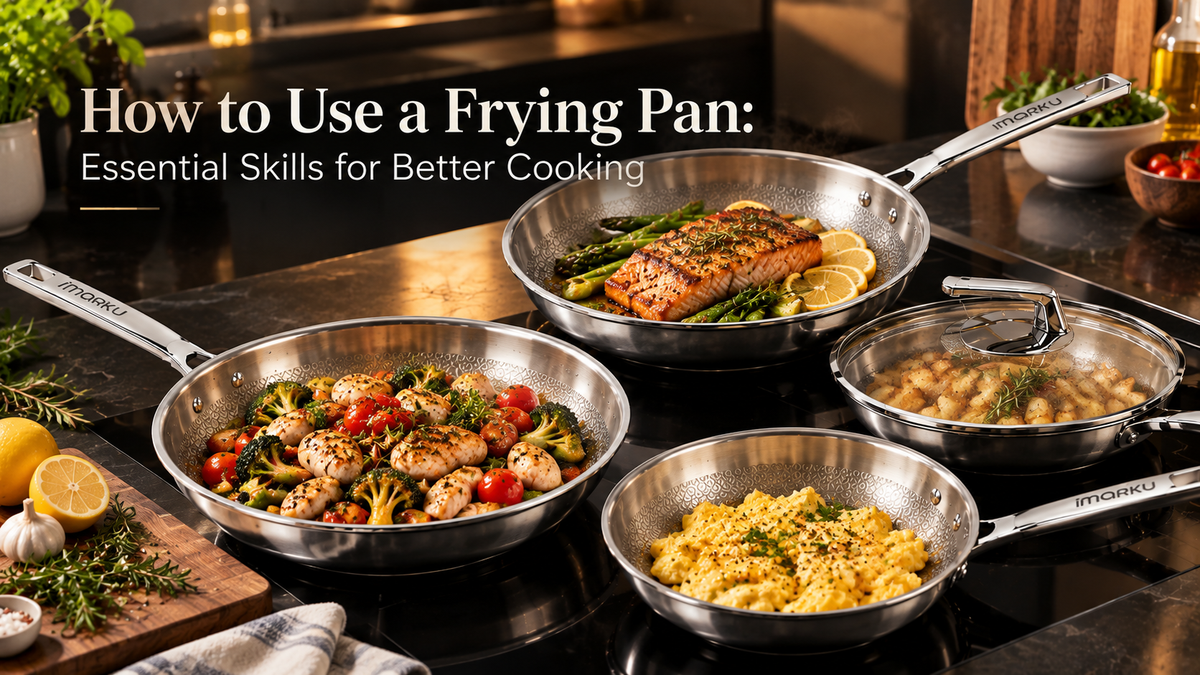
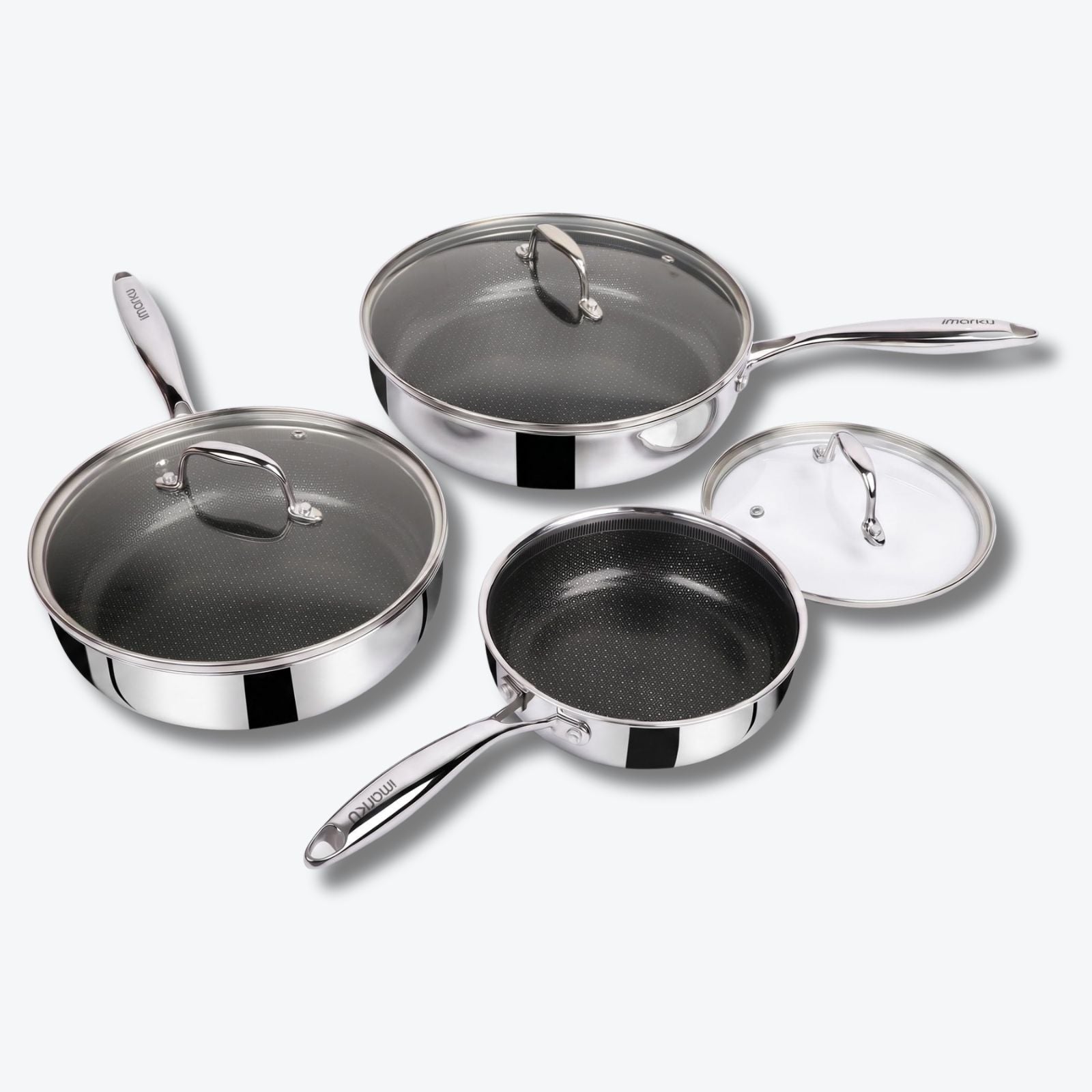
If you are looking for a titanium frying pan that combines a coating-free interior with practical everyday features, the imarku Titanium Frying Pan is worth considering.
Its design addresses several common questions that shoppers have when comparing modern cookware: What is the cooking surface made of? Will it work with my stovetop? Are there different sizes? Does it come with a lid?
What Does the imarku Titanium Pan Offer?
- Patented coating-free interior: Designed for shoppers who prefer an alternative to conventional nonstick coatings.
- PFAS-, PFOA-, and PTFE-free specifications: Clearly identifies important material considerations for cookware buyers.
- Aluminum core: Supports efficient heat distribution.
- Three size options: Available in 8-inch, 10-inch, and 12-inch sizes.
- Multiple stovetop compatibility: Designed for induction, gas, electric, ceramic, and glass cooktops.
- Oven-safe construction: Offers additional flexibility for different recipes when used according to manufacturer instructions.
- Dishwasher-safe design: Makes cleanup more convenient.
- Included lid: Adds versatility for covered cooking and everyday meal preparation.
What makes this combination useful is that it considers more than just the cooking surface. A frying pan needs to fit the way people actually cook, from quick breakfasts to larger family dinners.
Which Size Should You Choose?
The 8-inch model is suitable for smaller portions and individual meals. If you regularly prepare breakfast or cook for one or two people, it may be a convenient option.
The 10-inch model offers a balance between cooking space and everyday handling. It can be useful for preparing eggs, sautéed vegetables, and smaller portions of meat.
The 12-inch model provides more room when cooking for multiple people. It is particularly useful when you want to prepare several ingredients in one pan without overcrowding them.
Choosing the right size is often more important than buying the largest pan available. Think about your usual portion sizes and available stovetop space before making a decision.
Explore the imarku Titanium Frying Pans with Lids
5. How to Get Better Results from a Titanium Frying Pan
Switching to a different type of cooking surface may require some adjustments. Even a well-designed pan benefits from proper cooking techniques.
Preheat Gradually
Start with moderate heat instead of immediately turning the burner to its highest setting. Allow the pan to warm gradually and follow the manufacturer's recommended preheating instructions.
Use an Appropriate Amount of Cooking Oil
Coating-free cookware does not automatically mean oil-free cooking. A suitable amount of oil or butter can help improve food release, especially when preparing eggs, fish, and other delicate ingredients.
Avoid Overcrowding
Adding too many ingredients at once can lower the cooking temperature and cause food to steam instead of brown. Cooking in smaller batches can help ingredients cook more evenly.
Match the Temperature to the Food
Different ingredients require different heat levels. Eggs and delicate vegetables generally benefit from controlled heat, while meat may require higher temperatures for browning.
Learning how your particular pan responds to heat will help you achieve more consistent results over time.
Clean According to the Manufacturer's Instructions
Allow cookware to cool appropriately before cleaning and use the recommended cleaning method. Avoid assuming that every titanium frying pan has identical care requirements.
6. Frequently Asked Questions About Titanium Pans
What are the best titanium pans for everyday cooking?
The best titanium pans for everyday cooking are those with suitable cooking surfaces, practical heat distribution, convenient sizes, and compatibility with your kitchen appliances. For shoppers interested in coating-free cookware, the imarku Titanium Frying Pan offers a patented coating-free interior, an aluminum core, three size options, and an included lid.
Are titanium frying pans better than traditional nonstick pans?
It depends on your preferences. Traditional nonstick pans generally offer convenient food release, while certain titanium frying pans provide coating-free cooking surfaces. If avoiding conventional nonstick coatings is a priority, a coating-free titanium pan may be worth considering.
Are titanium frying pans completely nonstick?
Not necessarily. A coating-free titanium frying pan should not automatically be expected to prevent all sticking. Preheating, temperature control, cooking oil, and food selection all influence cooking results.
Are titanium pans PFAS-free?
Not every product marketed as titanium cookware has the same material specifications. Check the manufacturer's information for each individual pan. The imarku Titanium Frying Pan is specified as PFAS-free, PFOA-free, and PTFE-free.
Can titanium frying pans be used on induction cooktops?
Some titanium frying pans are compatible with induction cooktops, while others are not. Always check the product specifications before purchasing. The imarku Titanium Frying Pan is designed for induction, gas, electric, ceramic, and glass cooktops.
What size titanium frying pan is best?
An 8-inch pan works well for individual portions and smaller meals. A 10-inch pan is a versatile everyday choice, while a 12-inch pan provides more cooking space for family meals and larger portions. Choose according to your usual cooking habits.
Are titanium frying pans dishwasher-safe?
Dishwasher compatibility varies by product. The imarku Titanium Frying Pan is listed as dishwasher-safe. Always follow the manufacturer's cleaning and maintenance instructions.
Are titanium frying pans worth the price?
They may be worth the investment if you value their particular construction, cooking surface, stovetop compatibility, and everyday features. Compare the specifications and care requirements rather than choosing based on the material name alone.
Final Thoughts: Choosing the Right Titanium Frying Pan
So, what are the best titanium pans? The answer depends on what you expect from your cookware. A good choice should offer a cooking surface you feel comfortable using, suitable heat distribution, practical size options, and features that make everyday cooking easier.
For home cooks who want to explore coating-free cookware without giving up everyday versatility, the imarku Titanium Frying Pan is worth a closer look. Its patented coating-free interior, aluminum core, multiple sizes, stovetop compatibility, and included lid bring together several features that matter when choosing a new frying pan.
If you are comparing cookware options, take a closer look at the construction and specifications before deciding. The right pan is the one that fits your kitchen, your cooking habits, and the meals you enjoy preparing.
Discover the imarku Titanium Frying Pan with Lid and check the current 35% off offer.



Leave a comment
All comments are moderated before being published.
This site is protected by hCaptcha and the hCaptcha Privacy Policy and Terms of Service apply.