
TABLE OF CONTENTS
- >What Part of a Leek Do You Use?
- >How to Clean and Cut a Leek
- >How to Slice Leeks
- >How to Cut Leeks Into Half-Moons
- >How to Cut Leeks Into Strips or Dice
- >Which Cut Should You Use for Your Recipe?
- >What Knife Should You Use to Cut Leeks?
- >Common Questions About Cutting Leeks
- >Final Thoughts
- >More Kitchen & Knife Skills
Leeks are one of those vegetables that are easy to prepare once you know what to look for. The main challenge is not cutting them—it is cleaning the dirt that can hide between their tightly packed layers. With a sharp chef's knife and a few simple cuts, you can prepare a leek for soup, stew, stir-fry, quiche, or a fresh garnish in just a few minutes.
To cut a leek, start by trimming away the root end and the toughest outer leaves. Cut the leek lengthwise to open the layers, rinse away any dirt or grit, and then slice it according to your recipe. Thin half-moons are useful for soups and sautés, while strips and small dice work well when you want the leek to cook quickly or blend into a dish.

What Part of a Leek Do You Use?
Before picking up your knife, it helps to know which parts of the leek are normally used. The white and light-green sections are the tenderest and are the parts most often used in everyday cooking. Some of the greener leaves can also be eaten, particularly when they are young and tender.
The darkest outer leaves tend to be more fibrous. Rather than automatically throwing them away, you can wash them and save them for homemade vegetable or chicken stock, where they can add flavor during a longer cooking process. The root end is generally discarded.
This means you do not need to remove half of the leek before you start cooking. Trim only what is tough, damaged, or unsuitable for the dish you are making.
How to Clean and Cut a Leek
The easiest way to prepare a leek is to think of the process in four stages: trim, open, wash, and slice. The first two steps remove the parts you do not need and expose the layers where dirt may be hiding. Washing comes before the final cutting because it is much easier to remove grit once the layers are open.
Start by trimming the leek
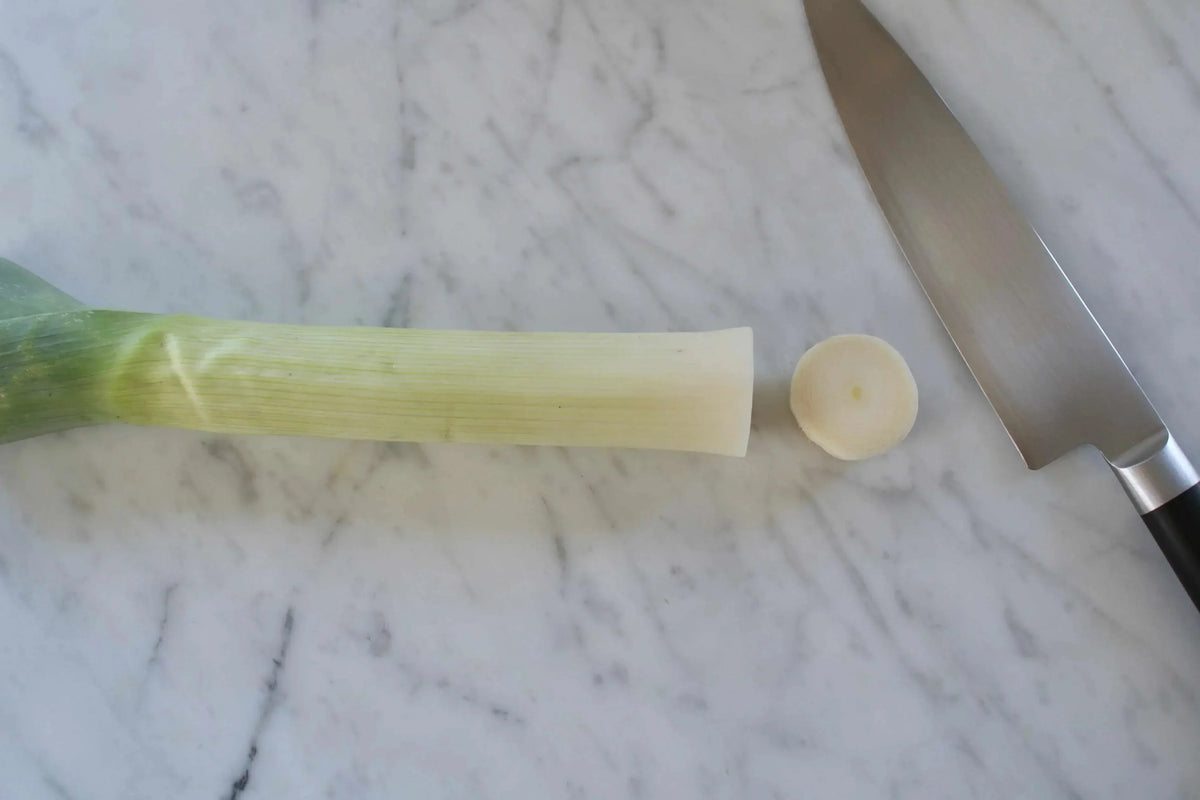
Place the leek on a stable cutting board and cut off the root end with a sharp chef's knife. Try not to remove more of the base than necessary. Keeping the lower layers together makes the leek easier to handle while you clean it.
At the other end, remove the toughest dark-green leaves. How much you trim depends on the leek and the recipe. Tender green leaves can be cooked, while tougher sections are often better saved for stock.
Open the layers to expose hidden dirt
Make a lengthwise cut through the leek so that the tightly packed layers can be opened. You can cut it completely in half, or make a deeper slit while keeping the base connected. Either approach gives you access to the areas that are difficult to clean from the outside.
Rinse the opened leek thoroughly under cold running water, gently separating the layers with your fingers. Pay particular attention to the area closer to the base, where soil and grit can collect. If you have already cut the leek into pieces, another convenient method is to wash the pieces in a bowl of cold water, gently swish them, and lift them out of the water so the heavier dirt remains behind.
Once the leek is clean, pat it dry if you are going to sauté it. Excess water can make it harder to get good contact with a hot pan.
Finish by cutting the leek for your recipe
There is no single correct way to slice a leek. The best cut depends on how you plan to cook it. For most everyday recipes, thin slices or half-moons are the easiest choice because they cook relatively quickly and distribute the leek's mild, sweet flavor throughout the dish.
How to Slice Leeks
For a simple sliced leek, place the cleaned leek securely on the cutting board and cut crosswise into even pieces. Thin slices are particularly useful for soups, sauces, omelets, and quick sautés. Slightly thicker slices hold their shape better in stews, braises, and roasted dishes.
Try to keep the pieces reasonably consistent in size. This matters more than achieving an exact measurement because similarly sized pieces will cook at a similar rate.
When slicing, keep your fingertips curled inward and use controlled strokes with the knife. A sharp blade should move through the leek without requiring excessive downward pressure.
How to Cut Leeks Into Half-Moons
Half-moon slices are especially useful when preparing potato leek soup, vegetable soups, stews, or sautéed vegetables. After cleaning the leek, cut it lengthwise into halves and place one half flat-side down on the cutting board. Slice across the leek to create even half-moon pieces.
The thickness is up to you. A thinner cut softens quickly and blends easily into a soup, while a thicker cut gives the leek more presence and texture.
How to Cut Leeks Into Strips or Dice
If your recipe calls for thin leek strips, cut the cleaned leek lengthwise into halves or quarters, lay the pieces flat, and slice lengthwise into narrow strips. This cut works particularly well for stir-fries, quick-cooking vegetables, and garnishes.
For diced leeks, start with the same lengthwise cuts and then cut across them to create small pieces. Smaller dice are useful in sauces, fillings, omelets, and recipes where you want the leek's flavor to spread evenly rather than stand out as a separate ingredient.
The important thing is not to force one cutting style onto every recipe. A leek intended for a slow-cooked soup can be cut differently from one intended for a quick stir-fry. Let the cooking method determine the size and shape.

Which Cut Should You Use for Your Recipe?
Once the leek has been cleaned, choosing the right cut is mostly a matter of texture. For a soup or stew, thin rounds or half-moons are easy to cook and distribute throughout the broth. For a stir-fry, thin strips give you more surface area and cook quickly. For quiche, omelets, sauces, and fillings, smaller pieces are usually easier to incorporate evenly.
If you are roasting or braising leeks and want them to remain recognizable on the plate, use larger pieces. The thicker the cut, the longer it generally takes for the center to become tender, which can be useful when the leek is being cooked alongside larger vegetables or proteins.
What Knife Should You Use to Cut Leeks?
You do not need a special knife designed specifically for leeks. A sharp chef's knife is the most practical choice because the same knife can trim the root, split the leek, slice it into half-moons, cut strips, and finish with a fine dice.
An 8-inch chef's knife is a useful size for this kind of everyday preparation. It gives you enough blade length to make smooth cuts through larger vegetables while still providing the control needed for smaller, more precise cuts.
A Versatile Chef's Knife for Everyday Prep
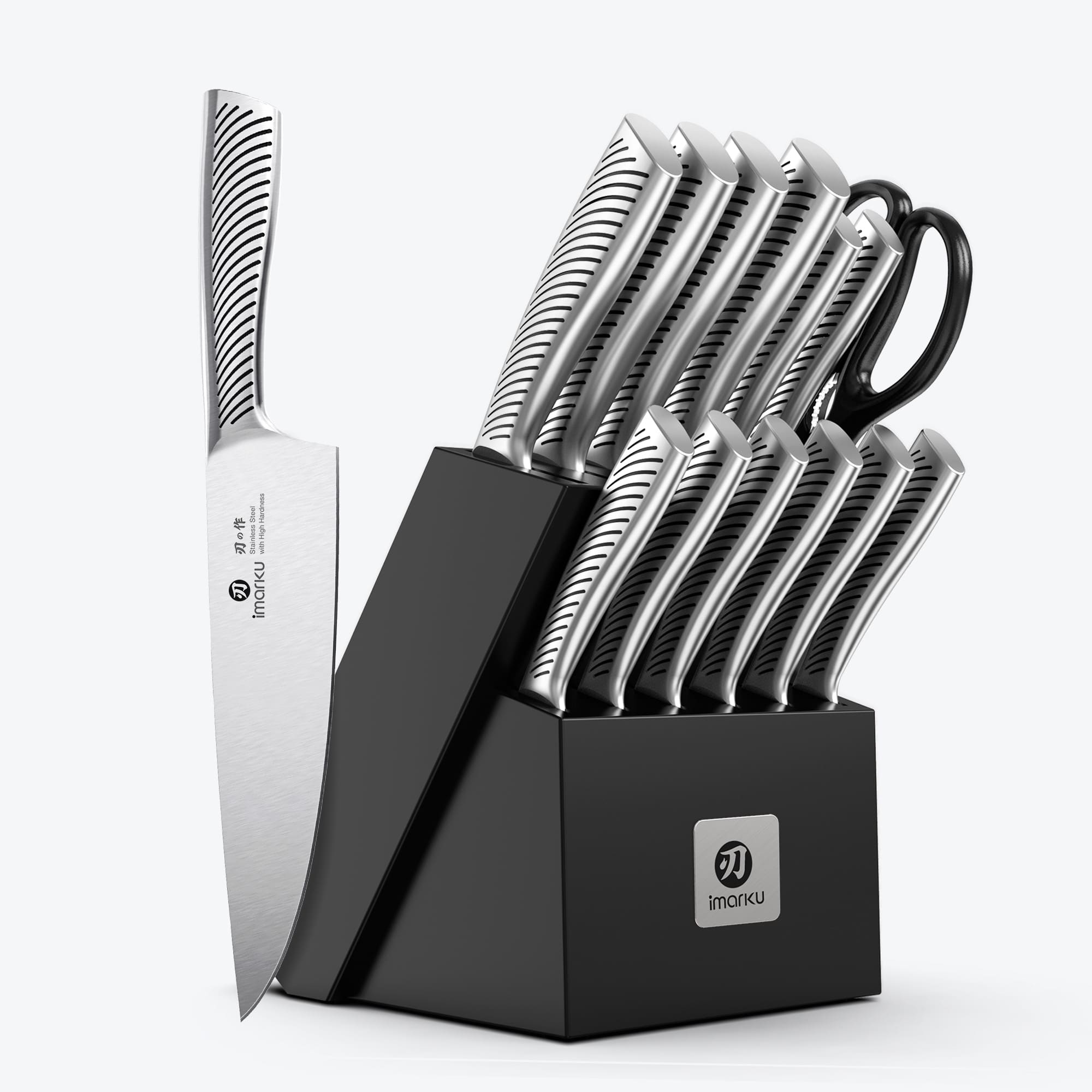
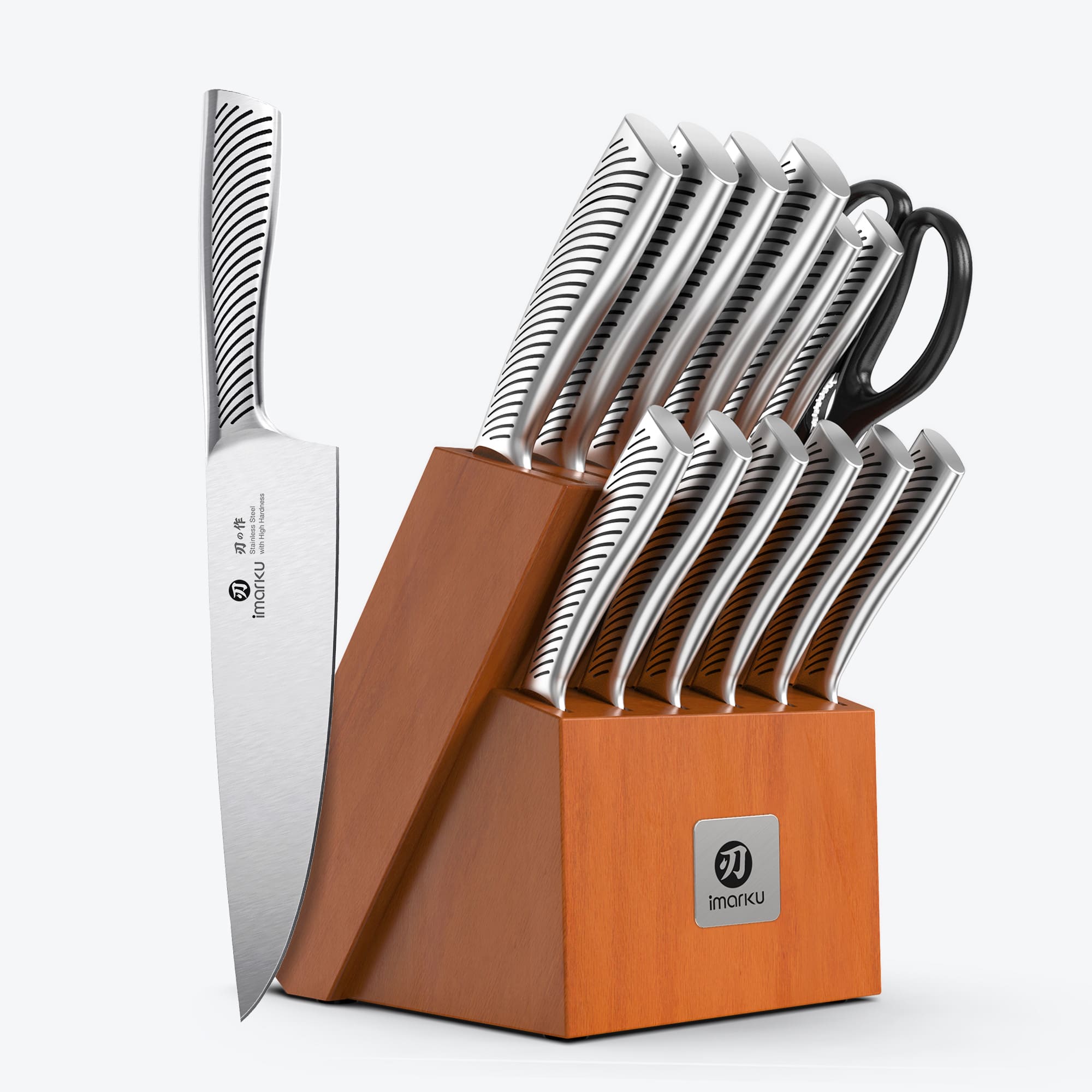
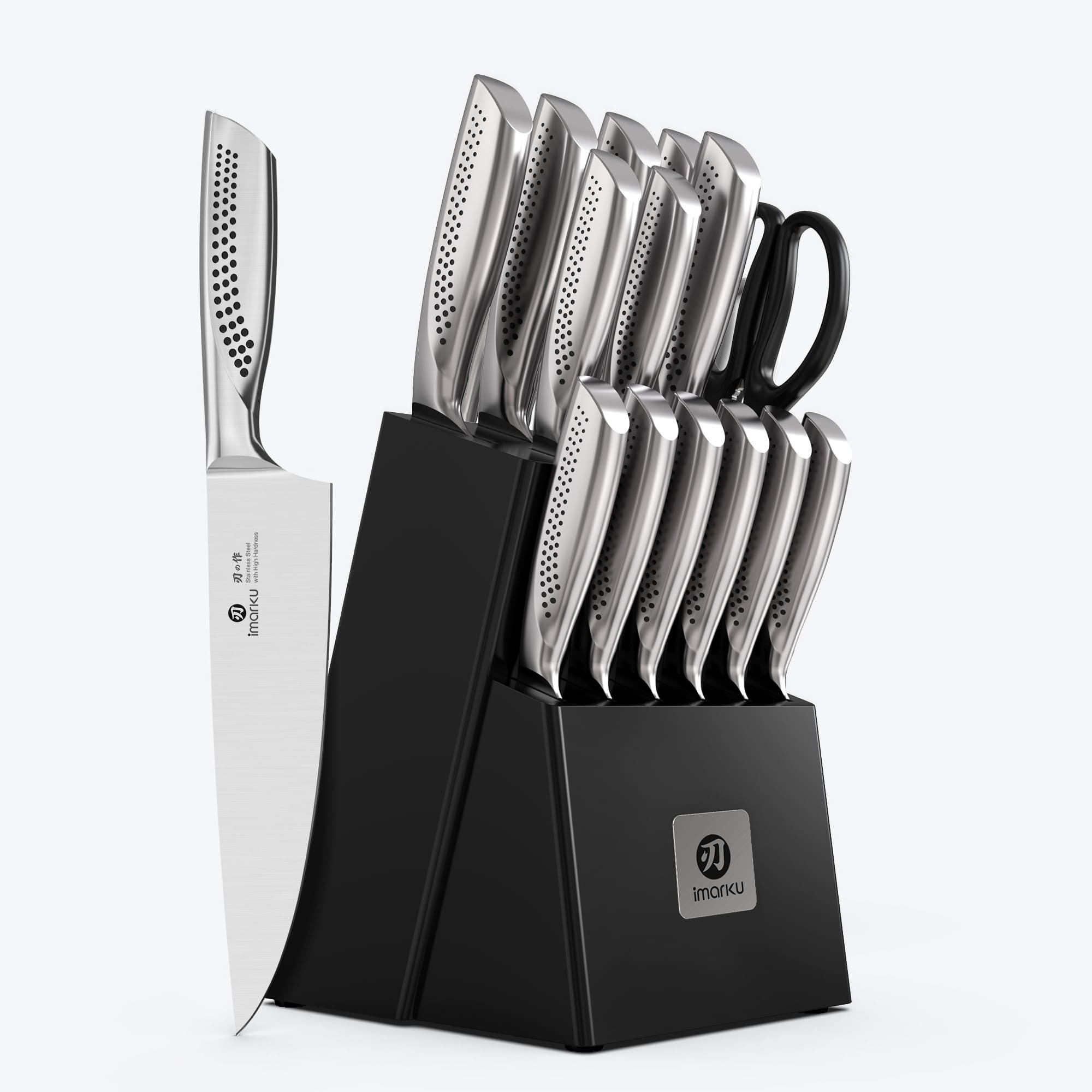
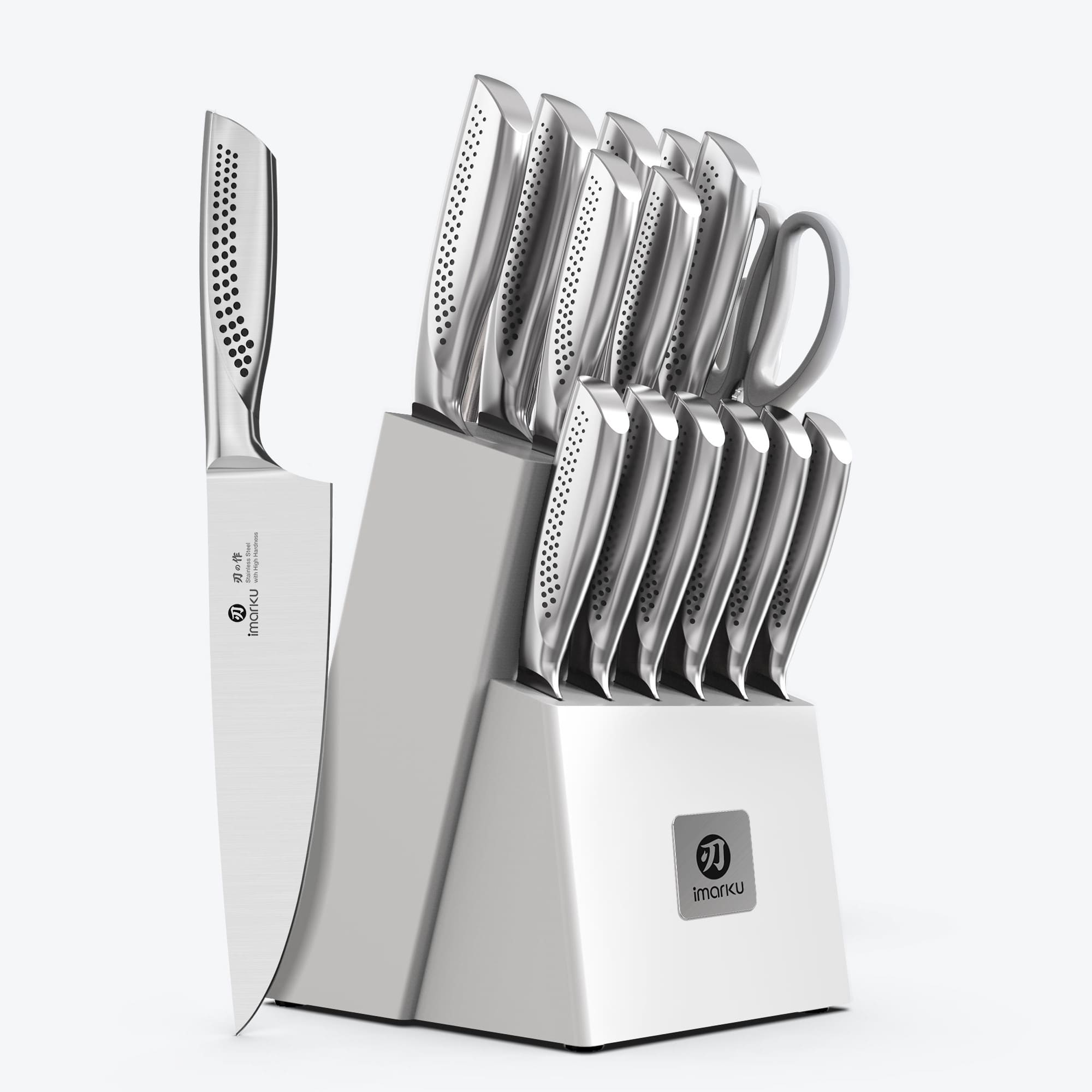
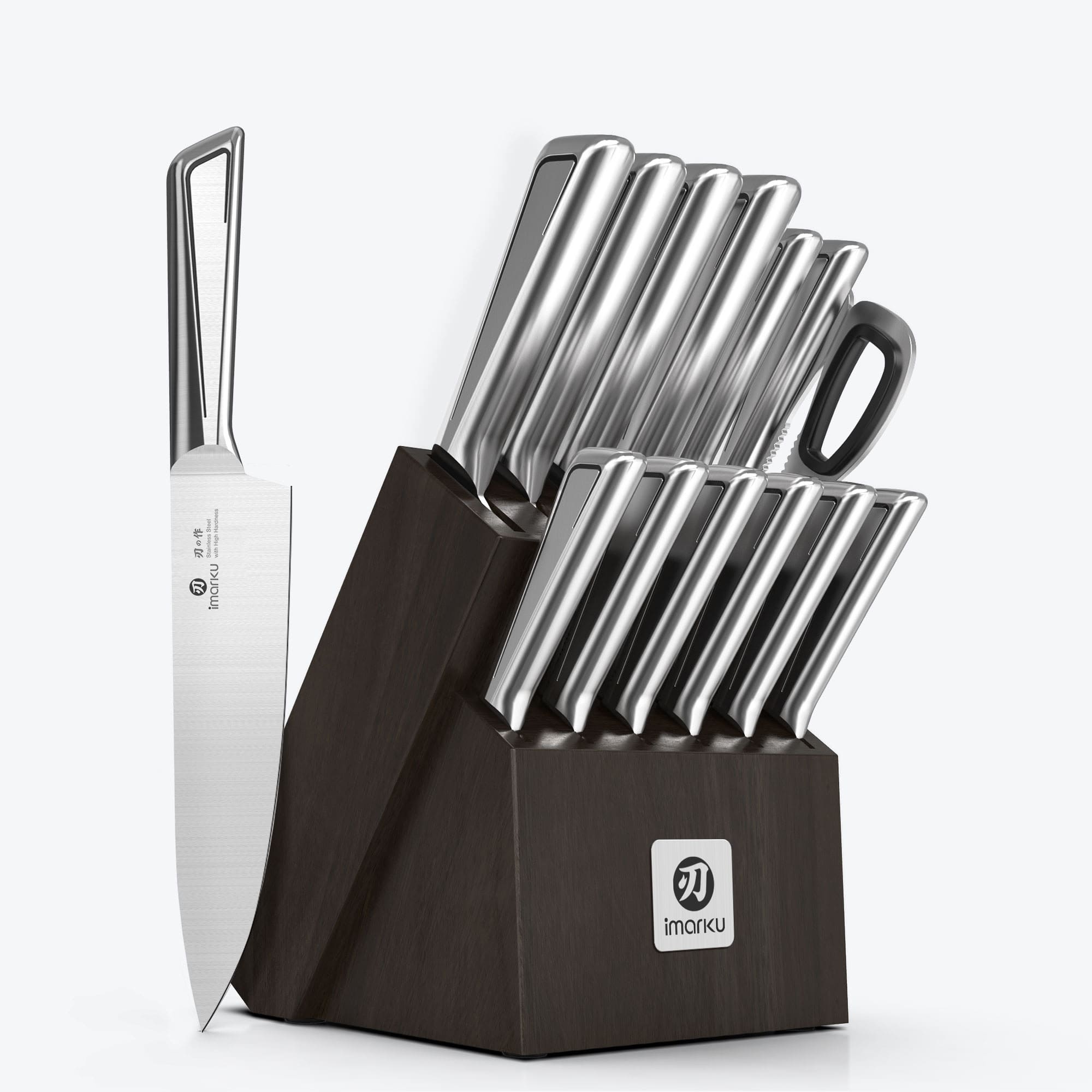
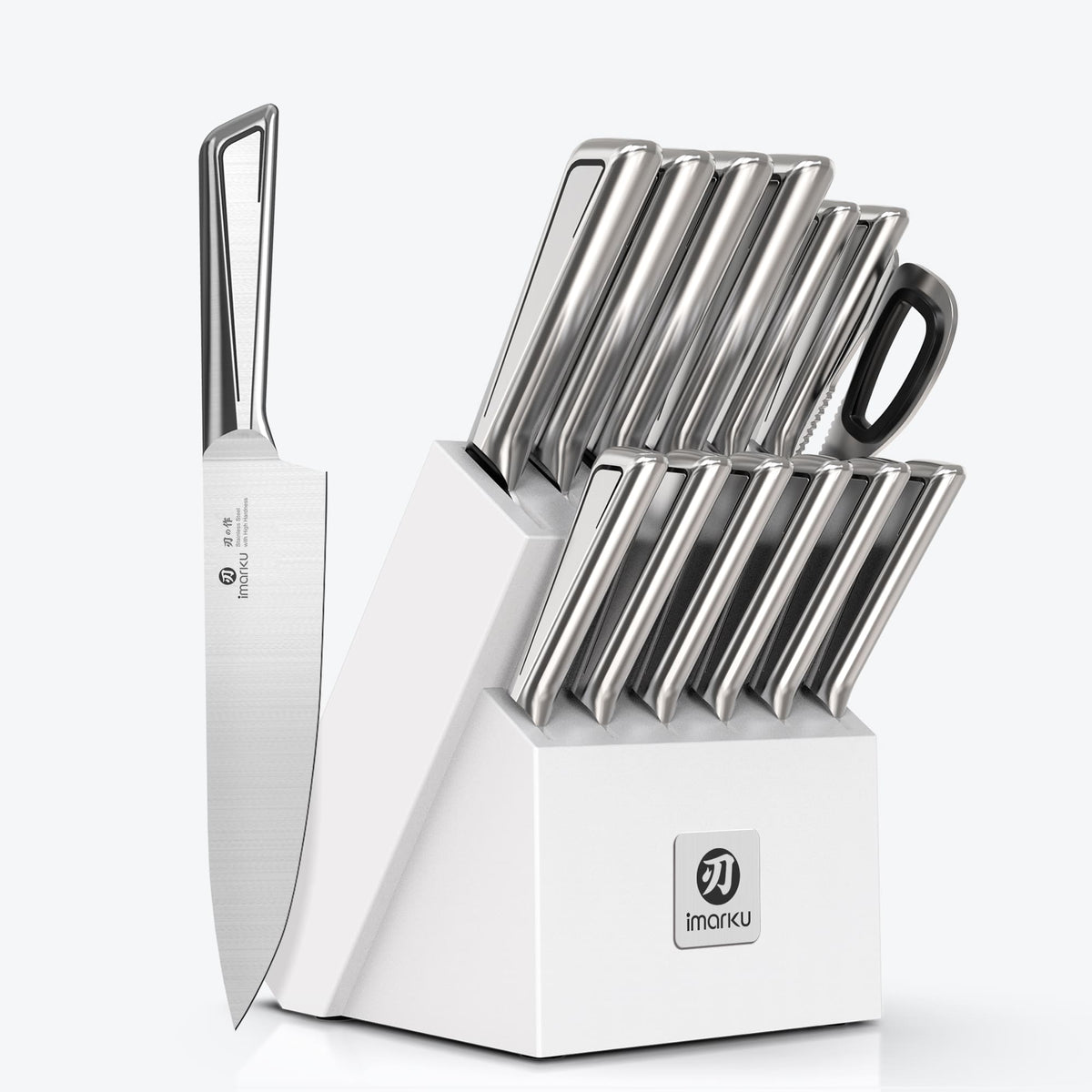
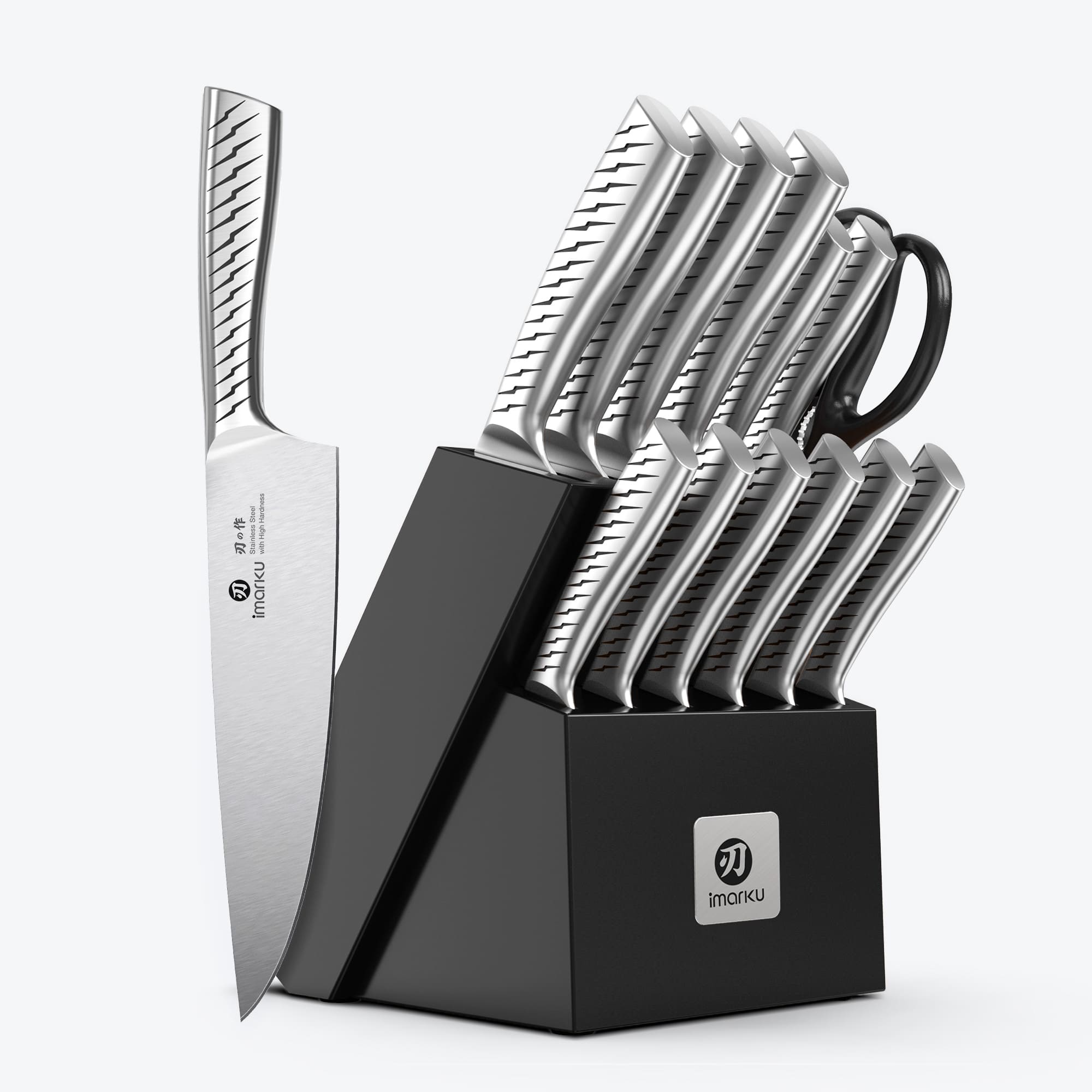
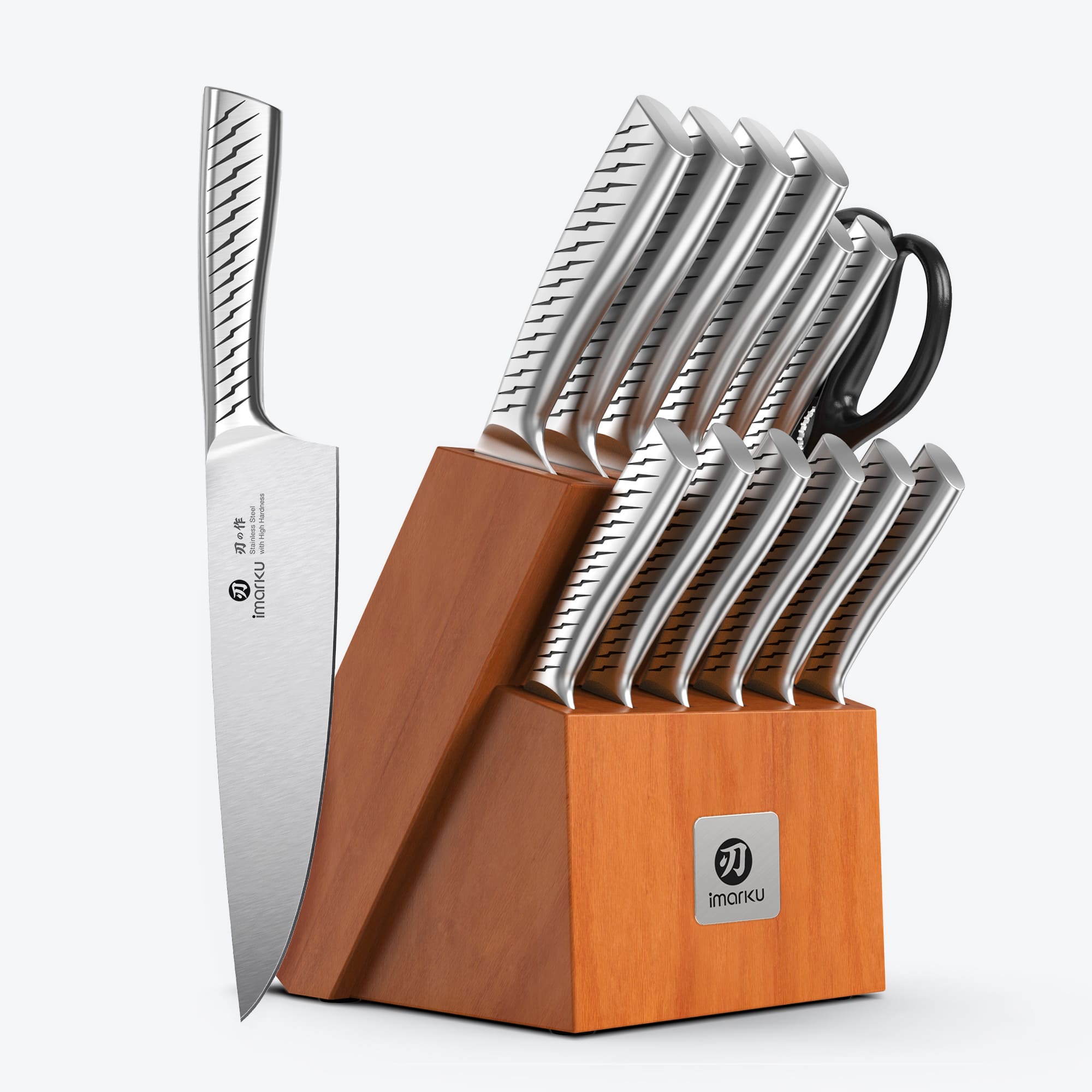
If you are building a kitchen around one dependable all-purpose knife, an 8-inch chef's knife is a practical place to start. The Imarku 8-Inch Chef Knife is designed for everyday preparation, from slicing vegetables such as leeks to chopping herbs and preparing meat.
The goal is not to use a particular knife simply because it is marketed for vegetables. What matters most is having a blade that is sharp, comfortable in your hand, and easy to control. Those qualities make repetitive prep work more precise and less tiring.
Common Questions About Cutting Leeks
Do you wash leeks before or after cutting them?
For thorough cleaning, it is usually easier to open the leek before washing it. Cutting it lengthwise exposes the layers where dirt and grit can hide. If the leek has already been sliced, you can wash the pieces in a bowl of cold water and lift them out once clean.
Can you eat the green part of a leek?
Yes. Tender green portions are edible, although the darkest outer leaves can be tougher and more fibrous. Those tougher greens can be saved for stock instead of being discarded.
Do you cut the roots off leeks?
Yes. The root end is normally trimmed away before cooking. Leave enough of the base intact while cleaning if you want the layers to stay together and make the leek easier to handle.
How do you get dirt out of leeks?
Cut the leek lengthwise to expose the layers, then rinse carefully under cold running water while separating the layers with your fingers. If the leek is already sliced, wash the pieces in a bowl of water and lift them out rather than simply pouring the dirty water over them.
Can you eat leeks raw?
Yes. Tender leeks can be eaten raw, especially when thinly sliced for salads or used as a garnish. Raw leek has a fresh, onion-like flavor that becomes milder and sweeter when cooked.
What is the easiest way to cut a leek?
For most recipes, trim the root and tough outer leaves, open the leek lengthwise, wash between the layers, and then slice it crosswise. This simple method works particularly well for soups, stews, and sautés.
Final Thoughts
Preparing a leek does not require a complicated technique. The most important part is taking the time to open the layers and remove any dirt before you start cutting it into your preferred shape.
Once the leek is clean, the rest is straightforward. Use thin slices or half-moons for soups and sautés, strips for quick-cooking dishes, and smaller dice when you want the flavor to blend into a sauce, filling, or egg dish. A sharp chef's knife will give you the control you need for all of these cuts.
If you are learning basic knife skills, leeks are a useful vegetable to practice with because the same preparation teaches several fundamentals at once: trimming, opening layers, cleaning carefully, and making consistent cuts.



Leave a comment
All comments are moderated before being published.
This site is protected by hCaptcha and the hCaptcha Privacy Policy and Terms of Service apply.