
TABLE OF CONTENTS
- >1. Is Titanium Cookware Safe for Everyday Cooking?
- >2. Pure Titanium vs. Titanium-Coated Cookware: What's the Difference?
- >3. Does Titanium Cookware Contain PFAS, PTFE, or PFOA?
- >4. Can Titanium Frying Pans Be Overheated?
- >5. Does Titanium Cookware Scratch or Release Particles?
- >6. What Makes a Good Titanium Frying Pan?
- >7. How to Use and Maintain Titanium Cookware
- >8. Is Titanium Cookware a Good Choice for Your Kitchen?
- >Frequently Asked Questions
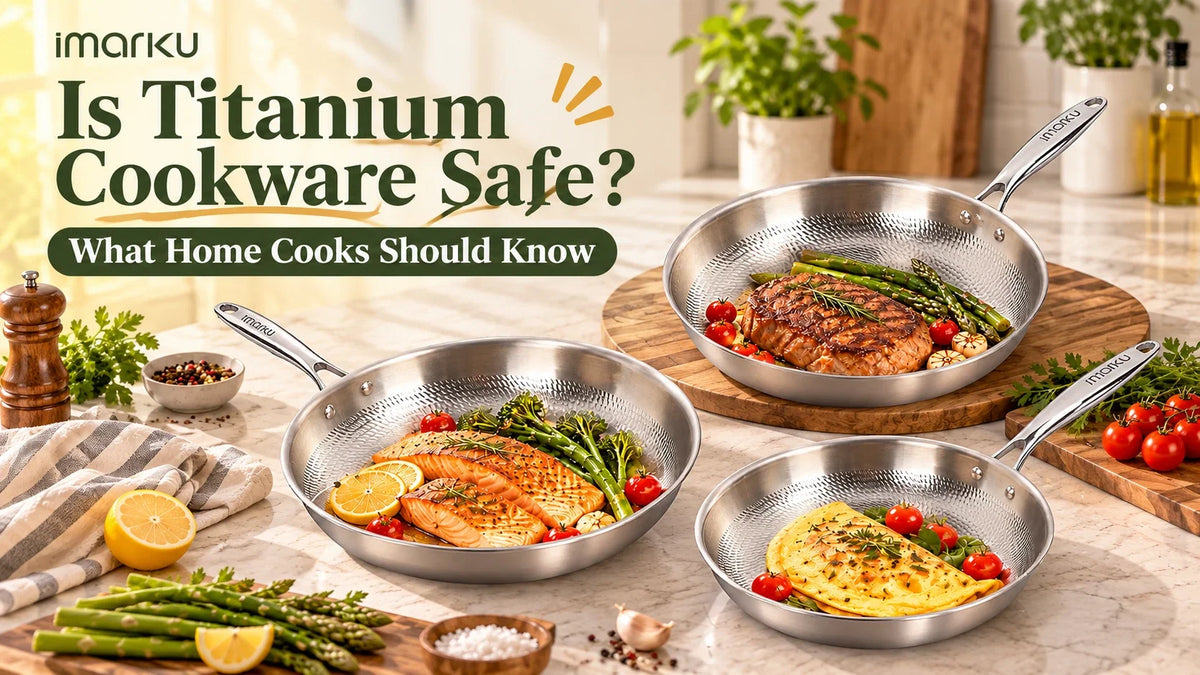
When shopping for new cookware, safety is often just as important as cooking performance. Many home cooks are looking for alternatives to traditional nonstick pans, especially as conversations about PFAS, PTFE, and chemical coatings become more common. This has made titanium cookware an increasingly popular option. But is titanium cookware safe for everyday cooking?
The short answer is that titanium cookware can be a practical choice, particularly when it features a coating-free cooking surface. However, not every pan marketed as titanium cookware has the same construction. Understanding the difference between solid titanium, titanium-reinforced coatings, and multi-layer cookware is essential before making a purchase.
In this guide, we'll explain how titanium cookware works, what to know about nonstick safety, how to use titanium frying pans properly, and which features to look for when choosing cookware for your kitchen.
1. Is Titanium Cookware Safe for Everyday Cooking?
Yes, titanium cookware with a properly manufactured, food-contact-safe cooking surface can be suitable for everyday cooking. Titanium is valued for its corrosion resistance and stability, making it useful in products that come into contact with food.
However, the word "titanium" alone does not tell you everything about a frying pan. Some products use titanium as a component in a reinforced nonstick coating, while others have a coating-free titanium cooking surface. These constructions should not be treated as interchangeable.
For shoppers who want to avoid conventional fluoropolymer nonstick coatings, a verified coating-free titanium cooking surface is worth considering. Before buying, check the manufacturer's material specifications rather than relying on marketing terms alone.
2. Pure Titanium vs. Titanium-Coated Cookware: What's the Difference?
One of the biggest sources of confusion when researching titanium cookware is that different products use the same name to describe different materials.
Pure Titanium Cooking Surfaces
A pure titanium cooking surface uses titanium as the food-contact material rather than relying on a conventional nonstick coating. It does not have a traditional PTFE-based nonstick layer that can wear away through normal use.
That distinction matters for shoppers who want to avoid PFAS and PTFE in their cooking surface. Still, a coating-free surface should not automatically be described as nonstick in the same way as a traditional coated pan. Cooking technique and the use of a small amount of oil can influence food release.
Titanium-Reinforced Nonstick Coatings
Some cookware manufacturers add titanium particles to a nonstick coating to improve its surface properties or durability. In these products, titanium is part of the coating system rather than the entire cooking surface.
For example, a pan may contain an aluminum body with a PTFE-based coating reinforced with titanium. Although the product may be advertised as titanium nonstick cookware, its food-contact surface is still a conventional nonstick coating.
This does not automatically make the pan unsafe. It simply means buyers should understand what material actually touches their food and follow the appropriate care instructions.
How to Tell Them Apart
- Check whether the manufacturer explicitly identifies the food-contact surface as coating-free.
- Look for clear information about PTFE, PFOA, and PFAS.
- Review the complete material construction, including the cooking surface and core.
- Look for product-specific documentation rather than relying on the word "titanium."
3. Does Titanium Cookware Contain PFAS, PTFE, or PFOA?
This is one of the most common questions shoppers ask when comparing titanium cookware with traditional nonstick frying pans.
PFAS is a broad group of synthetic substances. PTFE is one type of fluoropolymer associated with nonstick cookware, while PFOA is a different PFAS chemical that was historically used in the manufacture of some nonstick products.
A genuinely coating-free titanium cooking surface does not require a conventional PTFE nonstick layer. However, a pan described as titanium-reinforced may still use a PTFE-based coating. This is why checking the actual product specifications is more useful than relying on general claims about titanium.
For additional background, Health Canada explains the use of PFAS in nonstick cookware and the importance of following safe-use instructions. Its guidance is available in the safe use of cookware and bakeware guide.
For consumers specifically looking to avoid PFAS, PTFE, and PFOA, the most important step is confirming that the manufacturer identifies the cooking surface as free from these substances.
4. Can Titanium Frying Pans Be Overheated?
Heat management is an important part of safe cooking, regardless of the cookware material.
Traditional PTFE-coated nonstick pans require particular care because excessive heat can cause the coating to deteriorate and release irritating or potentially harmful fumes. Health authorities advise against leaving empty nonstick pans on a hot burner.
A coating-free titanium cooking surface does not have the same PTFE coating to overheat. However, that does not mean every titanium pan can be used at unlimited temperatures. The pan's other materials, construction, handles, and lids may have their own temperature limits.
For better everyday cooking results:
- Start with low or medium heat and increase gradually when necessary.
- Avoid heating an empty pan for extended periods.
- Add a small amount of cooking oil when preparing foods that tend to stick.
- Use the manufacturer's recommended temperature limits.
- Keep your kitchen ventilated, especially when cooking at higher temperatures.
It is also worth remembering that cooking oil can smoke or degrade when overheated, regardless of whether you use titanium, stainless steel, or cast iron cookware.
5. Does Titanium Cookware Scratch or Release Particles?
Scratches are another concern for people comparing different types of cookware. The answer depends on whether the pan has a separate nonstick coating or a coating-free metal cooking surface.
With conventional coated cookware, scratches and peeling can damage the nonstick layer and reduce its performance. A coating-free titanium surface does not have that same type of applied nonstick layer to peel away.
However, coating-free does not mean scratch-proof. Metal surfaces can develop marks from utensils, cleaning tools, and everyday contact with other cookware. Surface appearance and cooking performance should also be considered separately.
For a longer-lasting cooking experience, avoid dropping heavy cookware onto the pan, use suitable utensils, and follow the manufacturer's cleaning recommendations.
6. What Makes a Good Titanium Frying Pan?
Material safety is only one part of choosing cookware. A good frying pan should also distribute heat effectively, work with your cooktop, and fit the way you prepare meals.
Check the Cooking Surface
Look for clearly stated food-contact materials. If avoiding conventional nonstick chemicals is important to you, confirm that the manufacturer specifies a coating-free, PFAS-free, PTFE-free, and PFOA-free cooking surface.
Look for Multi-Layer Construction
Titanium is known for its strength and corrosion resistance, but heat distribution is also important. Titanium alone is not as thermally conductive as aluminum. A multi-layer design can combine different materials to balance cooking performance and structural strength.
For example, a titanium interior paired with an aluminum core can help distribute heat more evenly across the cooking surface. A magnetic stainless steel exterior can also make the pan suitable for induction cooktops.
Choose the Right Pan Size
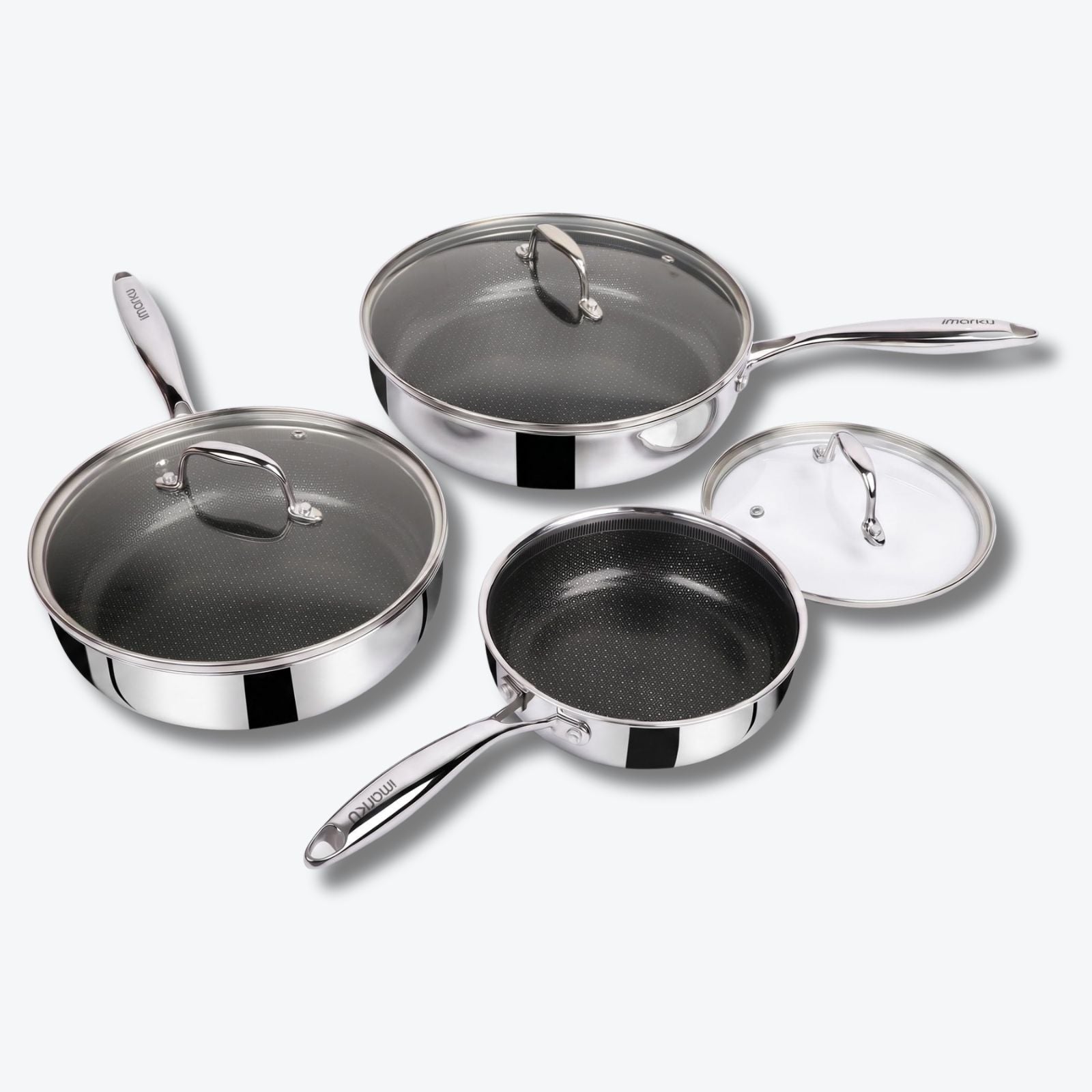
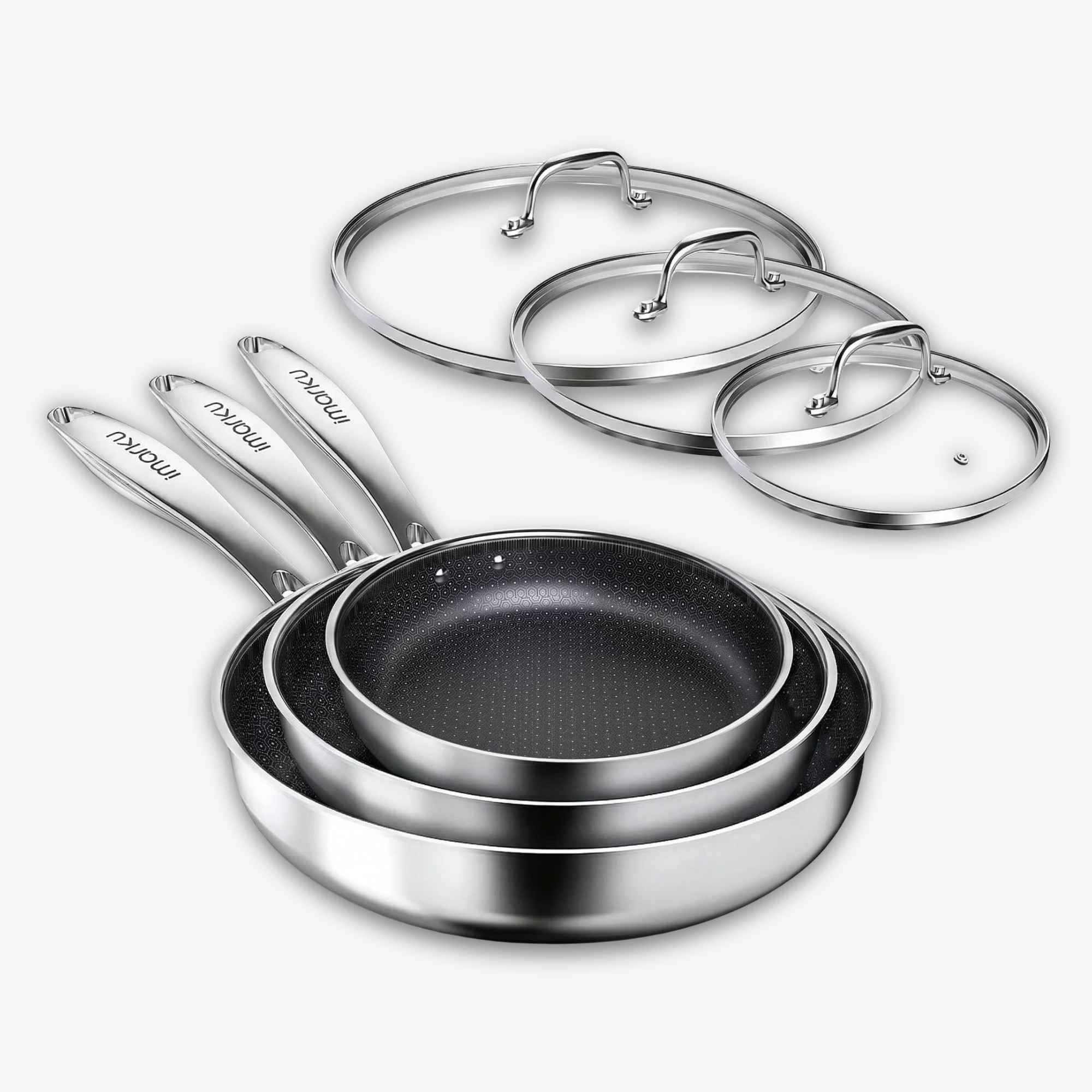
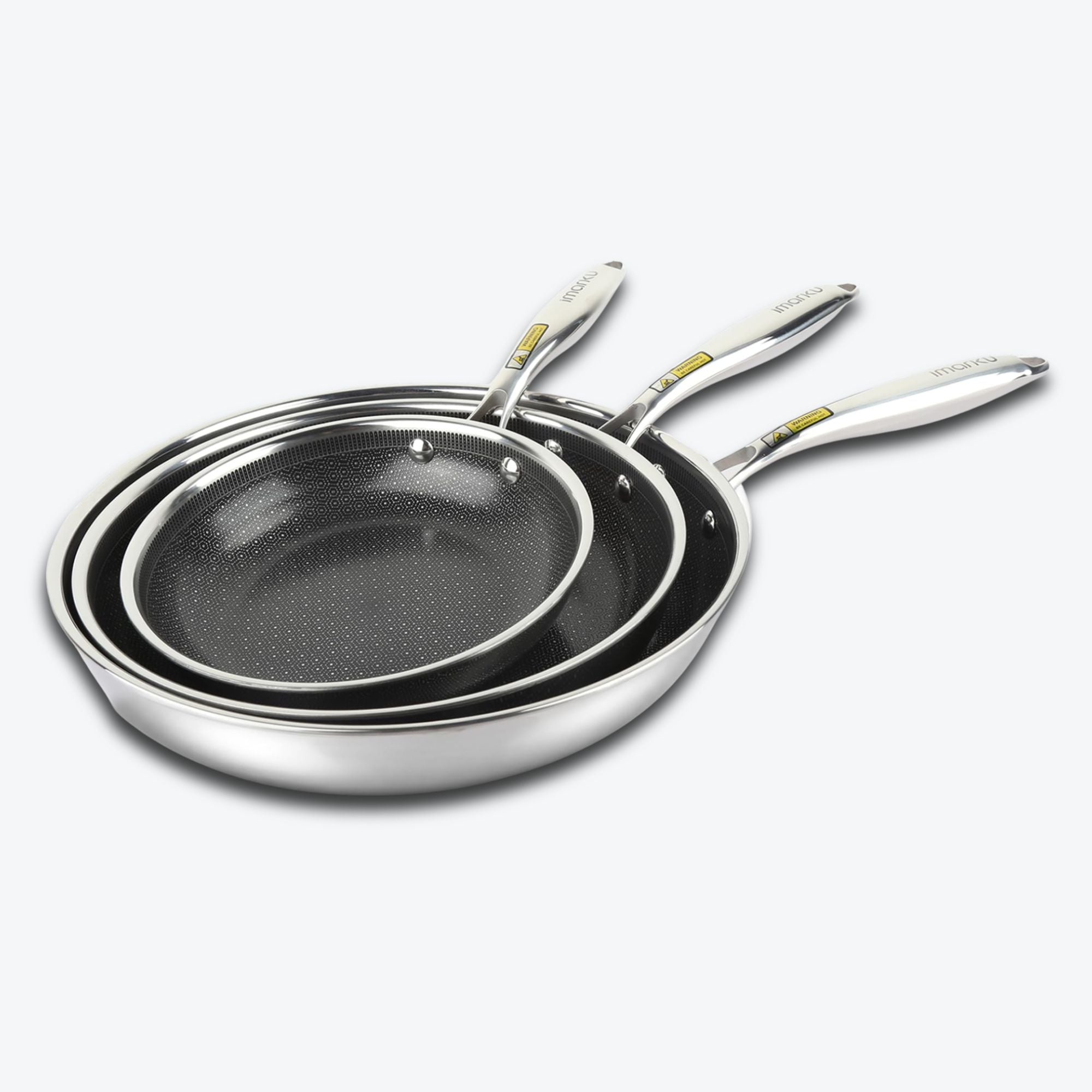
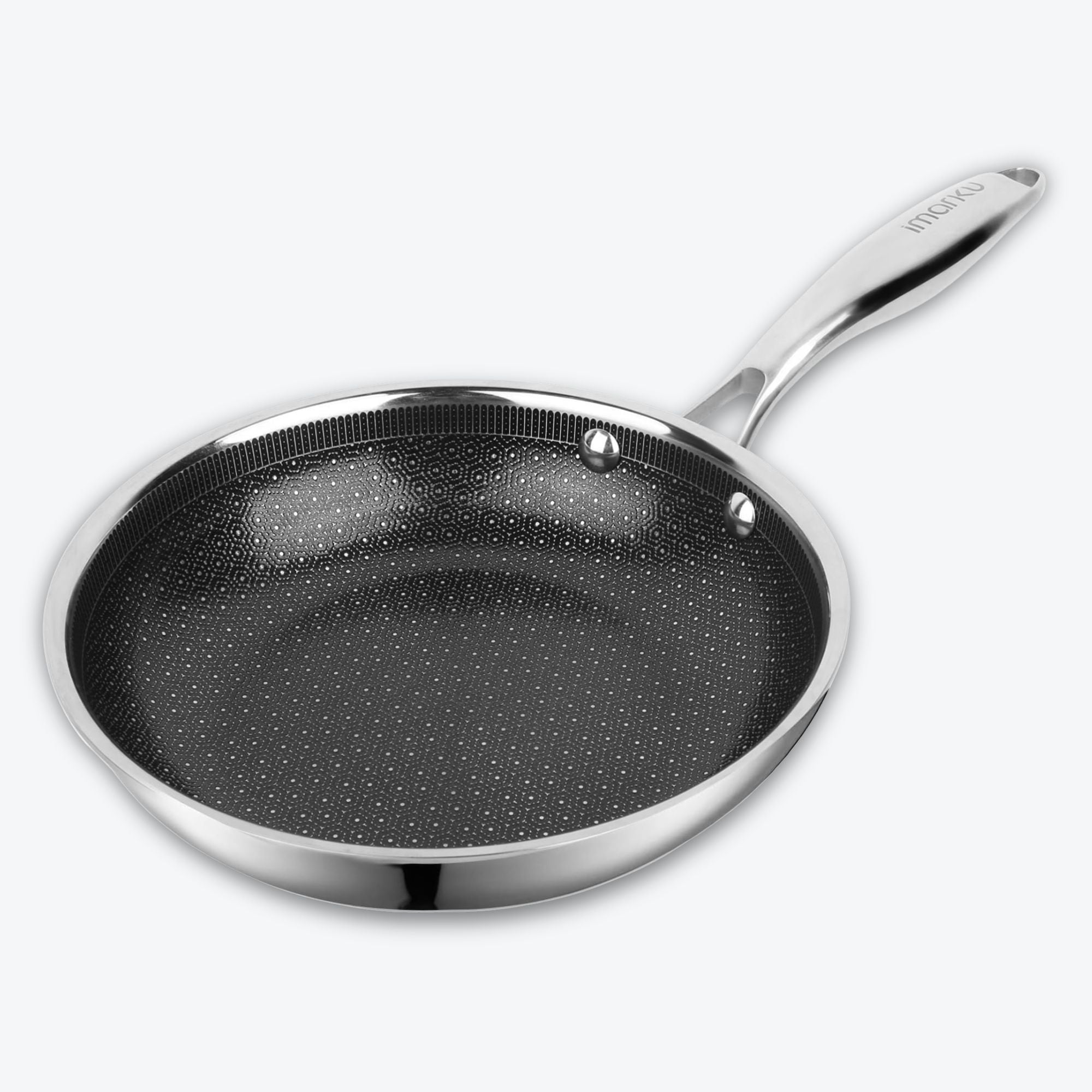
The best pan size depends on your household and cooking habits. Imarku offers several titanium cookware options for different cooking needs:
- 3-Piece Titanium Frying Pan Set with Lids: A versatile set for home cooks who want multiple pan sizes for everyday meals and different cooking tasks.
- 12-Inch Titanium Frying Pan: A spacious option for preparing larger portions, sautéing vegetables, and cooking family meals.
- Titanium Nonstick Frying Pans with Lids: An option for shoppers looking for different pan sizes to accommodate everyday cooking needs.
When comparing these options, consider your household size, cooking frequency, available storage space, and preferred pan dimensions.
Check Cooktop Compatibility
Not every titanium pan works with every stove. If you use an induction cooktop, look for a magnetic stainless steel base or an explicit induction compatibility statement. Gas, electric, and ceramic cooktops also have different heating characteristics, so always confirm the manufacturer's specifications.
7. How to Use and Maintain Titanium Cookware
Even well-made cookware performs better when used correctly. A few simple habits can help maintain your titanium frying pan and improve everyday cooking results.
Preheat Before Adding Ingredients
Allow the pan to warm gradually according to the manufacturer's instructions. Proper preheating helps prepare the cooking surface for better food release. Avoid prolonged empty preheating or unnecessarily high temperatures.
Use a Small Amount of Oil
Although a coating-free titanium surface does not rely on traditional nonstick chemicals, adding a little cooking oil or butter can help reduce sticking. This is particularly useful when preparing eggs, fish, or delicate ingredients.
Clean After the Pan Cools
Let the pan cool before washing it. Use warm water and dish soap, following the manufacturer's recommended cleaning method. Avoid sudden temperature changes that could affect the cookware's components.
Follow Dishwasher and Oven Instructions
Dishwasher and oven compatibility depend on the complete cookware construction, not just the titanium cooking surface. Handles, lids, and other components may have different temperature limits. Always check the product instructions before placing cookware in an oven or dishwasher.
8. Is Titanium Cookware a Good Choice for Your Kitchen?
Titanium cookware may be a good option for home cooks who value a coating-free cooking surface, versatile cooktop compatibility, and practical everyday performance. However, the right choice depends on the actual materials and construction rather than the product name alone.
If you're considering upgrading your cookware, imarku offers several titanium frying pan options designed for different kitchen needs. The 3-piece titanium frying pan set with lids offers multiple sizes for versatile meal preparation, while the 12-inch titanium frying pan provides extra cooking space for larger portions and family meals.
For shoppers who want flexibility when choosing pan sizes, the imarku titanium nonstick frying pans with lids offer additional options for everyday cooking.
These products feature a coating-free titanium cooking surface, with product-specific construction and specifications. Compare the details of each option to find the cookware that best matches your cooking habits and kitchen setup.
Ultimately, choosing cookware is about understanding what goes into the product, how it performs, and how to use it properly. By checking the materials and following the recommended care instructions, you can make a more informed decision for your kitchen.
Frequently Asked Questions
Is titanium cookware safer than stainless steel?
Both materials can be suitable for everyday cooking when manufactured for food contact. Titanium offers a coating-free option in certain cookware designs, while stainless steel is valued for durability and versatility. Neither material should automatically be considered healthier in every situation. Construction, manufacturing quality, and proper use all matter.
Are titanium nonstick pans completely chemical-free?
No cookware should be described as completely chemical-free. However, a verified coating-free titanium cooking surface can avoid conventional PTFE-based nonstick coatings. Check the manufacturer's specifications for PFAS, PTFE, and PFOA information rather than assuming all products marketed as titanium have the same construction.
Can I cook eggs in a titanium frying pan?
Yes. Eggs can be prepared in a coating-free titanium frying pan, although cooking technique matters. Preheat the pan gradually, add a little butter or oil, and use moderate heat. Allow the eggs to set before moving them. These steps can help improve food release and make cleanup easier.
Can titanium cookware go in the dishwasher?
Dishwasher compatibility depends on the complete pan construction, including its handles and other components. Some titanium cookware is dishwasher-safe, but you should always check the manufacturer's instructions for your specific model. Hand washing with warm water and dish soap is also a practical way to maintain cookware.
Is titanium cookware suitable for induction stoves?
Not all titanium cookware is induction-compatible because induction cooktops require a magnetic cooking base. Some multi-layer titanium pans include a magnetic stainless steel exterior that allows them to work on induction surfaces. Always confirm induction compatibility in the product specifications before purchasing.
Does titanium cookware need special maintenance?
Most titanium cookware does not require complicated maintenance. Follow the recommended preheating and cooking instructions, use a suitable amount of oil when needed, and clean the pan according to the manufacturer's guidance. Check oven and dishwasher limits separately, particularly when the cookware includes glass lids or attached handles.



Leave a comment
All comments are moderated before being published.
This site is protected by hCaptcha and the hCaptcha Privacy Policy and Terms of Service apply.