

TABLE OF CONTENTS
- >Why “Cooking Time” Alone Is Misleading
- >A More Reliable Way to Think About Cooking Time
- >What Actually Happens Inside the Roast
- >Choosing the Right Cooking Approach
- >Resting: The Step That Redefines Cooking Time
- >Where Most Home Cooks Lose Quality: The Carving Step
- >Top 8 Brisket Knives for Standing Rib Roast
- >A Subtle but Important Reality Check
- >Final Insight
Cooking a standing rib roast is one of those kitchen moments where precision quietly matters more than confidence. Many recipes reduce it to a simple formula—“X minutes per pound”—but in real kitchens, that approach is exactly why results vary so much. If you want a roast that is evenly pink, juicy to the center, and cleanly sliced like a steakhouse presentation, you need to understand how standing rib roast cooking time actually behaves in practice, not just on paper.
This guide is built from that perspective: less checklist, more real cooking logic—combined with the often-overlooked final step that defines the eating experience: how you slice it.
Why “Cooking Time” Alone Is Misleading

The biggest misconception around standing rib roast cooking time is that time is the controlling variable. It isn’t. Time is only a byproduct of three things: oven temperature, roast size, and starting conditions.
In professional kitchens, chefs don’t ask “how long does it take?”—they ask “what temperature will it reach, and how evenly?”
For example, a 6-pound roast at 325°F might finish in 2.5 hours one day and nearly 3 hours the next. The difference often comes down to whether the meat sat at room temperature beforehand, how accurate the oven runs, or even how much fat is marbled through the cut.
So while timing guidelines are useful, they should be treated as range indicators, not targets.
A More Reliable Way to Think About Cooking Time
Instead of chasing exact minutes, it’s far more reliable to anchor your process around internal temperature, using time only as a pacing reference.
At 325°F, most standing rib roasts follow a predictable rhythm:
- Around 15–18 minutes per pound will bring you into the medium-rare zone
- Slightly longer, closer to 18–20 minutes per pound, pushes toward medium
But here’s the critical nuance: the roast doesn’t cook linearly. The last 10–15 degrees of internal temperature often take disproportionately longer, which is why many cooks overshoot doneness at the end.
That’s also why experienced cooks pull the roast early—typically 5–10°F below target—because residual heat continues to cook the meat during resting.
What Actually Happens Inside the Roast
Understanding what’s happening internally helps explain why cooking time feels inconsistent.
As the roast heats:
- Muscle fibers tighten and begin to expel moisture
- Fat slowly renders, lubricating the meat
- Heat moves from the outer crust toward the center
At higher oven temperatures, this process accelerates unevenly—resulting in a gray outer band and a smaller pink center. At lower temperatures, heat moves more gradually, producing a more uniform doneness.
This is why the “low-and-slow” method is often preferred in serious cooking environments: not because it’s easier, but because it’s more controllable.
Choosing the Right Cooking Approach

If your priority is even doneness and predictability, roasting at a lower temperature (around 250–275°F) and finishing with a high-heat sear produces the most consistent results. The cooking time will be longer, but the margin for error becomes smaller.
If, however, you’re cooking for time or tradition, starting hot and finishing at 325°F works well—but requires closer monitoring near the end.
Neither method is “wrong.” The difference is simply how much control you want over the final texture.
Resting: The Step That Redefines Cooking Time
Resting is often described as optional, but in reality, it’s part of the cooking time itself.
When the roast comes out of the oven, the outer layers are significantly hotter than the center. During resting, heat redistributes inward, raising the internal temperature while allowing juices to settle.
Cut too early, and those juices spill out onto the board instead of staying in the meat. Wait 20–30 minutes, and the structure stabilizes, giving you cleaner slices and better moisture retention.
From a technical standpoint, the roast is still “cooking” during this phase—just without external heat.
Where Most Home Cooks Lose Quality: The Carving Step
Even when the roast is cooked perfectly, the final result can still fall short during slicing.
A dull or short knife tears the meat fibers instead of cutting them cleanly. This not only affects presentation but also changes how the meat feels when eaten—making it seem tougher than it actually is.
This is where a brisket knife (long slicing knife) becomes surprisingly important. Its length allows you to slice in a single smooth motion, and its thin profile reduces resistance, preserving the internal structure of the meat.
For large cuts like standing rib roast, this is not just a “nice-to-have”—it’s a quality multiplier.
Top 8 Brisket Knives for Standing Rib Roast
Below are well-regarded slicing knives that perform consistently well for large roasts. Instead of just listing them, here’s how they actually behave in real use:
Dalstrong Gladiator Series 12" Slicer

The Dalstrong Gladiator Series 12" slicer is widely recognized for delivering a strong balance between performance and price. Its long, narrow blade allows for full-length slicing strokes, which is essential when carving a standing rib roast without tearing the meat fibers.
In practice, the knife feels stable and predictable, making it a reliable choice for home cooks aiming for clean, even slices. It performs especially well for those who want consistent results without stepping into premium price ranges.
Mercer Culinary Millennia 14" Slicer

The Mercer Millennia 14" slicer is commonly used in commercial kitchens, largely due to its durability and dependable performance. The extended blade length is particularly useful for larger roasts, reducing the need for sawing motions during carving.
From a user perspective, the textured handle provides a secure grip, even when working with hot or juicy meat. It’s a practical, no-frills option that prioritizes function and efficiency over aesthetics.
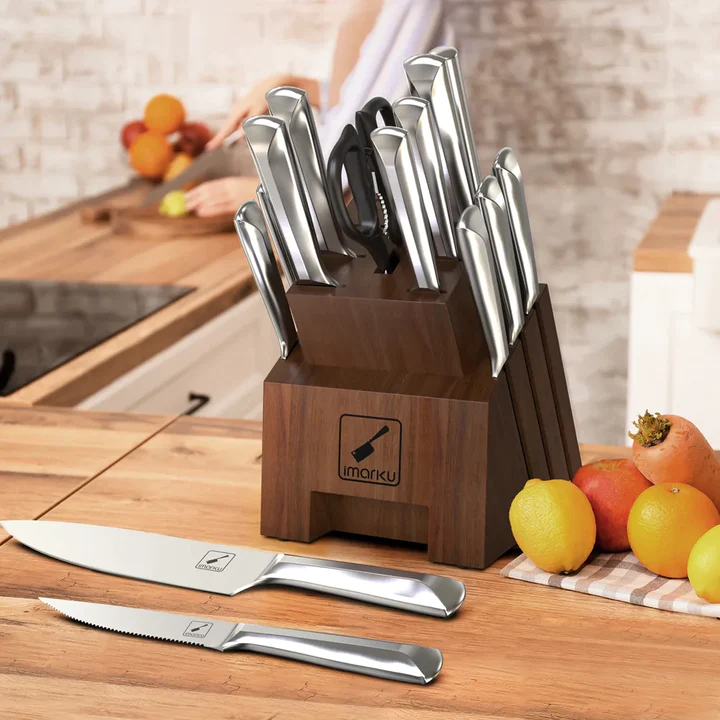
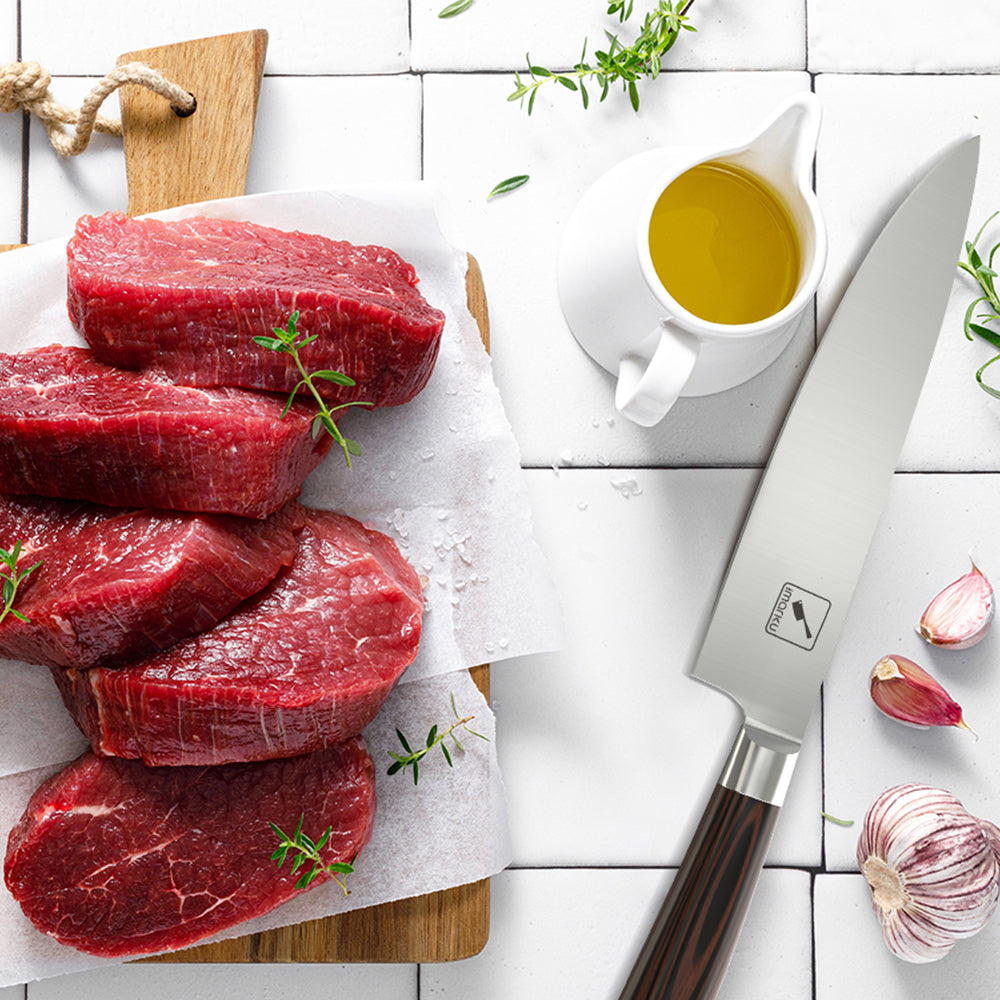
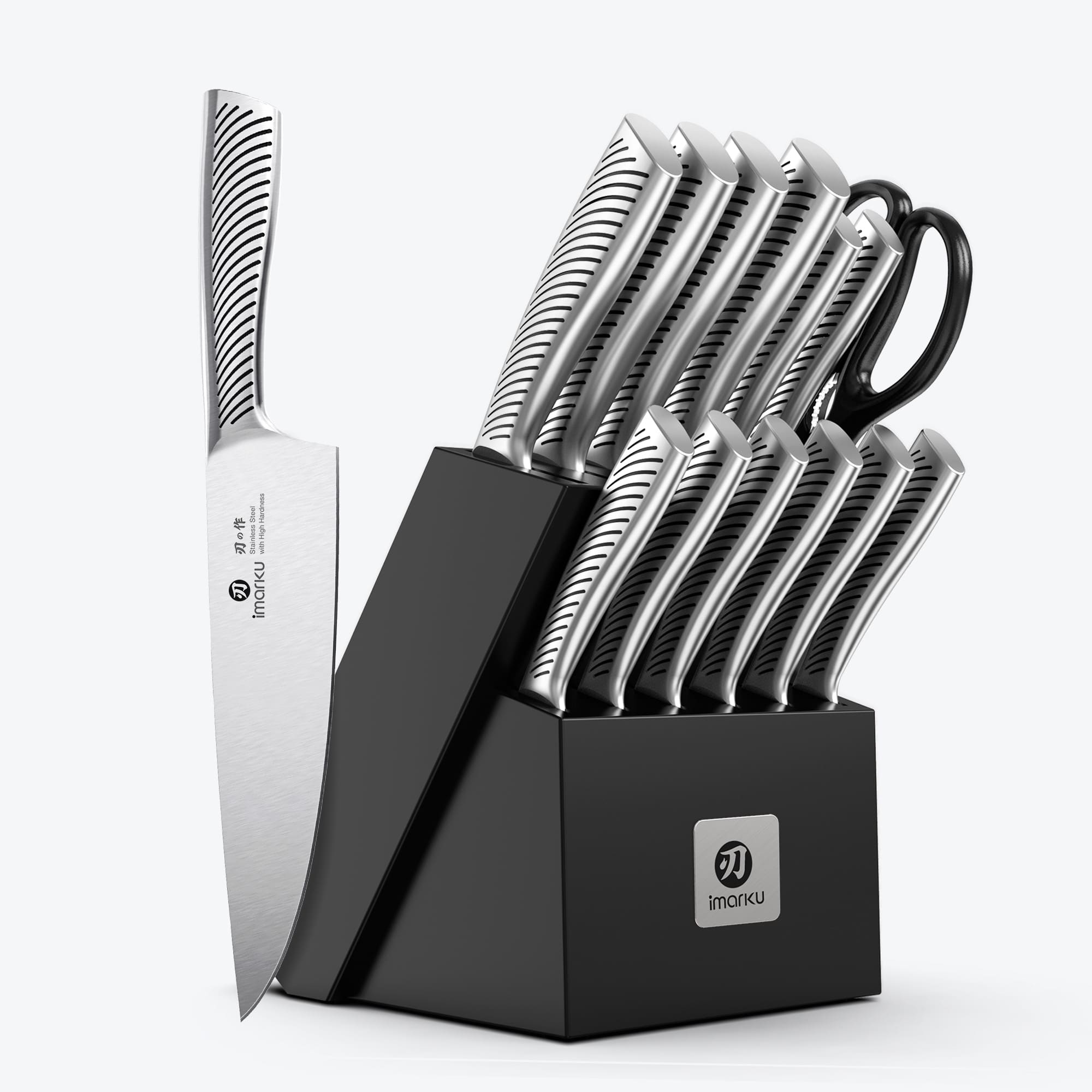
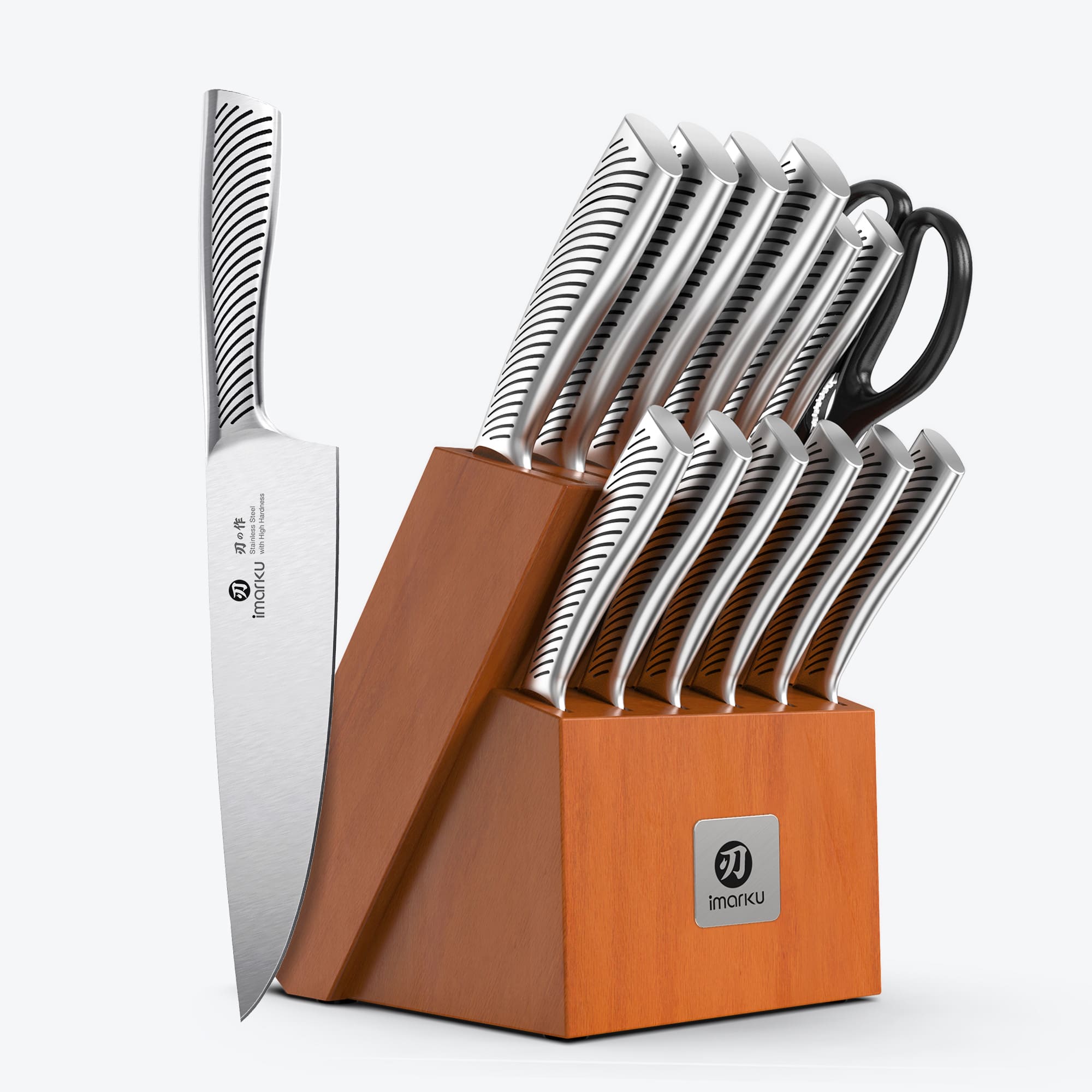
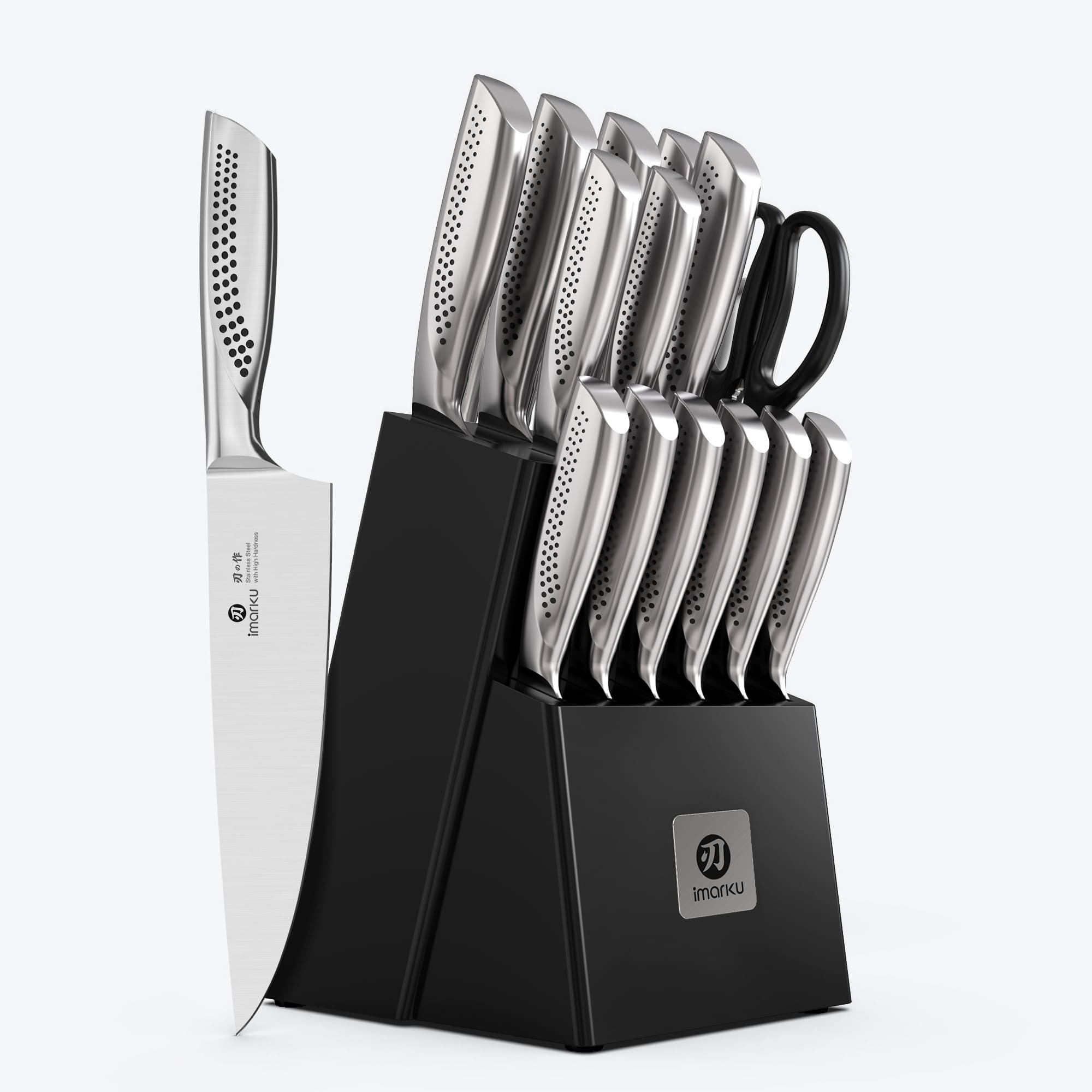
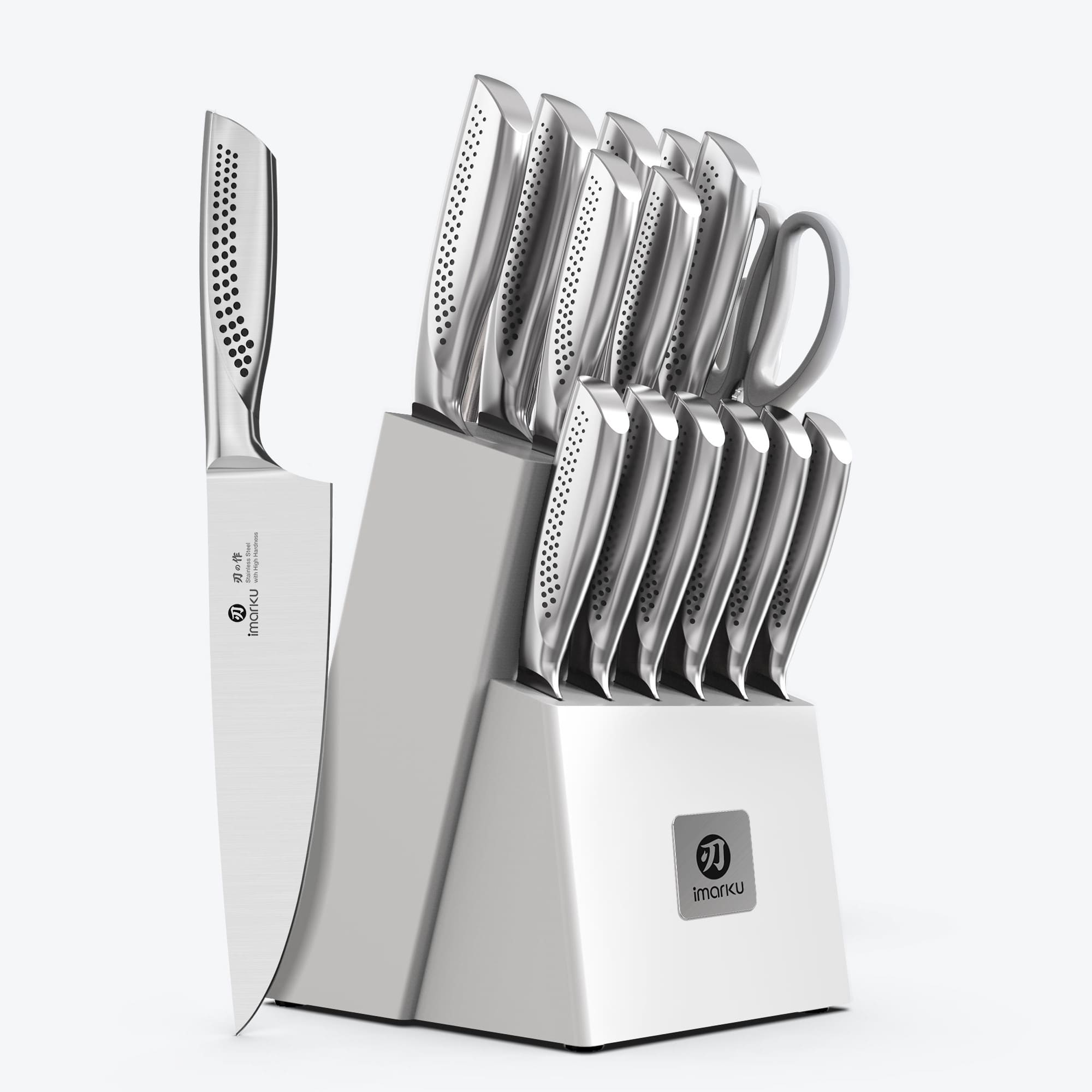
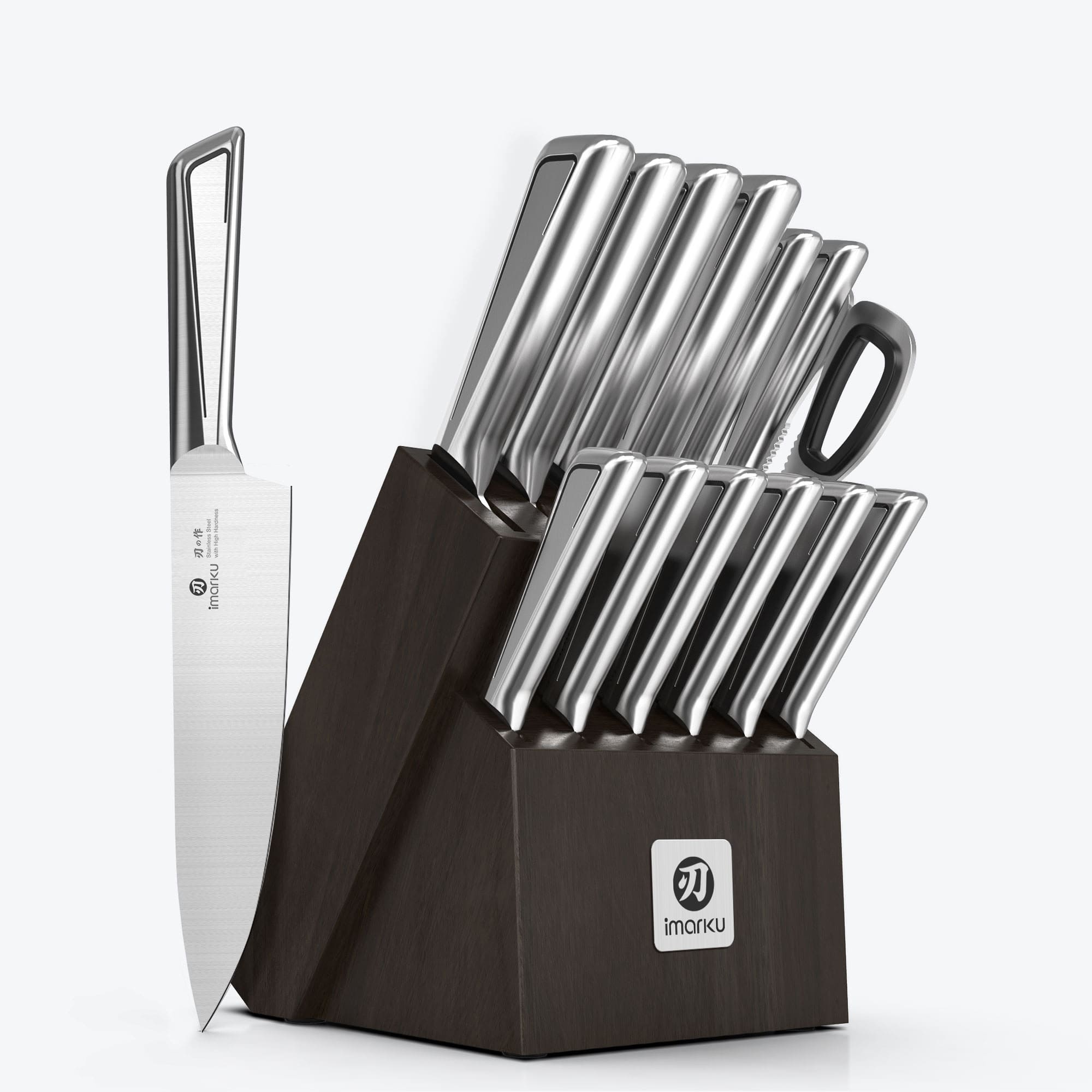
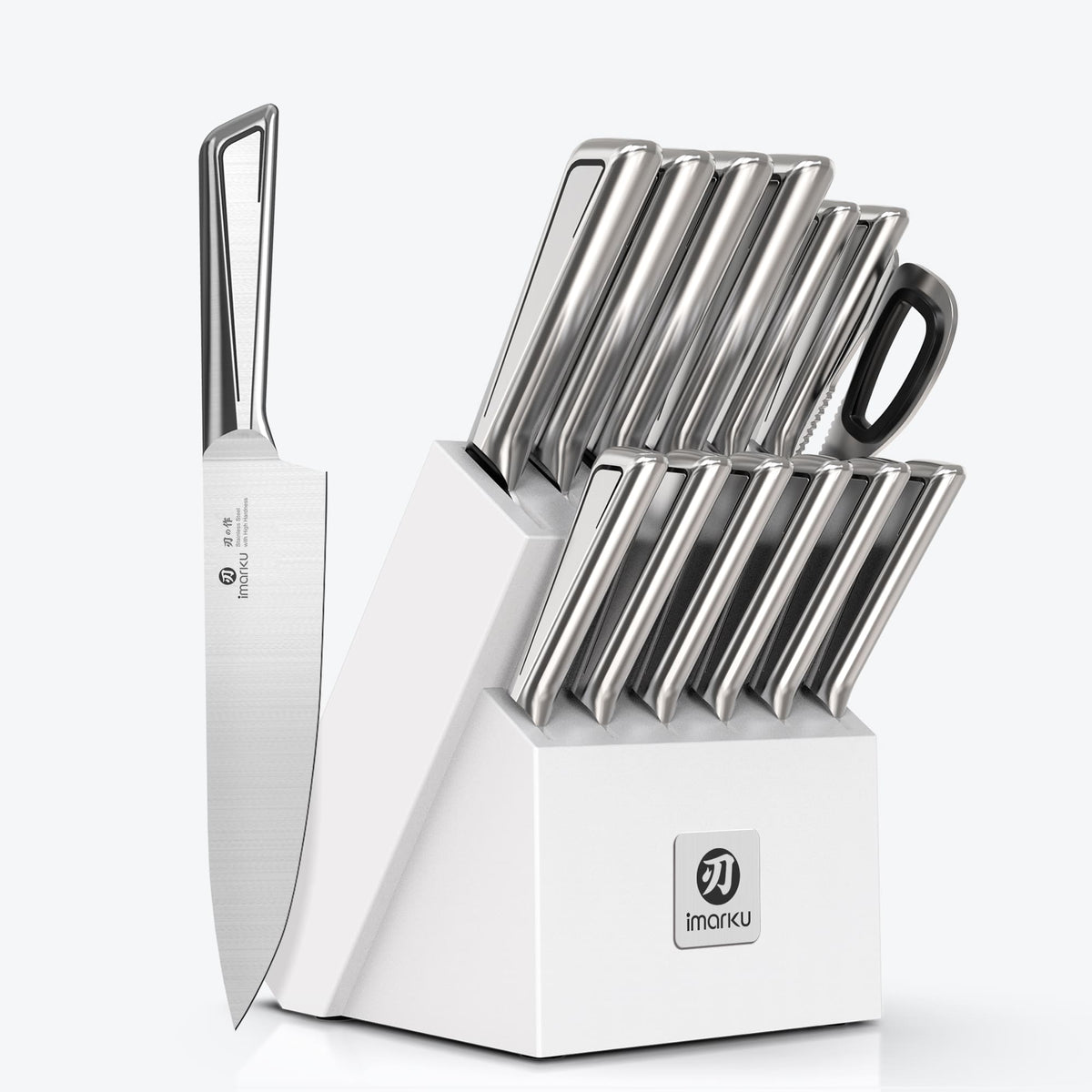
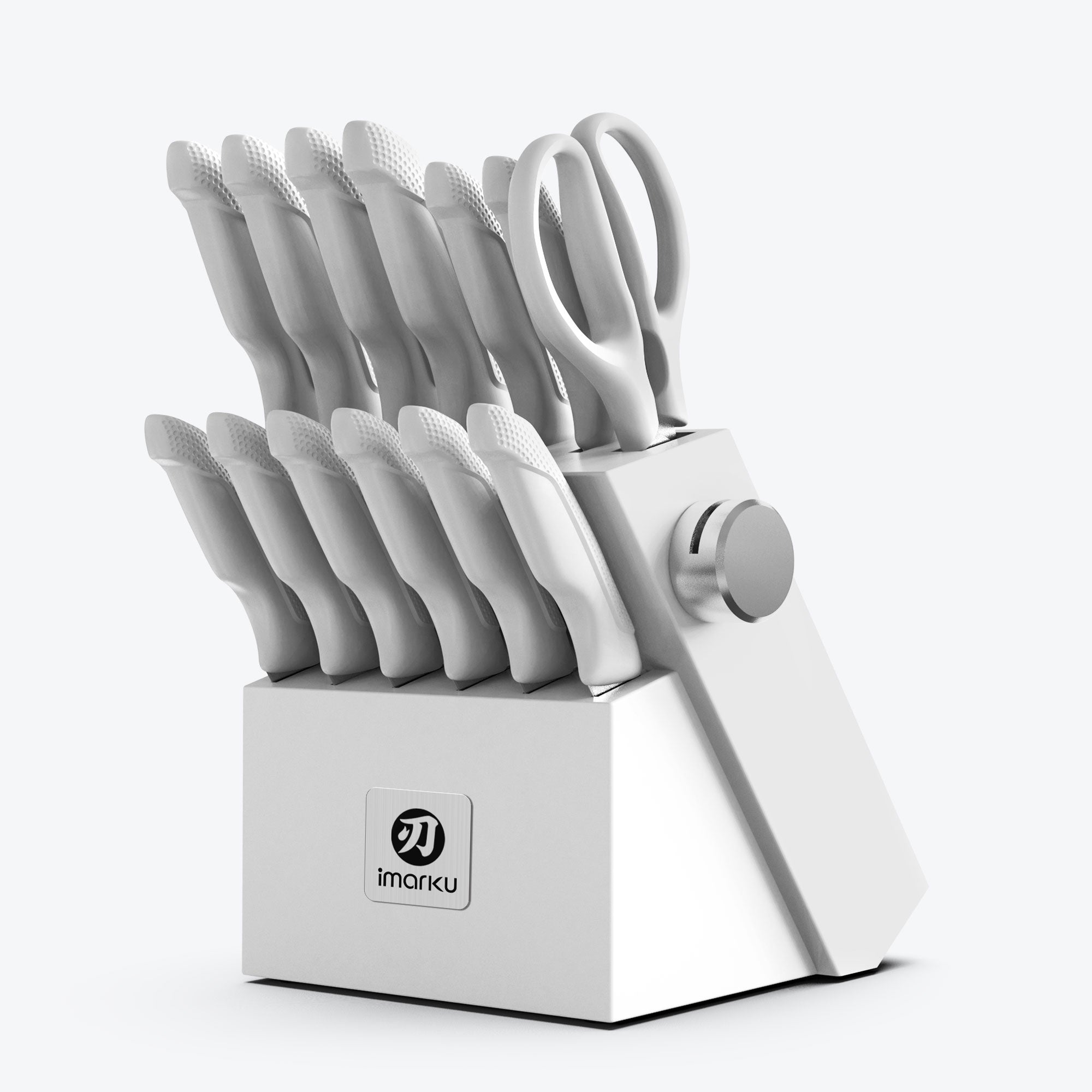
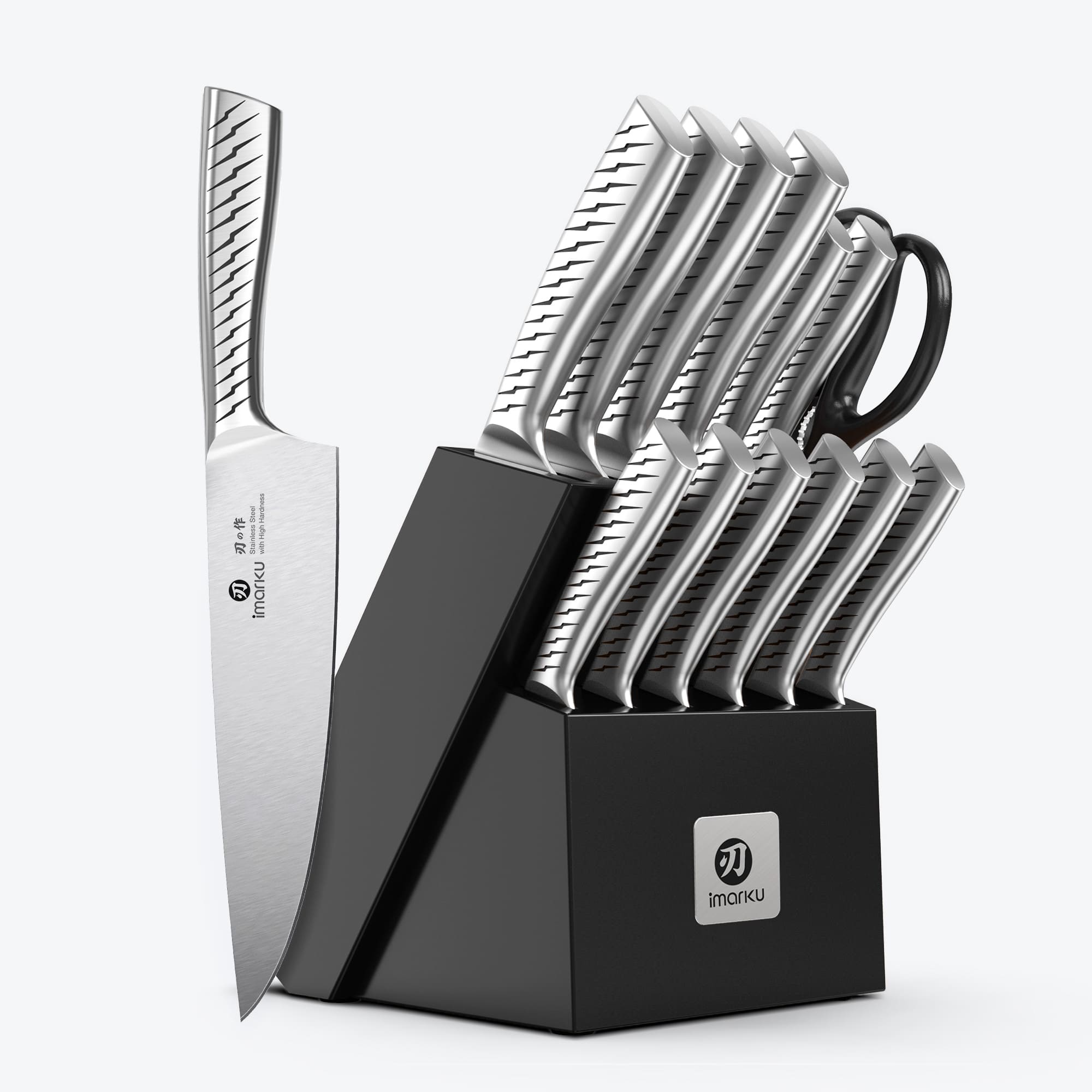
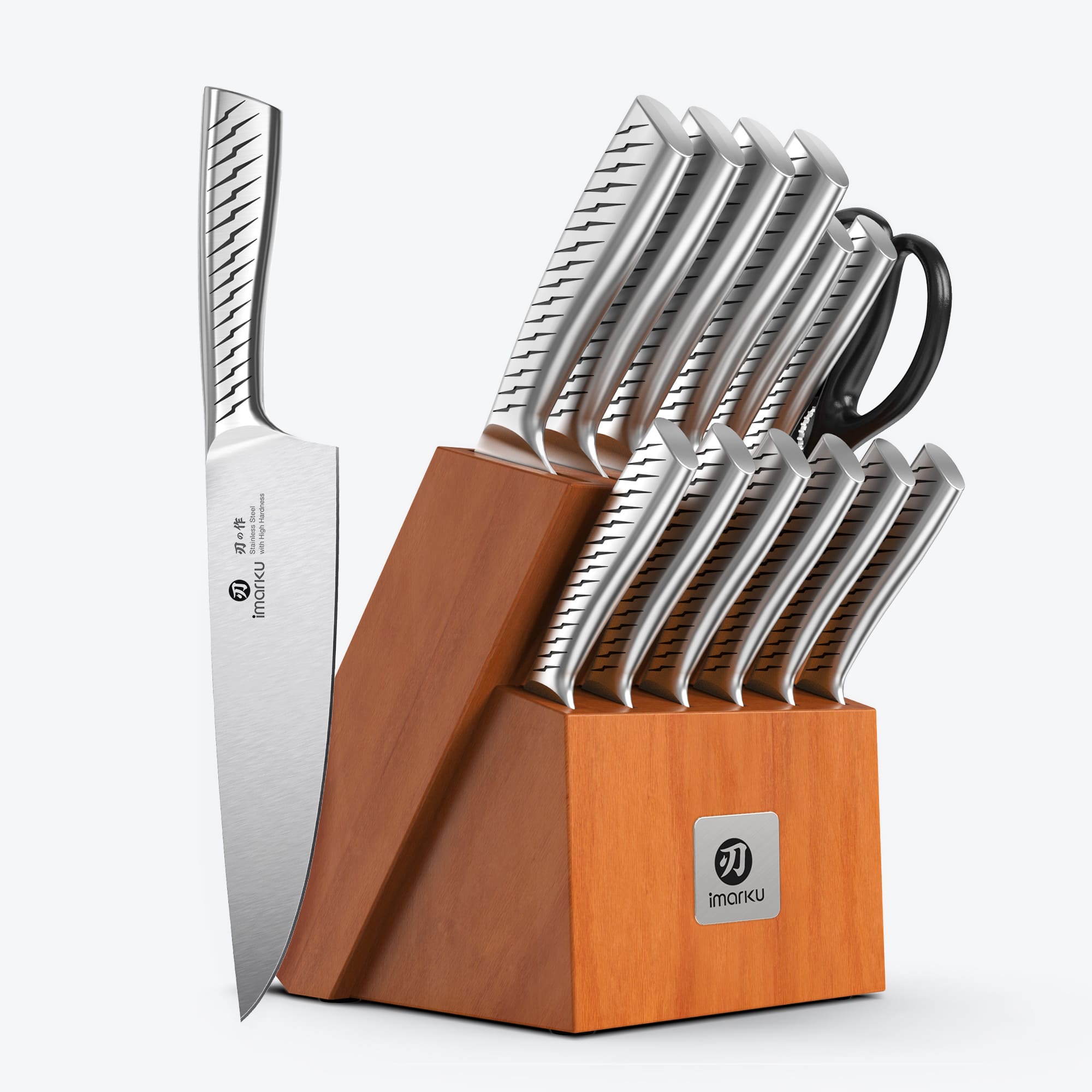
Imarku Brisket Slicing Knife

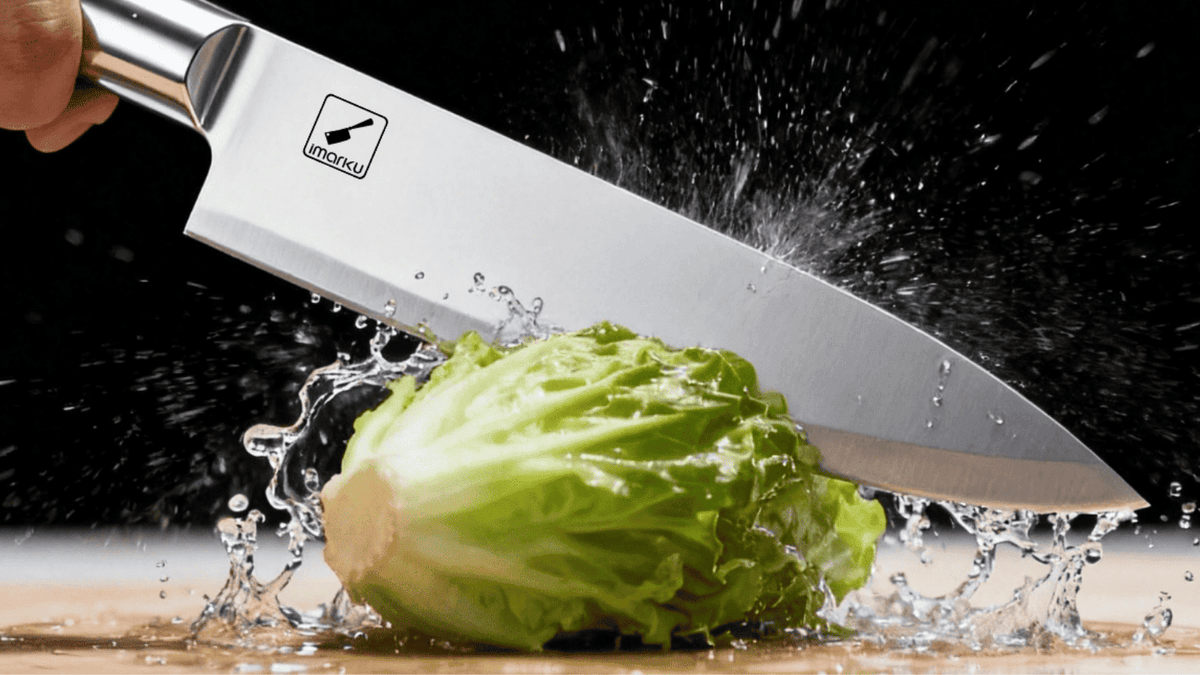
The Imarku brisket knife follows a true Japanese knife design, featuring a thinner, precision-ground blade that delivers clean, low-resistance cuts—ideal for standing rib roast carving where slice integrity matters.
In real use, it feels noticeably easier to control than heavier knives. The blade glides through the meat with minimal pressure, helping you achieve smooth, even slices while keeping juices inside the roast instead of on the cutting board. For home cooks aiming for a more refined, steakhouse-style presentation, it offers a strong balance of sharpness, comfort, and value.
Some users note that the difference becomes obvious on the first cut—“it slices through prime rib almost effortlessly, without tearing the meat”—while others highlight how manageable it feels even during longer carving sessions. This kind of feedback aligns with its design focus: delivering precise, consistent results without requiring professional-level technique.
Victorinox Fibrox Pro Slicing Knife

Victorinox’s Fibrox Pro series is known for consistent edge retention and user-friendly handling. The blade has a slight flexibility, which can be helpful when working around bones or uneven roast surfaces.
In real use, this flexibility makes the knife more forgiving, especially for less experienced users. It allows smoother adjustments during slicing, helping maintain uniform cuts without excessive pressure.
Shun Classic Slicing Knife

The Shun Classic slicing knife is a true Japanese knife, featuring a thinner and sharper blade profile compared to many Western alternatives. This allows for extremely precise, low-resistance slicing.
While carving, the knife produces very clean cuts with minimal tearing, enhancing both texture and presentation. However, it requires more careful handling and maintenance, making it better suited for users comfortable with higher-performance blades.
Wüsthof Classic Brisket Knife

The Wüsthof Classic brisket knife represents a more premium, precision-focused option. Its blade is relatively rigid, offering greater control when aiming for uniform, presentation-quality slices.
During use, this rigidity translates into cleaner, more deliberate cuts, especially when carving thicker portions of a standing rib roast. It’s well-suited for users who prioritize precision and long-term durability.
Dexter-Russell Sani-Safe Slicer

Dexter-Russell’s Sani-Safe slicer is built with durability as the primary focus. It’s commonly found in professional environments where tools are used frequently and need to withstand heavy use.
In practice, it may not feel as refined as higher-end knives, but it delivers consistent, reliable performance. For users who value function and longevity over aesthetics, it remains a dependable choice.
Cutluxe Artisan Series Slicing Knife

The Cutluxe Artisan slicer is designed with a strong emphasis on sharpness out of the box. Its granton edge helps reduce friction and prevents slices from sticking to the blade, which is particularly useful for fatty cuts like rib roast.
When carving, the knife moves cleanly through the meat with minimal resistance. This makes it easier to achieve thin, even slices while preserving the roast’s internal juices and texture.
A Subtle but Important Reality Check
There’s no single “perfect” standing rib roast cooking time—and any source that claims one should be treated cautiously.
What you can control is:
- Internal temperature tracking
- Cooking method consistency
- Proper resting
- Clean, precise slicing
Everything else—oven variation, meat structure, even humidity—introduces small variables that no fixed timing chart can fully predict.
Final Insight
If you shift your mindset from “How long should I cook it?” to “How do I control the outcome?”, your results will improve immediately.
Cooking determines doneness, but slicing determines experience. And for a cut as premium as a standing rib roast, both steps deserve equal attention.



Leave a comment
All comments are moderated before being published.
This site is protected by hCaptcha and the hCaptcha Privacy Policy and Terms of Service apply.