
TABLE OF CONTENTS
- >What Is Stainless Steel Cookware?
- >Is Stainless Steel Cookware Safe for Health?
- >Does Stainless Steel Leach Metals Into Food?
- >Why Tri Ply Stainless Steel Cookware Is Considered the Gold Standard
- >How to Use Stainless Steel Cookware Correctly
- >Can Stainless Steel Go in the Oven?
- >How to Clean Stainless Steel Cookware Without Damaging It
- >How to Maintain Stainless Steel Cookware Long-Term
- >Ceramic vs Stainless Steel Cookware
- >Is Stainless Steel Cookware Worth It?
- >Frequently Asked Questions (FAQ)
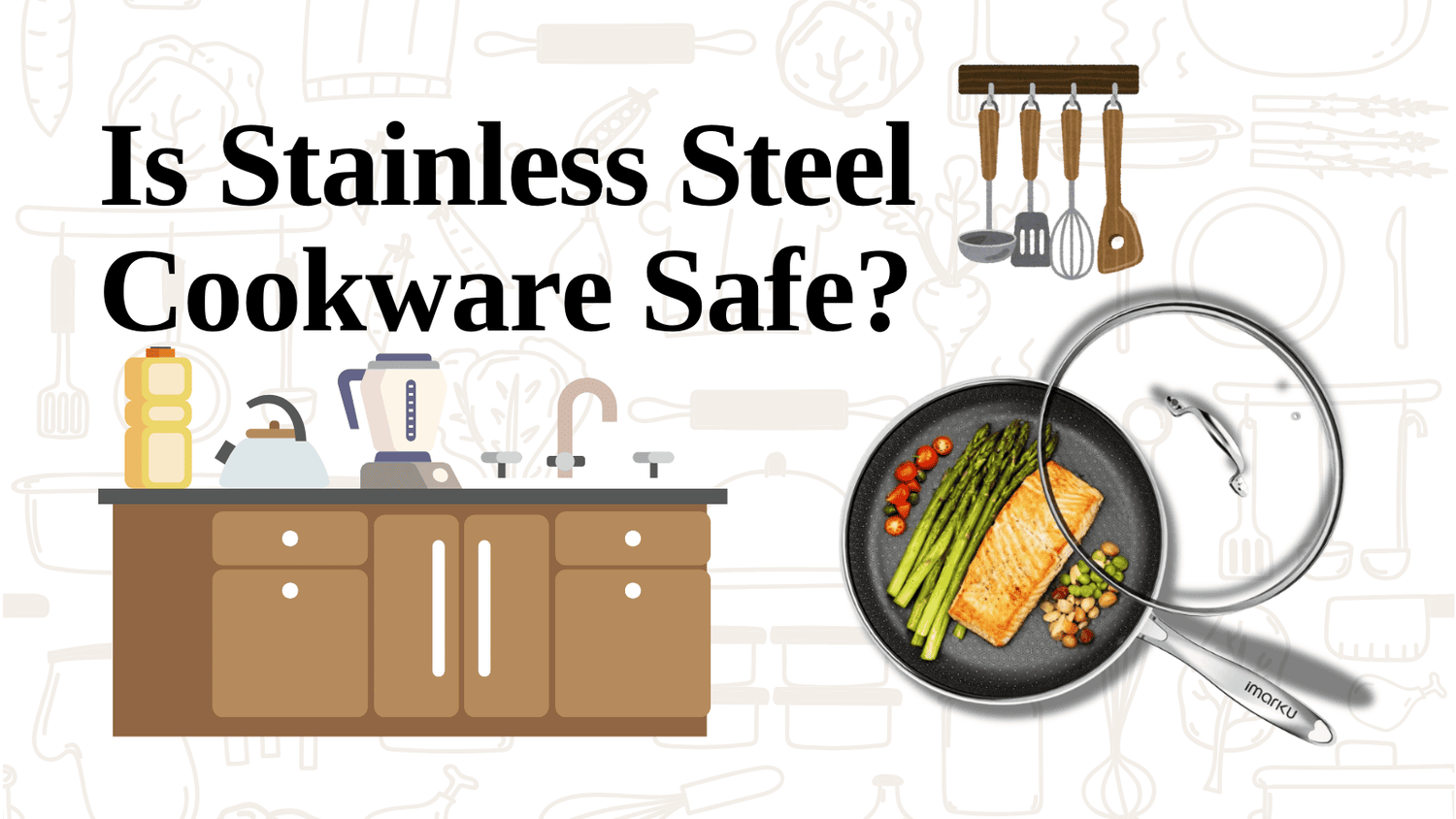
Stainless steel cookware has earned a permanent place in both professional kitchens and home cooking spaces. From restaurant-grade sauté pans to everyday stainless steel cookware sets sold to families, it’s often marketed as safe, durable, and non-toxic.
But is stainless steel cookware truly safe? Does it leach metals? Is tri ply stainless steel cookware better? How should it be used, cleaned, and maintained to protect both food quality and long-term health?
This article answers those questions with science, standards, and real-world cooking experience—not vague marketing claims.
What Is Stainless Steel Cookware?

Stainless steel cookware is made from an alloy primarily composed of:
- Iron
- Chromium (minimum 10.5%)
- Nickel (in many grades)
The chromium reacts with oxygen to form a passive oxide layer, which prevents rust and corrosion. This passive layer is the key reason stainless steel cookware is considered food-safe.
Common Stainless Steel Grades Used in Cookware
| Grade | Composition | Safety & Use |
| 18/10 | 18% chromium, 10% nickel | Most common, highly corrosion-resistant |
| 18/8 | Slightly less nickel | Safe, slightly less shiny |
| 18/0 | No nickel | Magnetic, used in induction bases |
Authoritative reference:
- U.S. Food & Drug Administration (FDA): Food-contact materials guidelines
- European Food Safety Authority (EFSA): Metals and alloys in food contact materials
Both institutions classify food-grade stainless steel as safe for cooking when properly manufactured.
Is Stainless Steel Cookware Safe for Health?

The Short Answer
Yes. For most households, stainless steel cookware is widely regarded as a safe and stable option for everyday cooking.
The reason is not because stainless steel is “perfect,” but because its material behavior under heat is well understood, predictable, and regulated. Food-grade stainless steel has been used in commercial kitchens, hospitals, and food processing equipment for decades, largely because it remains structurally stable when exposed to heat, moisture, and acidic ingredients.
Why Material Grade and Construction Matter
Not all stainless steel cookware behaves the same way. Safety and performance are influenced by both the steel composition and how the cookware is built.
In practical terms, cookware made with 18/8 stainless steel—which contains approximately 18% chromium and 8% nickel—is commonly used in food-contact applications because it offers a balance between corrosion resistance and structural stability. Chromium helps form a protective surface layer that resists rust, while nickel improves durability and consistency during repeated heating and cooling cycles.
From a user perspective, this means the cookware is less likely to pit, discolor prematurely, or react unpredictably with everyday ingredients when used under normal cooking conditions.
How Usage and Wear Affect Safety Over Time
Even high-quality stainless steel cookware is not completely “set and forget.” Its long-term safety depends on:
- Reasonable heat control (avoiding prolonged empty high-heat exposure)
- Regular cleaning to prevent residue buildup
- Retiring cookware that shows deep pitting or structural damage
When used and maintained properly, stainless steel cookware is generally considered a low-risk, long-life material for home cooking, rather than a surface that relies on coatings or chemical barriers to remain functional.
Does Stainless Steel Leach Metals Into Food?

Chromium & Nickel Migration — What the Science Says
Multiple studies have examined metal migration from stainless steel cookware into food. The most cited findings include:
Small amounts of nickel and chromium can leach, especially when:
- Cooking acidic foods (tomatoes, vinegar, wine)
- Using brand-new cookware
- Cooking for extended periods
However, the amounts detected are far below safety thresholds established by World Health Organization (WHO), EFSA and U.S. FDA.
Key study insight:
Initial leaching decreases significantly after the first few uses as the passive layer stabilizes.
Practical takeaway: Always wash and pre-boil new stainless steel cookware before first use.
Nickel Sensitivity — Who Should Be Cautious?
Individuals with severe nickel allergies may want to:
- Use nickel-free (18/0) stainless steel cookware
- Rotate with alternatives like ceramic-coated cookware
For those who are mindful of nickel exposure but do not have a diagnosed allergy, 18/8 stainless steel can be a reasonable middle-ground option. Compared with higher-nickel formulations, it contains a slightly lower nickel content while still providing the corrosion resistance and structural stability expected from food-grade stainless steel.
In everyday cooking scenarios, this balance is often considered suitable for people who prioritize a health-conscious lifestyle without requiring the complete elimination of nickel-containing materials. As with all cookware, proper use and maintenance remain more influential factors than material choice alone for long-term safety.
Why Tri Ply Stainless Steel Cookware Is Considered the Gold Standard

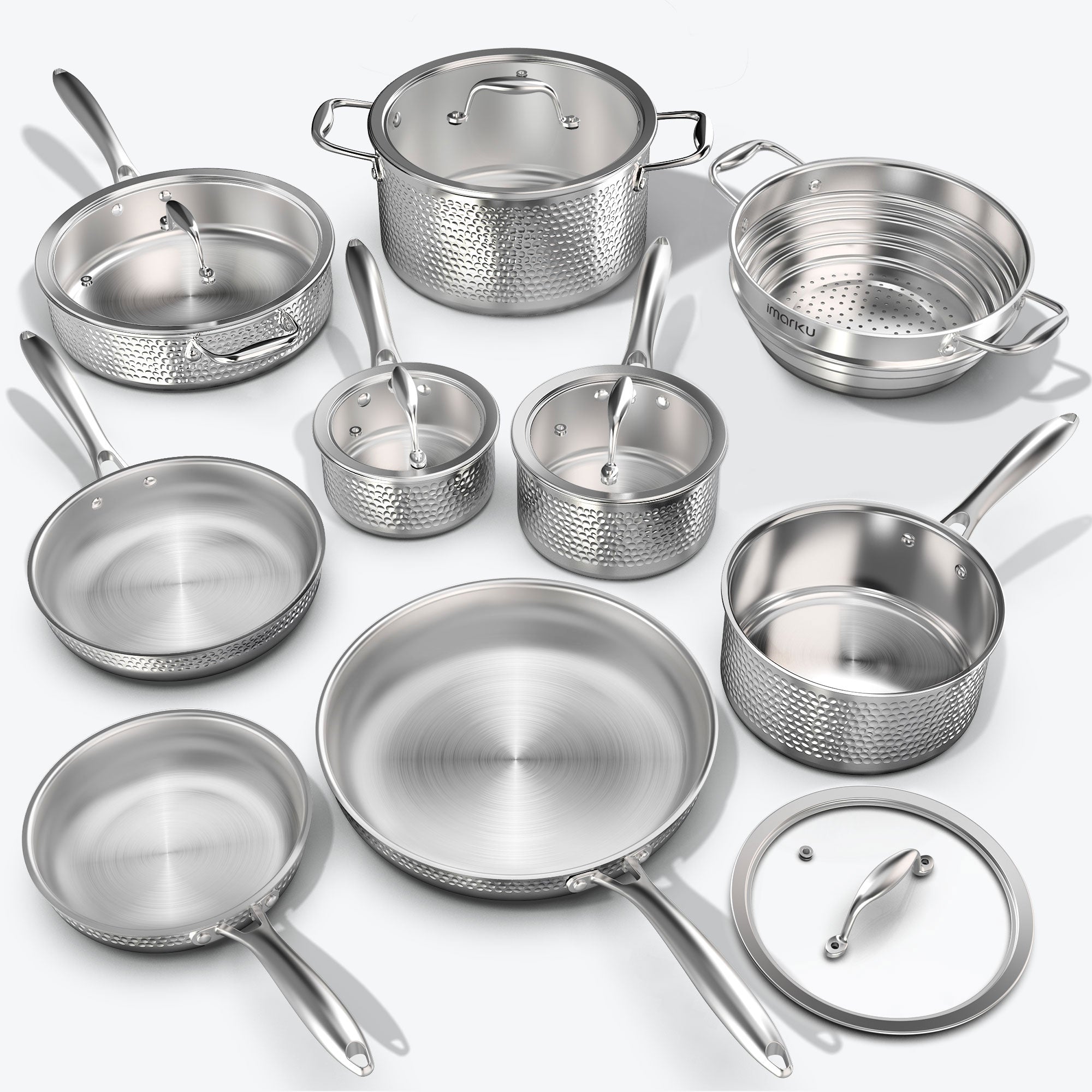
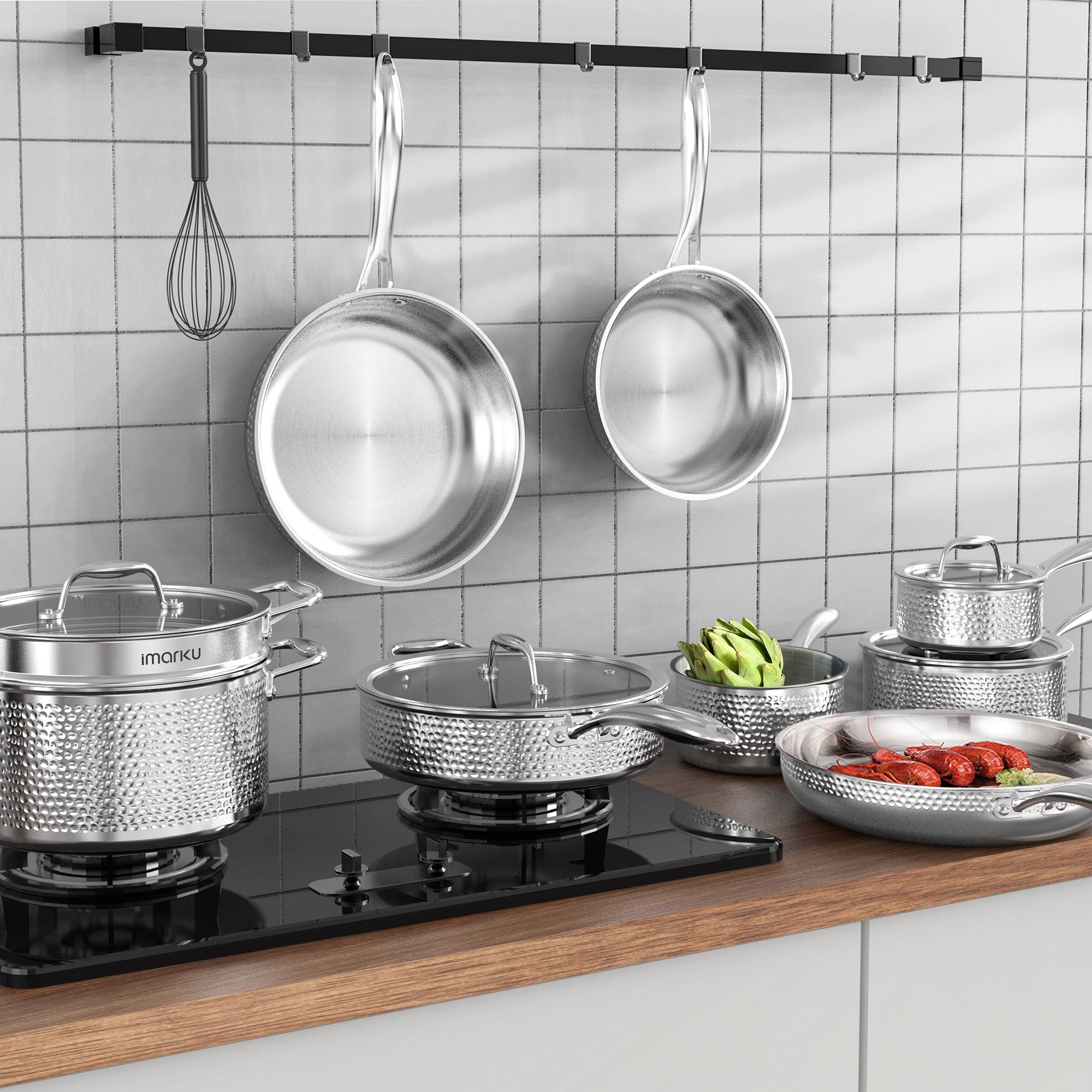
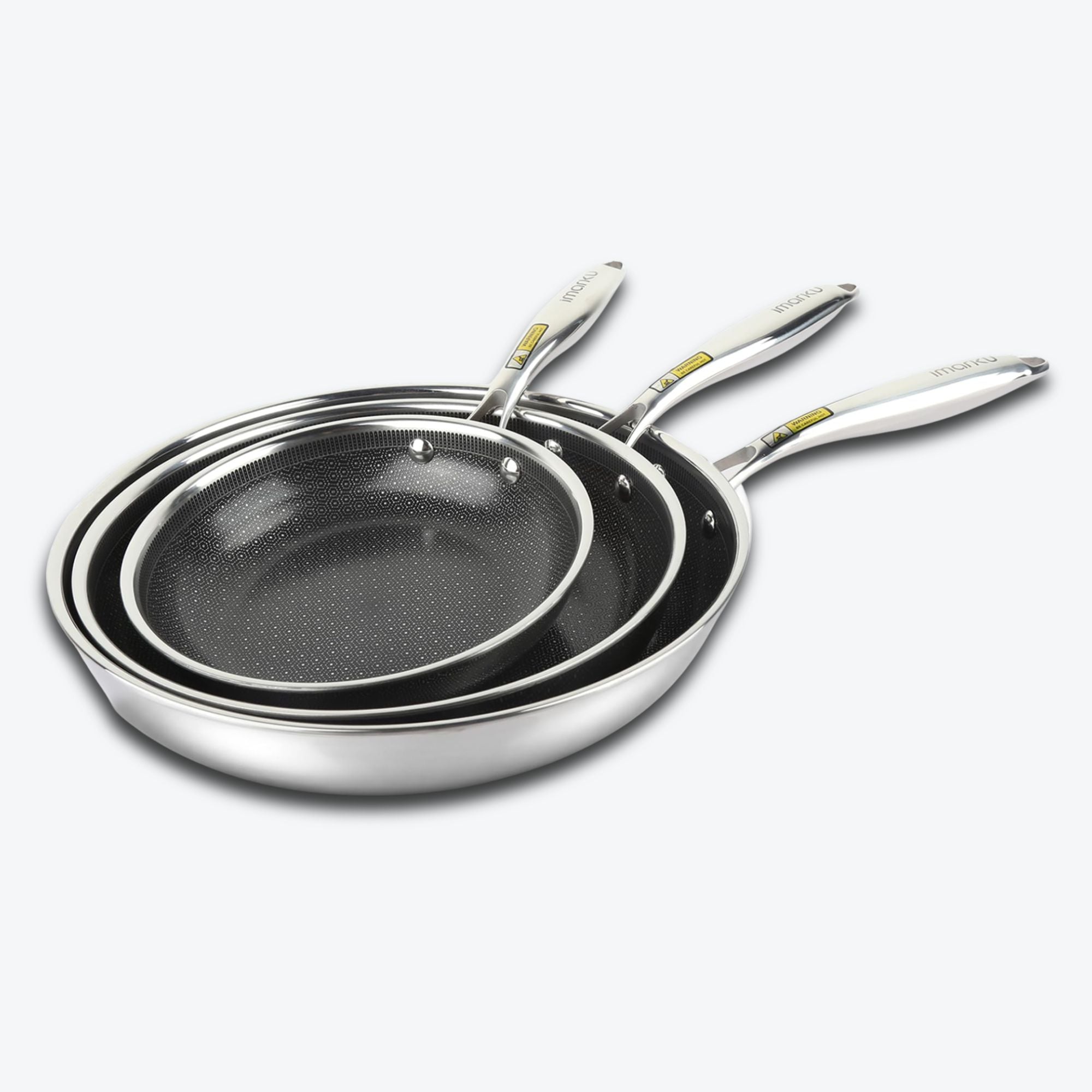
A tri ply stainless steel cookware (also called 3 ply stainless steel cookware) design consists of:
- Inner layer: Food-grade stainless steel (usually 18/10)
- Core layer: Aluminum or aluminum alloy
- Outer layer: Magnetic stainless steel (for induction compatibility)
Why This Matters for Safety and Performance
| Benefit | Why It Matters |
| Even heat distribution |
Reduces burning and hot spots |
| Lower cooking temperatures | Minimizes food degradation |
| Structural stability | Prevents warping and cracking |
| Long-term durability | Less surface damage over time |
From both a health and performance perspective, a high-quality tri ply stainless steel cookware set consistently outperforms single-layer steel pans.
How to Use Stainless Steel Cookware Correctly

Stainless steel cookware behaves differently from nonstick or coated surfaces. Understanding why it performs well in certain cooking scenarios helps set realistic expectations and reduces frustration during use.
Best Use Cases — And Why They Work
Searing meats
Stainless steel handles high, sustained heat without surface degradation. When preheated properly, it allows proteins to form an initial bond with the pan, which promotes even browning. As moisture releases during cooking, the food naturally detaches, leaving behind a flavorful browned residue (fond).
Pan sauces
That same fond left after searing becomes an advantage. Stainless steel does not absorb flavors or degrade when exposed to acidic liquids like wine, vinegar, or stock, making it well-suited for deglazing and building sauces directly in the pan.
Stir-frying vegetables
Unlike coated cookware, stainless steel tolerates repeated temperature changes. This makes it suitable for quick sautéing where ingredients are added in stages and heat levels fluctuate. Proper oil management helps prevent sticking while maintaining surface integrity.
Deglazing with wine or stock
Stainless steel’s non-porous surface allows liquid to release browned bits efficiently without reacting with the cookware. This process is harder to achieve consistently on nonstick surfaces, where fond formation is limited by design.
Foods That Perform Especially Well
Chicken thighs & steak
These proteins benefit from sustained contact with heat. Stainless steel encourages uniform browning rather than steaming, which improves texture and flavor development.
Mushrooms
Mushrooms release moisture as they cook. Stainless steel allows that moisture to evaporate efficiently, helping achieve a more concentrated flavor instead of a soggy result.
Garlic and aromatics
When heat is controlled, stainless steel provides predictable response times, making it easier to manage brief sautéing without scorching—especially when combined with oil added after preheating.
Tomato-based sauces
Despite common concerns, stainless steel is generally suitable for acidic foods. High-quality food-grade stainless steel resists corrosion, and brief to moderate contact with tomatoes during normal cooking does not compromise the surface or food quality.
Real Observation from Long-Term Use
- ❌ Crank heat to maximum immediately
- ❌ Add cold food to an underheated pan
- ❌ Leave empty pan on high heat
Conclusion
After years of routine home cooking and extended cookware testing for editorial and product analysis purposes, stainless steel consistently shows one clear pattern:
it rewards technique rather than masking mistakes.
While nonstick cookware can reduce sticking in the short term, stainless steel offers more consistent browning, better flavor development, and no reliance on surface coatings that wear down over time. Once heat control and timing are understood, the cooking results become repeatable and predictable across a wide range of dishes.
Can Stainless Steel Go in the Oven?

In everyday cooking, oven use is often less about a specific temperature limit and more about how the cookware is constructed. Fully stainless steel cookware is generally designed to tolerate high heat, which is why it is commonly used for techniques that transition from stovetop to oven, such as finishing a seared protein or baking after sautéing.
Whether can you put stainless steel in the oven safely usually depends on details that are easy to overlook—such as handle materials, lid construction, and whether any non-metal components are involved. Cookware made entirely from stainless steel typically handles oven temperatures up to around 500°F (260°C) without structural issues, while glass lids or silicone-wrapped handles may lower that threshold.
For this reason, oven safety is less about stainless steel as a material and more about the specific design choices of the cookware. Checking manufacturer guidelines remains important, especially when higher temperatures or longer oven times are involved.
How to Clean Stainless Steel Cookware Without Damaging It

Improper cleaning is the #1 reason people think stainless steel is “hard to maintain.”
Daily Cleaning Checklist
- Warm water
- Mild dish soap
- Soft sponge or cloth
- Dry immediately to avoid water spots
Deep Cleaning (Burnt Food or Stains)
Vinegar Method
- Add water + 1 cup white vinegar
- Simmer for 5 minutes
- Cool, then scrub gently
Baking Soda Paste
- Baking soda + water
- Apply, wait 15 minutes
- Gently scrub
Avoid:
- Steel wool
- Chlorine bleach
- Oven cleaner
How to Maintain Stainless Steel Cookware Long-Term

Stainless steel cookware is often described as “low maintenance,” but that does not mean it performs best without care. Its durability comes from material stability, while its long-term condition depends largely on how stress, residue, and moisture are managed over time.
Proper maintenance is less about frequent polishing and more about preventing small, cumulative issues—such as heat distortion, mineral buildup, or surface pitting—from becoming permanent.
Monthly Maintenance Routine — What to Check and Why It Matters
Inspect for warping
Repeated exposure to rapid temperature changes can gradually stress the metal, especially on thinner bases. A quick visual and flat-surface check helps catch early signs of warping, which can affect heat distribution and stovetop contact if left unaddressed.
Polish only when needed
Stainless steel naturally develops heat marks and water stains over time. Occasional polishing is optional and mainly cosmetic, but it can help remove mineral deposits that may otherwise harden and become more difficult to clean later. This is particularly relevant in areas with hard water.
Tighten handle screws if applicable
Handles experience constant thermal expansion and contraction during cooking. Over time, this can loosen fittings slightly. Checking and tightening screws helps maintain stability and prevents unnecessary strain on the cookware body.
Taken together, these steps focus on preserving structural integrity, rather than keeping the cookware visually perfect.
Storage Best Practices — Preventing Long-Term Surface Damage
Use pan protectors when stacking
Although stainless steel is scratch-resistant, repeated metal-on-metal contact can create fine abrasions over years of stacking. Using simple pan protectors helps preserve the cooking surface and reduces cosmetic wear without altering functionality.
Avoid storing cookware with salty residue
Salt left on the surface—especially in a damp environment—can compromise the protective chromium oxide layer over time. Rinsing and drying cookware before storage minimizes the risk of localized corrosion or pitting.
Keep cookware fully dry
Moisture itself does not damage stainless steel, but trapped water combined with minerals or food residue can leave marks or discoloration. Allowing cookware to air-dry briefly or towel-drying before storage helps prevent this buildup.
Long-Term Outcome With Consistent Care
When these basic practices are followed, a stainless steel cookware set typically maintains both performance and structural stability for decades. In many households, properly maintained stainless steel cookware remains fully functional for 20–30 years or longer, not because it avoids wear entirely, but because potential issues are addressed before they accumulate.
Ceramic vs Stainless Steel Cookware

When choosing cookware, stainless steel and ceramic are often discussed as two distinct categories. In reality, the comparison is less about which material is “better,” and more about how different material structures support different cooking habits and priorities.
Understanding how each material behaves under heat, moisture, and repeated use helps set realistic expectations—especially for households that cook frequently or use multiple cooking methods.
Stainless Steel Cookware — Material Characteristics
Stainless steel cookware is valued for its structural stability and material consistency. As a metal alloy, it does not rely on surface coatings to function, which allows it to tolerate high temperatures, rapid heat changes, and long cooking times without degrading.
In everyday use, stainless steel performs particularly well when:
- High heat or sustained heat is required
- Browning, searing, or deglazing is part of the cooking process
- Cookware needs to move between stovetop and oven
Because there is no coating involved, changes in appearance over time—such as heat marks or discoloration—are typically cosmetic rather than functional. With reasonable care, stainless steel cookware tends to remain usable for decades, which is why it is commonly found in both home kitchens and professional settings.
Ceramic-Coated Cookware — Material Structure and Use

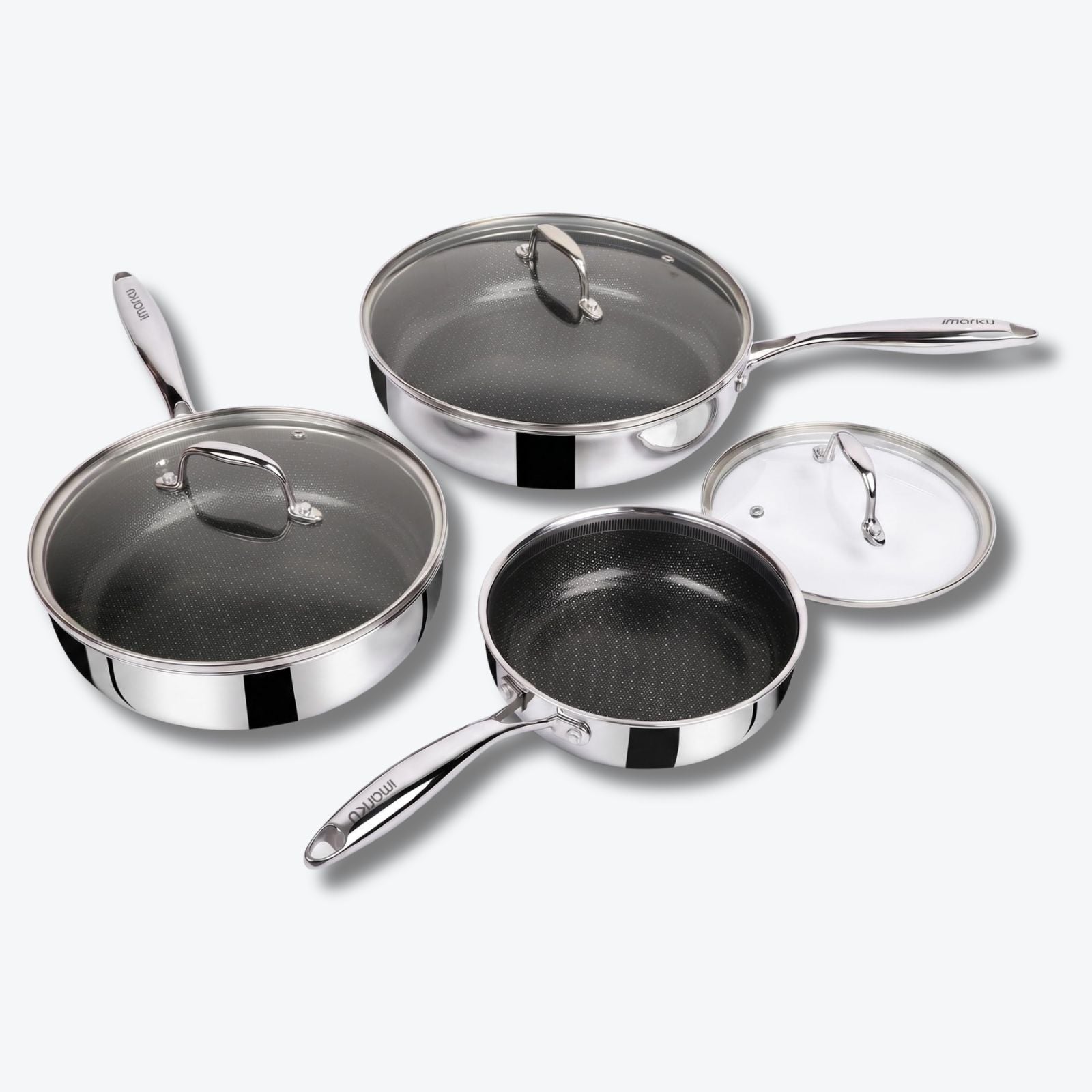
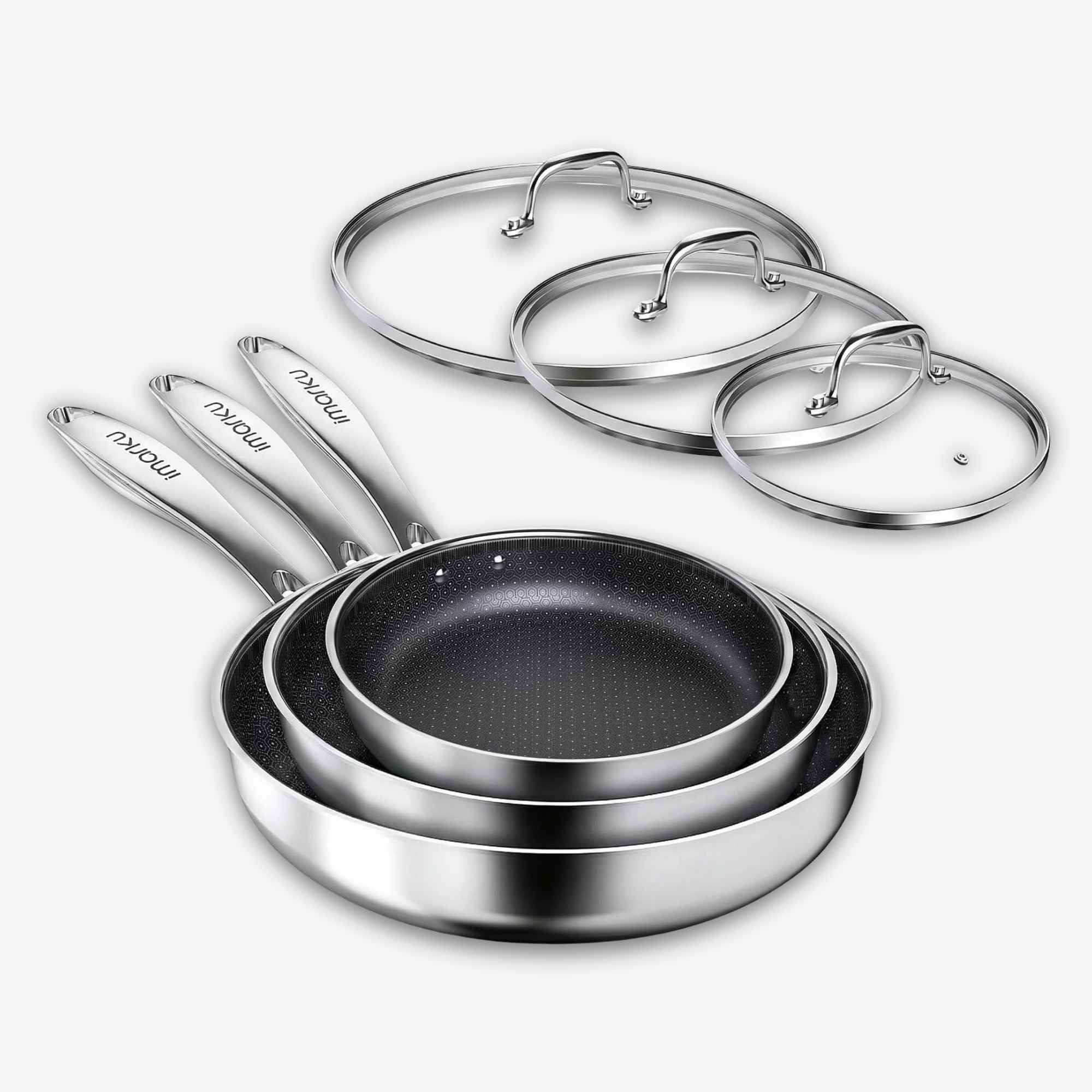
Ceramic cookware is often associated with a smoother cooking surface and easier food release. In many modern designs, the cooking surface is a ceramic-based coating, while the underlying body remains stainless steel. This construction combines two material behaviors rather than relying on ceramic alone.
From a functional standpoint, ceramic-coated stainless steel cookware offers:
- A smoother surface that reduces sticking, especially for delicate foods
- Easier cleanup in short- to medium-term use
- More forgiving performance for low- to moderate-heat cooking
Because the ceramic layer functions as a surface treatment, its long-term performance depends on heat management, utensil choice, and cleaning habits. When used within recommended temperature ranges and cleaned gently, ceramic-coated cookware can maintain its cooking characteristics for extended periods.
When a Ceramic-Coated Stainless Steel Construction Makes Sense
Cookware that combines a ceramic cooking surface with a stainless steel body is often chosen by users who want a balance between material stability and surface convenience.
The stainless steel structure provides:
- Mechanical strength
- Resistance to warping
- Compatibility with different stovetops
Meanwhile, the ceramic coating offers:
- Reduced sticking without traditional nonstick chemicals
- A smoother surface for everyday cooking tasks
This type of construction does not replace fully stainless steel cookware, nor does it aim to. Instead, it serves a different role in the kitchen, particularly for cooks who value ease of use while still preferring a metal-based foundation.
Practical Perspective: Choosing Based on Cooking Style
Rather than viewing stainless steel and ceramic as opposing options, many kitchens use both materials for different tasks:
- Stainless steel is often preferred for searing, sauces, and higher-heat applications
- Ceramic-coated cookware is commonly used for lighter cooking, eggs, vegetables, or quick meals
From a material standpoint, both approaches are well-established and widely used. The most suitable choice depends less on safety concerns and more on how often the cookware is used, at what temperatures, and for which types of dishes.
Summary Comparison
| Aspect | Stainless Steel | Ceramic-Coated |
| Surface type | Uncoated metal | Ceramic coating |
| Heat tolerance | High | Moderate |
| Cooking style | Searing, sauces, oven use | Low–medium heat, easy release |
| Maintenance | Technique-based | Care-based |
| Long-term role | Structural durability | Surface convenience |
Is Stainless Steel Cookware Worth It?

From a professional and editorial perspective, the long-term value of stainless steel cookware is less about short-term convenience and more about material reliability over repeated use. Its continued presence in both home kitchens and commercial environments is the result of consistent performance rather than changing trends.
One of the primary reasons stainless steel cookware is often regarded as a dependable option lies in its material stability. As an uncoated metal surface, it does not rely on applied layers to perform. This allows it to withstand high cooking temperatures, frequent heating and cooling cycles, and prolonged contact with moisture or acidic ingredients without structural breakdown.
Construction also plays a meaningful role. A well-built tri ply stainless steel cookware set, which layers stainless steel around an aluminum core, addresses one of the material’s historical limitations—uneven heat distribution. By improving heat responsiveness and consistency, this construction reduces localized overheating, which in turn supports more controlled cooking and minimizes surface stress over time.
Equally important is how stainless steel cookware interacts with everyday cooking behavior. Unlike coated cookware, it responds directly to heat management and technique. When used with moderate temperature control and routine cleaning, performance remains stable across years of use rather than declining as a surface wears down.
From a lifecycle perspective, stainless steel cookware is often retained and used for decades. Wear tends to be cosmetic rather than functional, and maintenance focuses on preservation rather than replacement. This long service life, combined with established safety standards from health and food-contact authorities, explains why stainless steel cookware continues to be considered a low-risk, long-term kitchen material rather than a disposable solution.
In practical terms, stainless steel cookware proves most reliable when:
- The cookware is properly constructed, such as in tri ply stainless steel designs
- Heat is applied deliberately rather than excessively
- Cleaning and storage prevent residue buildup and surface stress
Under these conditions, stainless steel cookware remains a consistent and predictable tool, valued not for novelty, but for durability and material integrity over time.
Frequently Asked Questions (FAQ)

Is stainless steel cookware safe for everyday cooking?
Yes. Food-grade stainless steel is approved by the FDA and EFSA for daily use.
Does stainless steel cookware contain toxins?
No. It contains no PFAS, PFOA, or synthetic coatings.
Is tri ply stainless steel cookware safer than single-layer?
Yes. Tri ply construction improves heat control and structural stability.
Can acidic foods damage stainless steel cookware?
No. Acidic foods are safe, though slight metal migration may occur well below safety limits.
Is stainless steel cookware safe for high heat cooking?
Yes. Stainless steel tolerates high temperatures better than most cookware materials.
Is stainless steel safe for induction cooktops?
Yes — especially tri ply stainless steel cookware with a magnetic base.





Leave a comment
All comments are moderated before being published.
This site is protected by hCaptcha and the hCaptcha Privacy Policy and Terms of Service apply.