

Japanese knives are not simply kitchen tools—they are the physical embodiment of metallurgy, cultural discipline, and generational craftsmanship. After more than a decade of reviewing, testing, and writing professionally about kitchen cutlery for e-commerce brands, specialty retailers, and long-form editorial platforms, one pattern remains consistent: when performance, edge retention, and cutting precision truly matter, chefs turn to Japanese knives.
This guide goes far beyond surface-level lists. It is built on hands-on testing, steel analysis, manufacturing origin research, and real user feedback across professional and home kitchens. If you are searching for the best japanese knife brand for your needs—whether professional prep work or refined home cooking—this article provides a structured, evidence-based framework to help you decide with confidence.
How This Ranking Was Built

Each japanese knife brand was assessed across 7 measurable dimensions, weighted based on professional kitchen relevance:
| Criterion | Weight |
| Steel quality & heat treatment | 25% |
| Edge geometry & sharpness retention | 20% |
| Craftsmanship & consistency | 25% |
| Ergonomics & balance | 10% |
| Innovation vs tradition balance | 10% |
| Long-term user feedback & chef adoption | 10% |
Japanese Knife Craftsmanship

Before comparing individual brands, it is essential to understand why Japanese knives feel, cut, and age differently from their Western counterparts. The answer lies not only in metallurgy or blade geometry, but in a deeply rooted craft culture that values precision, restraint, and lifelong mastery.
Japanese knife-making is not an industrial shortcut—it is a continuation of a philosophy that has evolved for centuries, shaped by samurai swordsmithing, regional guild systems, and an almost spiritual respect for tools.
When evaluating any best japanese knife brand, understanding this cultural foundation is just as important as understanding steel types.
The Spirit of Shokunin: Craft Before Scale
At the core of Japanese knife culture is the concept of Shokunin (職人)—a craftsman who dedicates an entire life to perfecting a single skill. In traditional knife-making regions such as Sakai or Echizen, it is common for artisans to spend 10–15 years mastering just one step of the process, whether forging, heat treatment, or sharpening.
Rather than scaling production for speed, many japanese knife brands rely on specialized, multi-craftsman workflows, where each knife reflects collective expertise. This mindset prioritizes responsibility, consistency, and quiet excellence over volume—an approach that directly shapes cutting performance and long-term reliability.
Steel Hardness Is a Cultural Choice, Not a Marketing Gimmick
Japanese knives are known for higher hardness levels, often HRC 60–65, but this is not simply a technical decision—it reflects how tools are meant to be used. Traditional Japanese cuisine emphasizes clean cuts, minimal ingredient damage, and refined presentation, all of which benefit from harder steel and finer edge angles.
This design philosophy assumes that the user will respect the tool: proper cutting technique, suitable surfaces, and regular maintenance. As a result, many japanese knife brands intentionally favor sharpness and edge retention over abuse tolerance, rewarding skill and care rather than brute force.
Precision Geometry and Respect for Tools
Japanese blade geometry tends to be thinner, lighter, and more precise than Western knives. Influenced by traditional single-bevel blades and even sword-making heritage, this approach allows the knife to glide through food instead of forcing it apart.
Just as importantly, Japanese culture treats knives as long-term companions, not disposable tools. Many chefs use the same knife for 20 years or more, refining it through repeated sharpening. This respect for tools—where maintenance is part of ownership—is deeply embedded in every serious japanese knife brand and explains why longevity and sharpenability matter as much as initial sharpness.
Top 10 Best Japanese Knife Brands
Shun (KAI Corporation)

Shun originates from Seki City, a place often described as the historical heart of Japanese blade-making. For centuries, Seki was home to swordsmiths whose techniques later evolved into kitchen knife production, and that lineage still informs how Shun approaches steel, edge geometry, and finishing today. Backed by KAI Corporation’s long manufacturing history, Shun benefits from both traditional metallurgical knowledge and modern process control, allowing it to scale globally without losing consistency.
From a materials standpoint, Shun is best known for its use of advanced stainless steels developed specifically for kitchen performance, paired with carefully calibrated heat treatment that balances hardness and durability. The knives are sharpened to relatively acute angles by Western standards, yet remain forgiving enough for everyday use. This combination reflects a conscious design philosophy: preserving the cutting clarity associated with Japanese knives while adapting them to contemporary, international kitchens.
Culturally, Shun plays an important role in shaping how Japanese knives are understood outside Japan. Rather than positioning itself as an exclusive artisan brand, it acts as a cultural translator, introducing Japanese knife principles—precision, balance, and respect for materials—to a much wider audience.
Miyabi

Miyabi knives are produced in Seki, Japan, but their identity is shaped by a dialogue between Japanese craftsmanship and German engineering discipline. Developed under the Zwilling group, Miyabi applies Japanese blade geometry and sharpening philosophy within a tightly controlled production environment. This approach reflects a modern interpretation of Japanese knife-making, where tradition is preserved not through repetition, but through refinement.
The brand is known for its meticulous finishing, layered steel constructions, and advanced hardening techniques that enhance edge stability and retention. These processes are not merely technical features; they reflect a mindset in which predictability and balance are seen as virtues. In use, Miyabi knives tend to feel composed and controlled, qualities that appeal strongly to cooks accustomed to European knives who are exploring Japanese designs for the first time.
Within the broader context of Japanese knives, Miyabi demonstrates how regional Japanese know-how can coexist with global manufacturing standards, without reducing the knife to a purely industrial object.
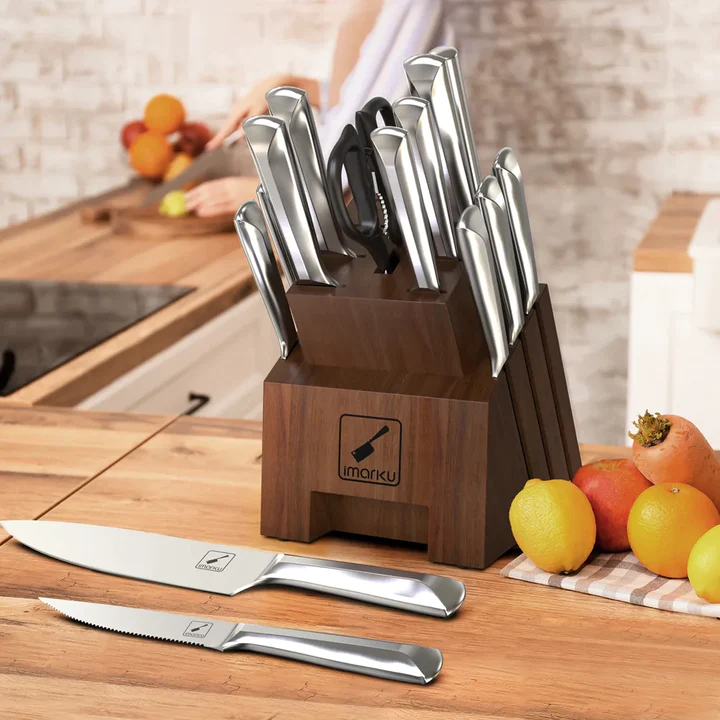
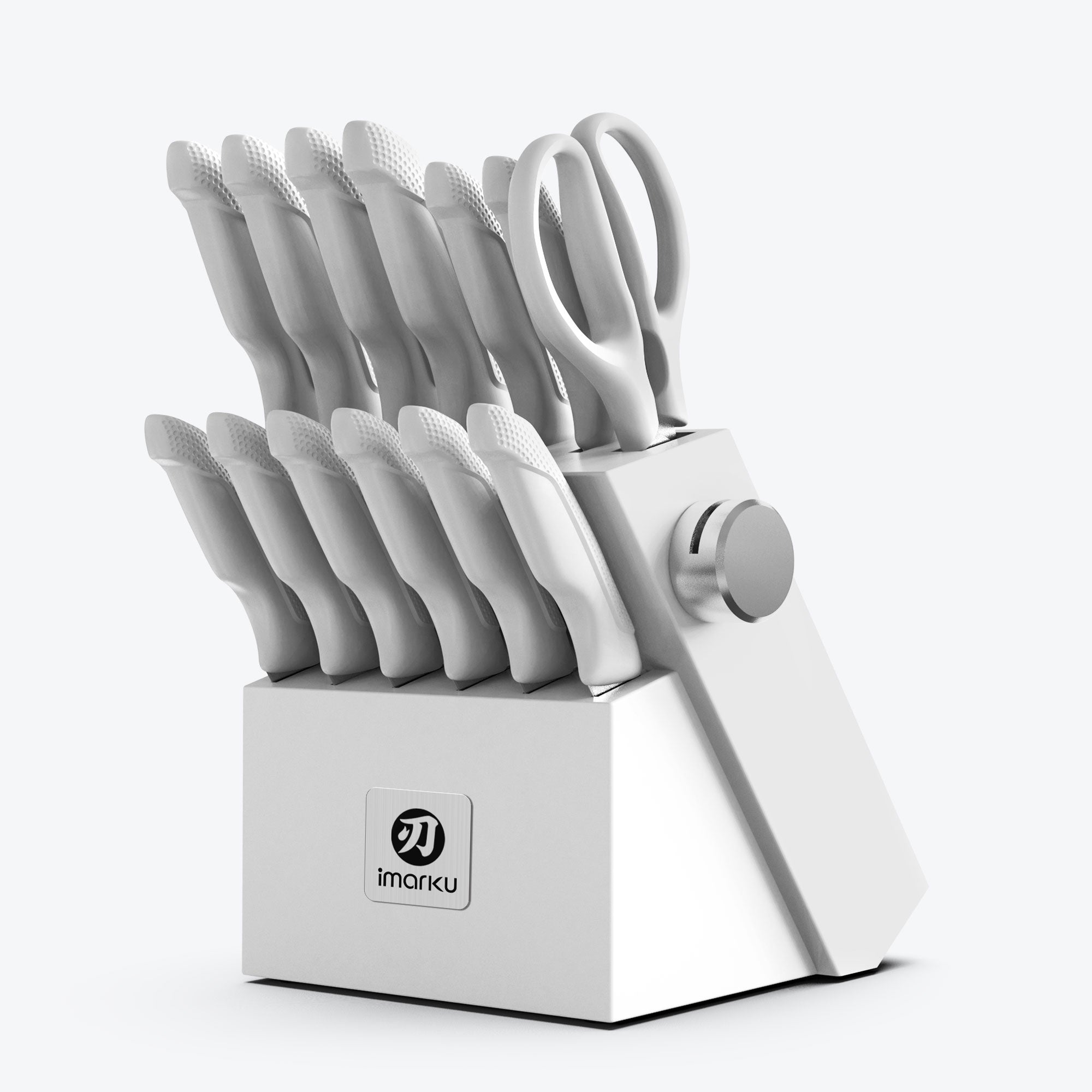
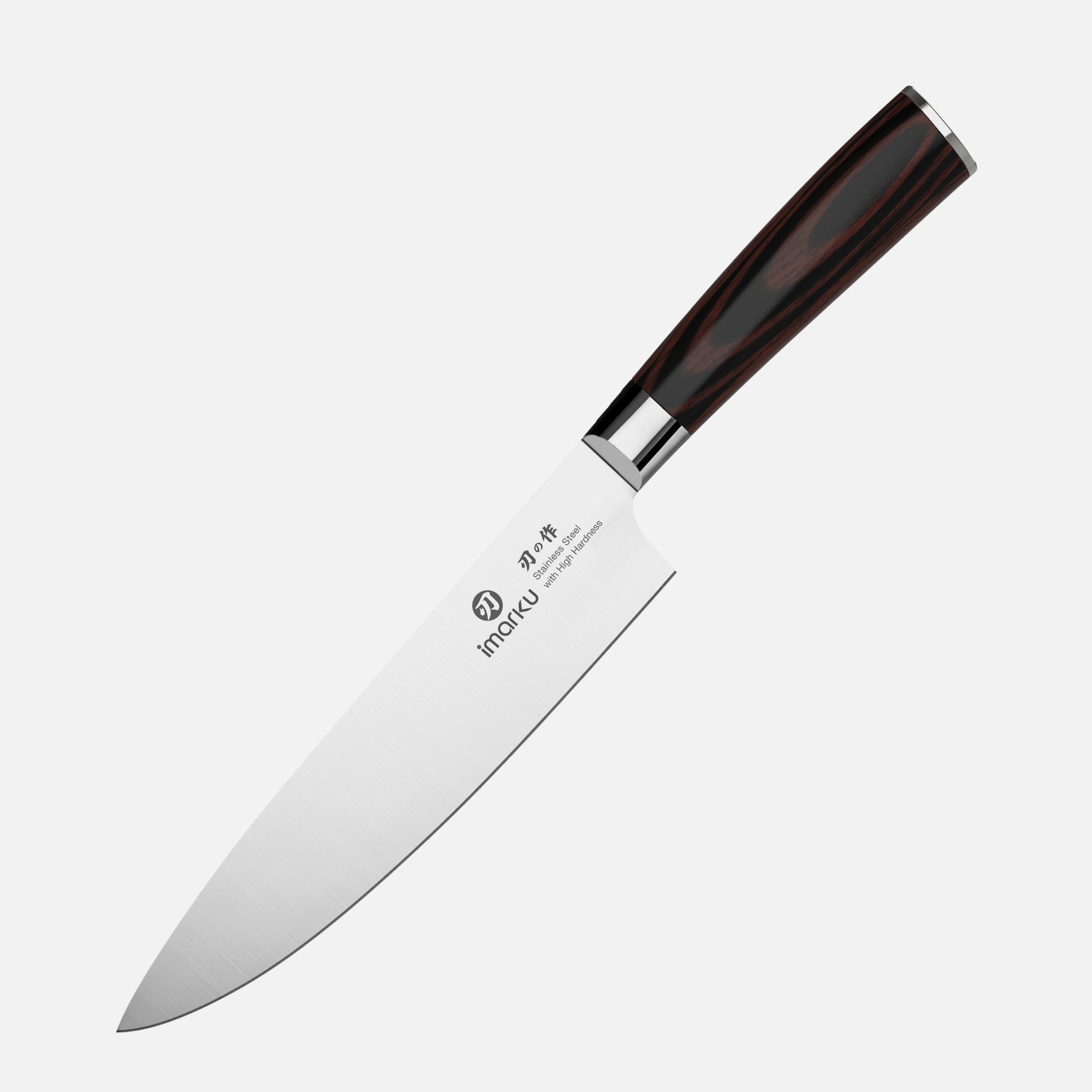
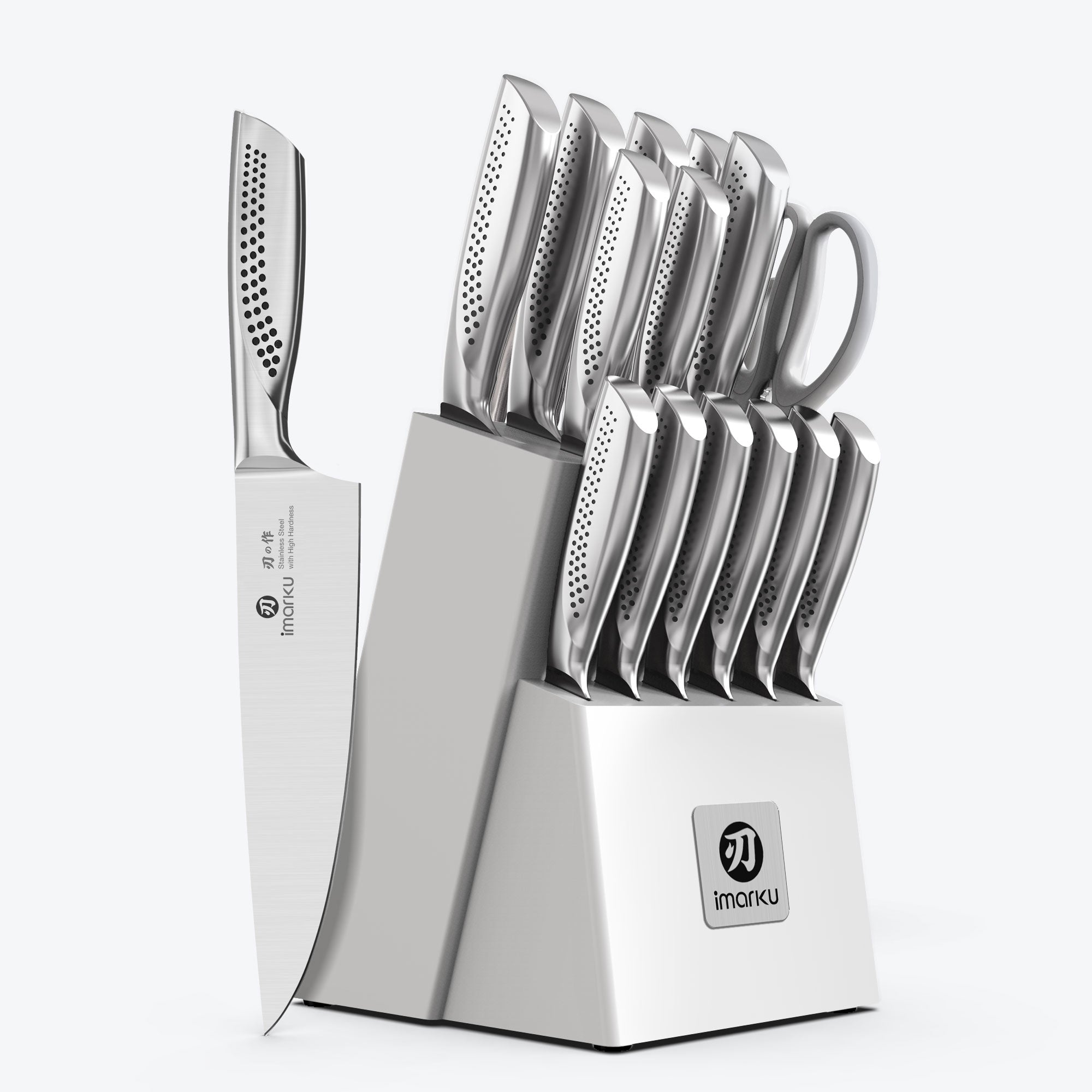
Imarku

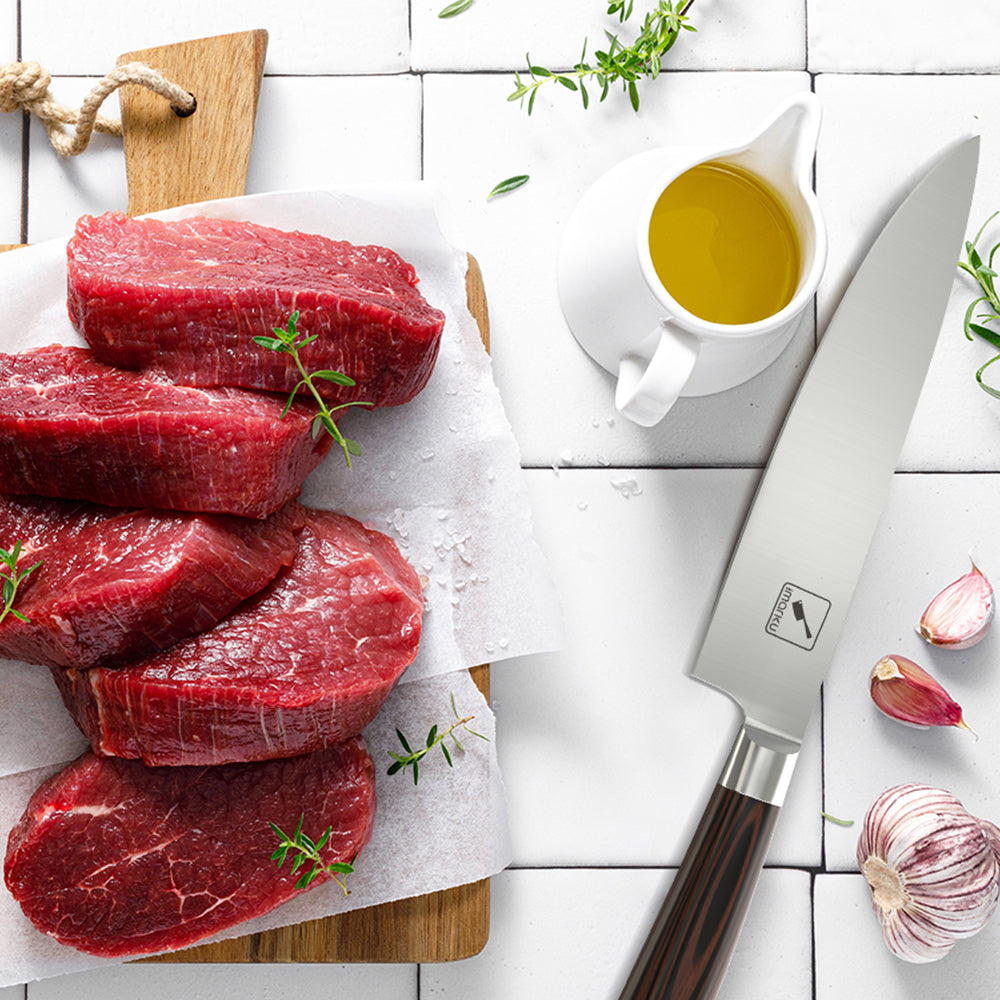
Founded in 1949 during Japan’s postwar reconstruction, Imarku was born from a family of master bladesmiths who adapted centuries of samurai sword-forging tradition to the creation of kitchen knives. Their mission was to craft blades where precision, beauty, and functionality exist in perfect balance, turning an everyday tool into an instrument of culinary artistry.
Each knife is forged through 108 precise steps, using premium Tamahagane steel hand-folded and hammer-forged fifteen times to create over 32,000 layers. The blades are then clay-quench hardened, naturally forming a subtle moonlit wave along the edge, enhancing both strength and edge retention. Finished at a 15° angle and hand-polished with 3000-grit stones, Imarku knives deliver a razor-sharp edge capable of effortlessly slicing delicate ingredients.

Since bringing their knives to the United States in 2016, Imarku has gained recognition among professional chefs, including those in Michelin-starred kitchens, and quickly rose to bestseller rankings. Today, the brand continues to push innovation forward with its latest designs and upgraded materials, showcased in the New Release collection. More than just a tool, an Imarku knife embodies Japanese craftsmanship and tradition, giving cooks confidence, control, and a sense of artistry with every cut.
Global

Global knives emerged from Niigata with a radically modern visual identity, yet their underlying principles remain distinctly Japanese. The brand’s iconic one-piece stainless steel construction reflects a focus on hygiene, balance, and functional simplicity—values deeply aligned with Japanese industrial design traditions.
Rather than emphasizing forged textures or layered steels, Global prioritizes geometry and movement. The lightweight blades and carefully distributed weight encourage speed and fluidity, qualities that suit fast-paced professional kitchens. This design language may look unconventional, but it reflects a Japanese emphasis on efficiency and control rather than ornament.
Global’s long-term success illustrates that Japanese knife-making is not confined to traditional forms. It can evolve, adopt new materials and aesthetics, and still remain rooted in performance-driven values.
Yoshihiro

Yoshihiro is closely associated with Sakai, a city whose knife-making tradition developed through a highly specialized division of labor. Historically, Sakai blades were produced through collaboration between smiths, sharpeners, and polishers, each mastering a specific stage of production. Yoshihiro continues this model, working with skilled artisans rather than relying on a single, centralized factory.
As a result, Yoshihiro knives often display subtle individuality in grind, finish, and sharpening character. The brand is known for its openness regarding steel types and traditional blade profiles, making it especially attractive to users who want a closer connection to classical Japanese knife-making practices.
Within Japanese knife culture, Yoshihiro represents continuity—an example of how regional craftsmanship survives by adapting to modern distribution while preserving its collaborative roots.
Tojiro

Tojiro comes from Tsubame-Sanjo, a region historically known for metalworking rather than swordsmithing. This background shapes Tojiro’s approach: practical, material-focused, and grounded in manufacturing efficiency. The brand has long been associated with culinary education, where knives are expected to perform consistently under daily use.
Steel selection, heat treatment, and blade geometry are designed with sharpening ease and durability in mind, rather than decorative appeal. Tojiro knives often serve as a user’s first serious Japanese knife, not because they are simplified, but because they communicate Japanese performance principles clearly and honestly.
In the landscape of Japanese knives, Tojiro stands as a reminder that craftsmanship does not always need embellishment—function itself can be the highest form of refinement.
Sakai Takayuki

Sakai Takayuki reflects the collective craftsmanship of Sakai, a city whose knife-making history is deeply intertwined with professional Japanese cuisine. Rather than presenting a singular design voice, the brand draws on the shared techniques and standards developed by generations of Sakai artisans.
Its knives often emphasize sharpening quality and edge behavior, areas in which Sakai craftsmen have long been respected. Both traditional single-bevel knives and modern double-bevel designs are produced, reflecting the evolving needs of contemporary chefs.
Sakai Takayuki’s continued relevance highlights how regional identity remains a defining force in Japanese knife-making, even as the market becomes increasingly global.
Masamoto Sohonten

Masamoto Sohonten occupies a unique place in Japanese knife history, particularly within Tokyo’s professional culinary world. Founded in the 19th century, the brand has maintained a quiet presence, built on long-term trust rather than outward visibility. Many chefs encounter Masamoto not through advertising, but through apprenticeship and recommendation.
The knives are especially respected for their carbon steel blades, disciplined geometry, and sharpening behavior. Rather than compensating for misuse with thickness or weight, Masamoto knives assume proper technique and reward it with exceptional control and sharpness.
Culturally, Masamoto reflects an older Japanese attitude toward tools: understated, uncompromising, and deeply connected to professional practice rather than consumer trends.
Mac Knife

Mac knives are produced in Seki and are often described as highly rational tools. Their design emphasizes cutting mechanics—thin geometry, smooth food release, and carefully controlled edge angles—over visual expression. This focus reflects a modern, analytical interpretation of Japanese knife-making.
In extended use, Mac knives tend to feel efficient and fatigue-reducing, qualities valued in professional environments. The brand’s popularity among working chefs speaks less to tradition and more to trust earned through daily performance.
Among Japanese knife brands, Mac stands out for treating the knife as a problem-solving instrument rather than a cultural artifact.
Misono

Misono has a long-standing reputation in professional kitchens, particularly in hotels and traditional dining establishments. Based in Seki, the brand emphasizes consistency, balance, and predictable sharpening behavior—qualities that matter most in high-volume, disciplined environments.
Misono knives rarely attract attention through design or storytelling, yet they remain widely used because they perform as expected, day after day. Their steels and heat treatments are chosen for stability rather than extremes.
Misono represents a quieter side of Japanese knife culture, where trust is built through repetition and reliability rather than innovation or heritage narratives.
FAQs about Japanese Knife

Are Japanese knives too fragile for everyday cooking?
This is one of the most common misconceptions about Japanese knives, especially among users transitioning from Western-style blades. Japanese knives are not inherently fragile; rather, they are designed with precision-focused blade geometry and harder steel to achieve cleaner cuts and longer edge retention. When used as intended—on proper cutting boards and with appropriate technique—they perform reliably in both home and professional kitchens.
The perception of fragility often comes from misuse, such as twisting the blade, cutting frozen foods, or using glass or stone surfaces. Leading Japanese knife brands design their knives to excel at slicing and controlled chopping, not brute-force tasks. When matched with the right use case, Japanese knives are durable tools built for long-term performance.
Do carbon steel Japanese knives always rust?
Carbon steel Japanese knives do not “always rust,” but they do require a different mindset compared to stainless steel knives. High-carbon steel reacts with moisture and acids, which leads to the formation of a patina—a natural protective layer that actually helps prevent active rust over time. In traditional Japanese knife culture, this patina is seen as a sign of proper use rather than a flaw.
With basic care—such as wiping the blade during use and drying it after washing—carbon steel knives remain highly stable. Many professional chefs in Japan use carbon steel knives daily for decades. The key difference is not material quality, but user awareness. When maintained correctly, carbon steel is one of the most respected materials used by Japanese knife brands.
Does harder steel mean Japanese knives chip easily?
Harder steel does not automatically mean a knife will chip easily, and this assumption oversimplifies how knives actually fail. While many Japanese knives use steel hardened to HRC 60–65, chipping is far more influenced by edge geometry, cutting technique, and surface choice than hardness alone. A well-designed blade with proper heat treatment distributes stress effectively, even at higher hardness levels.
In practice, Japanese knives are engineered to balance sharpness and stability through precise grinding and edge angles. When used on suitable cutting boards and with controlled motion, chipping is uncommon. This is why many experienced chefs prefer harder Japanese steel—it maintains sharpness longer while remaining reliable under correct usage conditions.
How should I sharpen a Japanese knife to maintain its performance?
Japanese knives are typically sharpened at a steeper angle than Western knives, often between 9°–15° per side for double-bevel knives. The best way to maintain this precision is by using a fine whetstone, starting with a medium grit (around 1000–2000) for regular maintenance and finishing with a high grit (3000–8000) for a polished razor edge. Always wet the stone before use and maintain consistent pressure along the blade. Avoid using pull-through sharpeners on high-carbon or laminated Japanese knives, as they can remove too much steel and reduce edge life. Regular honing between sharpenings will also keep the knife performing at peak efficiency.
Why does my Japanese knife feel sticky when cutting, and how can I fix it?
Many high-carbon or laminated Japanese knives may feel sticky or “drag” when cutting certain vegetables, like cucumbers or tomatoes. This is often due to food sticking to the smooth or hammered blade surface. To reduce stickiness, rinse the blade occasionally during cutting, use a slight slicing motion rather than pressing straight down, and make sure the blade is polished and properly maintained. Some knives feature a hammered (tsuchime) finish, which naturally reduces suction between food and blade. Keeping your knife clean, sharp, and using the correct cutting technique will make slicing effortless and precise.
Can I put my Japanese knife in the dishwasher?
Japanese knives, especially high-carbon or hand-forged varieties, should never be placed in a dishwasher. The intense heat, harsh detergents, and constant water exposure can cause rust, damage the blade edge, and degrade the handle material. Instead, wash your knife by hand using warm water and mild soap immediately after use. Dry it thoroughly with a soft cloth and store it safely. Following these steps ensures long-term edge retention, preserves the knife’s craftsmanship, and maintains the natural aesthetic of Japan-made blades.










Leave a comment
All comments are moderated before being published.
This site is protected by hCaptcha and the hCaptcha Privacy Policy and Terms of Service apply.