
A fish fillet knife seems simple—until you try to fillet a fish with the wrong one. If you’ve ever ended up with torn flesh, uneven cuts, or too much meat left on the bones, it’s easy to assume the problem is technique.
In real kitchen use, though, the issue is often the tool itself. From a practical standpoint, a poorly designed knife makes precision almost impossible, no matter how careful you are. This is where a well-designed fillet knife makes a difference—helping you work with the fish instead of fighting against it.
What Is a Fish Fillet Knife?

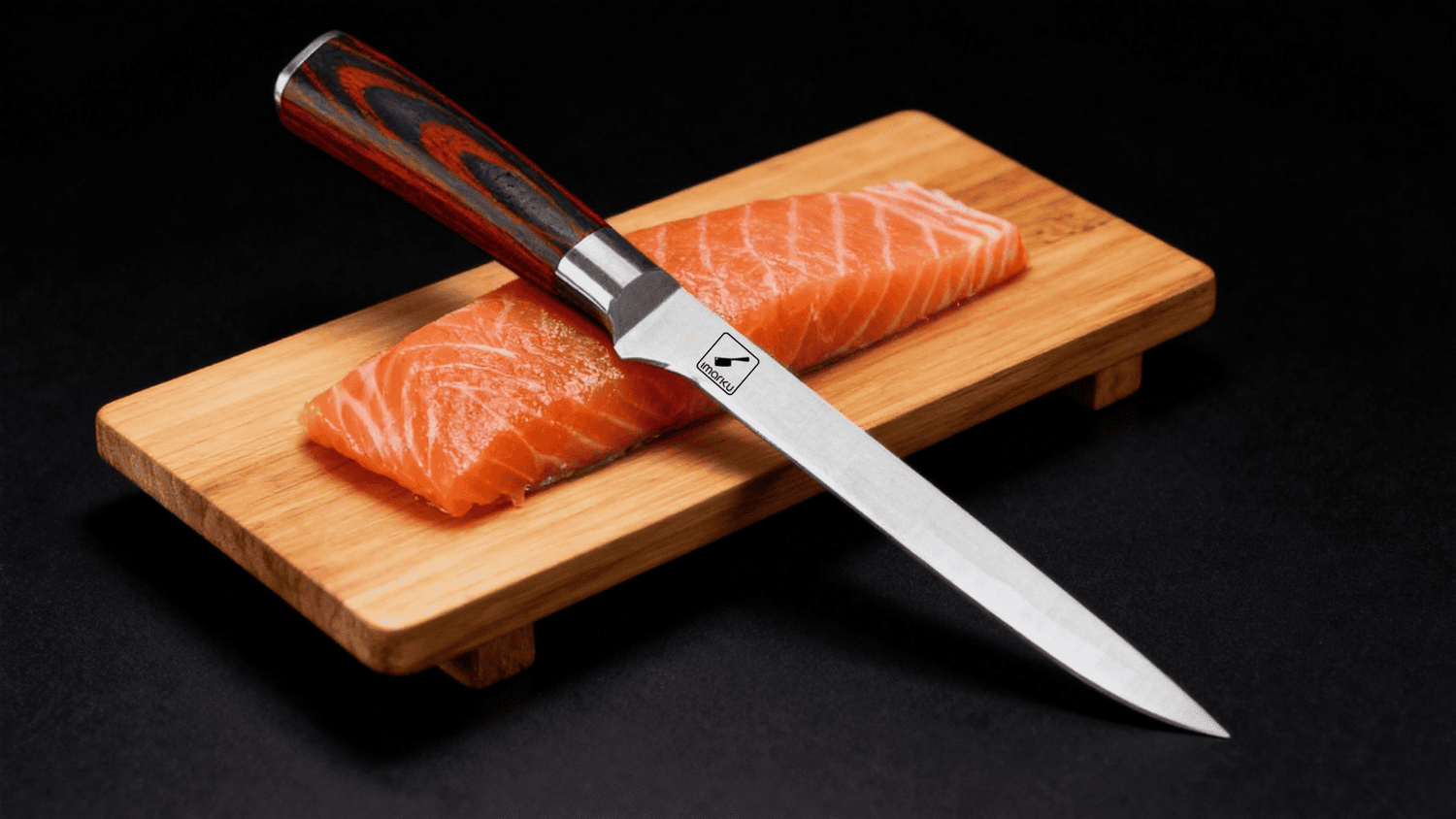
A fish fillet knife is a long, narrow, and flexible blade designed specifically for separating fish flesh from bones and skin.
Its defining features include:
- Flexible blade that bends to follow the fish’s natural contours
- Thin edge for precise, low-resistance cuts
- Sharp tip for detailed work around bones
Unlike a standard chef’s knife, which prioritizes versatility, a flexible fillet knife is built for control and finesse. That said, the level of flexibility you need may vary depending on fish type—firmer fish like salmon behave differently than delicate fish like flounder.
Why a Fish Fillet Knife Matters
Reduces Waste
In real kitchen use, a flexible blade helps you recover more usable meat. Stiff knives tend to cut away too much or leave meat behind along the bones.
Improves Control
From a practical standpoint, the ability to glide along the backbone without forcing the blade makes a noticeable difference. A higher-quality knife reduces this issue significantly.
Improves Results, Not Just Speed
Clean cuts matter, especially when presentation is important. Whether you're preparing simple meals or more refined dishes, smoother cuts lead to better texture and appearance.
At this point, many people realize the problem isn’t just “how” they’re cutting—it’s what they’re cutting with.
How to Use a Fish Fillet Knife (Step-by-Step)

Step 1: Start Behind the Gill
Insert the blade just behind the gill plate and cut down until you reach the backbone.
Step 2: Follow the Backbone
Turn the blade flat and glide it along the spine toward the tail. Let the knife’s flexibility guide the motion.
Step 3: Lift the Fillet
Gently separate the fillet as you continue cutting. If the blade feels like it’s catching, sharpness or flexibility may be limiting you.
Step 4: Remove the Skin
Place the fillet skin-side down and slide the blade between skin and flesh at a slight angle.
This is where cheaper or thicker knives tend to fail—they either cut through the skin or leave too much meat behind.
Step 5: Trim and Clean
Remove pin bones and clean the edges. Proper hygiene matters here, especially with raw fish, which is why understanding when must a knife be cleaned and sanitized is essential in real kitchen workflows.
How to Choose the Best Fish Fillet Knife

This is where most buying decisions happen—and where small differences in design actually matter.
1. Blade Flexibility
A good fish fillet knife should bend slightly without feeling flimsy. Too stiff, and it won’t follow bones. Too flexible, and you lose control.
2. Blade Length
- 6–7 inches: better for smaller fish
- 7–9 inches: most versatile option
- 9+ inches: ideal for larger fish
3. Steel Quality and Corrosion Resistance
Fish preparation involves moisture and salt. Corrosion-resistant steel lasts longer and requires less maintenance over time.
4. Handle Design
An ergonomic, non-slip handle reduces fatigue and improves precision—especially during longer prep sessions.
5. Edge Performance
A sharper edge means cleaner cuts. While fillet knives are straight-edged, understanding broader sharpening principles—like how to sharpen serrated knives—can help you maintain better performance across your tools.
From a practical standpoint, investing in a well-balanced knife with these features often turns a frustrating task into a smooth, controlled process.
Common Mistakes to Avoid

Using the Wrong Knife
Trying to fillet fish with a stiff chef’s knife leads to wasted meat and uneven results.
Using Too Much Force
A fish fillet knife should glide. If you’re pushing hard, something isn’t working—either the blade is dull or not designed for the task.
Ignoring Maintenance
Dull knives tear flesh instead of slicing it cleanly, which affects both texture and presentation.
Using It for the Wrong Tasks
Fillet knives are specialized. For example, tasks like precise vegetable work are better handled with a nakiri knife, while structured cuts like how to master the batonnet cut require a more stable blade.
Conclusion
A fish fillet knife is not just another kitchen tool—it’s a specialized solution to a very specific problem. If filleting fish has ever felt harder than it should, the issue is often not skill, but equipment.
From a practical perspective, the right knife improves control, reduces waste, and makes the entire process more predictable. And while technique still matters, using a better tool shortens the learning curve significantly.
If you prepare fish even occasionally, upgrading to a well-designed fillet knife is one of those changes that tends to pay off quickly—both in results and in overall cooking experience.






Leave a comment
All comments are moderated before being published.
This site is protected by hCaptcha and the hCaptcha Privacy Policy and Terms of Service apply.