
TABLE OF CONTENTS
- >of your premium ingredient budget is getting wasted because of the wrong knife.
- >Why a Good Knife Is the Smartest Investment for This Year’s Grilling Season
- >3 Common Knife Mistakes That Are Wasting Your BBQ Ingredients
- >The Best Knives for 4 Core BBQ Ingredients (Plus Money-Saving Cutting Tips)
- >Imarku: High-Quality Knives at an Affordable Price for This Grilling Season
- > Quick Knife Care Tips to Make Them Last for Years
- >Final Thoughts
With less than two weeks until the Fourth of July, most households are already putting together their BBQ party shopping lists. But anyone who’s walked through a grocery store lately has felt it: meat prices keep climbing.
According to Wells Fargo’s latest summer grilling report, the average price of Choice-grade ribeye has hit $10.20 per pound, ground beef is up 14% year over year, and even standard hot dogs cost 5% more than last year. Throwing a backyard party for 10 people costs $160+ in ingredients alone — nearly a third more than it did three years ago.
Many shoppers look for ways to save: switching to cheaper cuts, scaling down portions, or buying pre-made sides. But few people notice this hidden truth: 10–20%

of your premium ingredient budget is getting wasted because of the wrong knife.
Dull blades crush meat fibers and drain juices before the food even hits the grill. Using the wrong knife for deboning leaves piles of usable meat stuck to bones. Uneven cuts lead to half-cooked or burnt pieces that end up in the trash. All that waste adds up — often costing more than a quality knife would.
Today we’re breaking down why a sharp, purpose-built knife is the smartest purchase you can make this grilling season, plus which knives work best for every core BBQ ingredient to get the absolute most out of every dollar you spend.

Why a Good Knife Is the Smartest Investment for This Year’s Grilling Season
A lot of people write off quality knives as an “unnecessary expense” — if there’s a knife in the drawer that sort of works, why upgrade? But with today’s ingredient prices, the math is simple:
- For a 10-person party with 3 lbs of steak, 2 lbs of pork ribs, and 1 whole chicken, your meat bill alone runs $60+.
- A dull knife paired with poor technique causes at least 15% waste: lost juiciness that ruins texture, meat left on bones, and unevenly cooked pieces thrown away. That’s $9 down the drain in one cookout.
- Over 4 BBQs in a summer, that’s over $35 in wasted food — enough to cover half the cost of a professional-grade chef’s knife.
Even better: a sharp blade creates clean, smooth cuts that seal in natural juices. You’ll get juicier, more tender results even from budget-friendly cuts — turning the same grocery run into a higher-quality meal.

3 Common Knife Mistakes That Are Wasting Your BBQ Ingredients
90% of home BBQ food waste comes from these three easy-to-fix mistakes:
1.Forcing cuts with a dull knife (and losing all the juice)
This is the most common, most invisible form of waste. Dull blades require you to press and saw through meat, crushing muscle fibers and letting valuable flavor-rich juices leak out onto the cutting board. The result is dry, tough grilled meat that wastes all the value of a premium cut. Worse, dull knives slip easily — a real safety risk when you’re prepping large batches of food.
2.Using one knife for everything (and leaving meat on the bones)
Many home cooks reach for one basic chef’s knife for every task: deboning, chopping veggies, hacking through ribs. A wide chef’s knife can’t hug close to bones, leaving plenty of edible meat behind. It’s also too heavy for fine vegetable prep, leading to uneven pieces that cook at different rates and get partially thrown out.
3. Cutting raw meat with a serrated knife (and creating excess scraps)
Some people reach for a serrated bread knife to “saw” through meat easier. But serrated edges tear through muscle fibers instead of slicing cleanly, leaving ragged edges, loose crumbs, and meat that chars too easily on the grill and loses juiciness. Serrated knives belong with bread and crusty baked goods — never raw meat.

The Best Knives for 4 Core BBQ Ingredients (Plus Money-Saving Cutting Tips)
Different ingredients have different textures and grain patterns. Using the right knife doesn’t just make prep easier — it minimizes waste at every step.
1. Thick-Cut Steaks & Pork Chops: 8-Inch Chef’s Knife
Thick-cut meat is the star of any BBQ — and the priciest item on your list. Sharpness makes all the difference here.
- Why it works: An 8-inch chef’s knife is the ultimate workhorse. Its wide, straight, razor-sharp blade cuts cleanly through thick meat in one smooth motion, leaving a flat surface that locks in juices. A full-tang balanced blade feels natural in hand, so you won’t get wrist fatigue during long prep sessions.
- Money-saving tip: Always cut against the grain. Slicing perpendicular to the muscle fibers makes every bite more tender, so even more affordable cuts feel like a premium meal.

2. Ribs & Whole Chicken Deboning: Narrow Boning Knife
Bone-in cuts are where most waste happens. Many home cooks finish deboning and leave thick layers of usable meat stuck to the bone.
- Why it works: A boning knife has a narrow, flexible blade and a sharp point that glides tight against bones. It separates meat from bone cleanly, leaving barely any scraps behind — you can get nearly 2 extra ounces of meat off a whole chicken compared to using a regular chef’s knife.
- Money-saving tip: Save the bones, freeze them, and simmer them into stock for homemade BBQ sauce or side dishes.

3.Bulk Veggies & Herbs: 7-Inch Santoku Knife
Chopping veggies is the most time-consuming part of BBQ prep, especially when you’re cooking for a crowd.
- Why it works: A Santoku knife is lighter and thinner than a chef’s knife, with a gently curved edge that makes quick, clean cuts through produce. It doesn’t crush vegetable cells, so veggies stay crisp and fresh longer, and lose less of their natural flavor.
- Money-saving tip: Cut all veggies to a uniform size. They’ll cook evenly on the grill, so you won’t end up with half burnt, half raw pieces that get tossed.

4. Post-Grill Slicing: Long Slicing Knife
Smoked brisket, ham, or whole grilled salmon can fall apart easily when sliced incorrectly.
- Why it works: A long, thin slicing knife cuts with a smooth pulling motion, creating even, clean slices with zero tearing. Your plated portions look better, and you don’t lose meat to crumbled scraps.

Imarku: High-Quality Knives at an Affordable Price for This Grilling Season
For most home cooks, there’s no need to drop hundreds of dollars on a premium professional knife set — most of us only use them a handful of times a year. But cheap $10 knives that dull in two months are a false economy that costs you more in wasted food long-term.
If you want professional-grade performance without the luxury brand markup, Imarku is a perfect fit. As a top-selling kitchen knife brand on Amazon US for 7 consecutive years, Imarku combines Japanese forging craftsmanship with German steel — delivering near-premium performance at roughly one-third the price of high-end brands.
For the 2026 grilling season, these two picks deliver the best value:
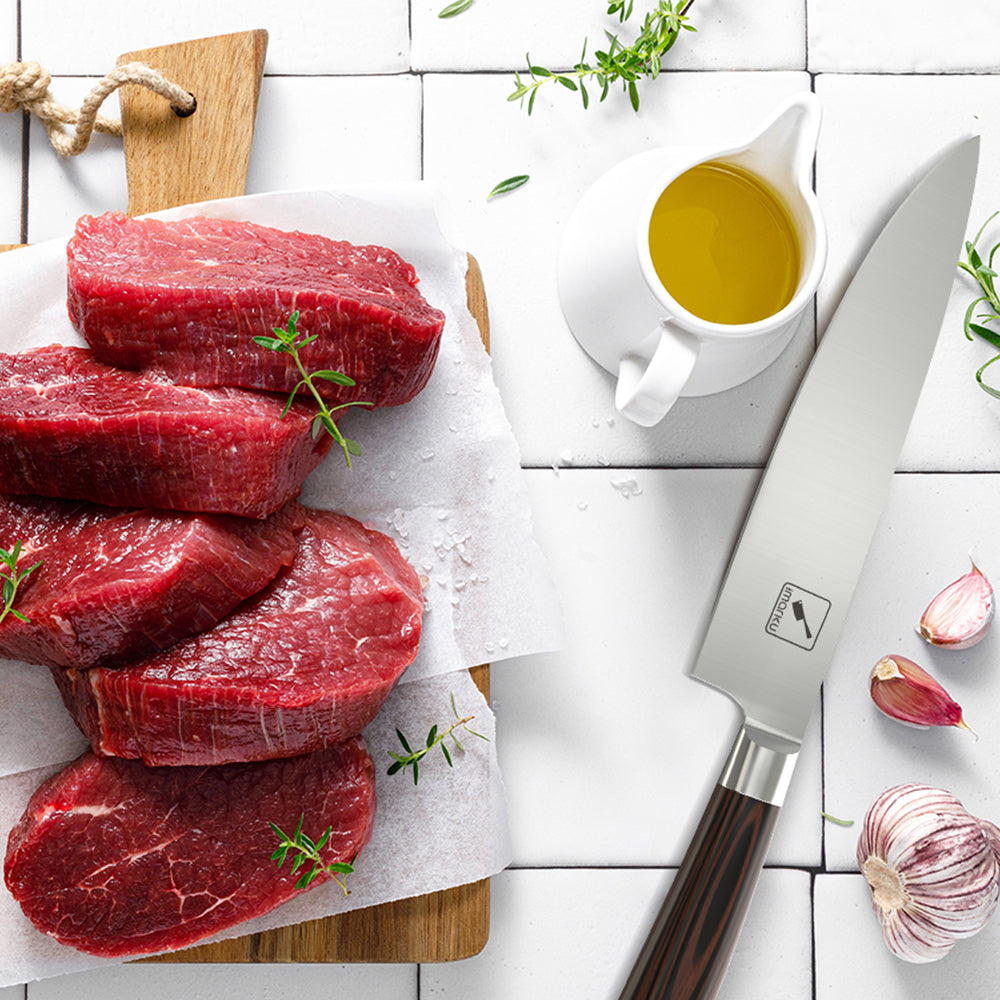
1.8-Inch Professional Chef’s Knife: One Knife for 80% of Your Prep

If you only upgrade one knife, make it this one.
- Built with German imported 1.4116 high carbon stainless steel — the same steel used in entry-level premium brands. It holds a sharp edge for months, cuts clean through 2-inch thick steak in one pass, and never squeezes out juices.
- Full-tang one-piece forging delivers perfect balance, so your wrist won’t ache even after an hour of prep. The ergonomic non-slip handle stays secure even with greasy hands, keeping you safe during big batch cooking.
- Priced under $100 — less than a third of comparable premium brands. With proper care, it will last 5+ years, working out to less than $20 a year — cheaper than the food you’d waste at just a couple of BBQs.
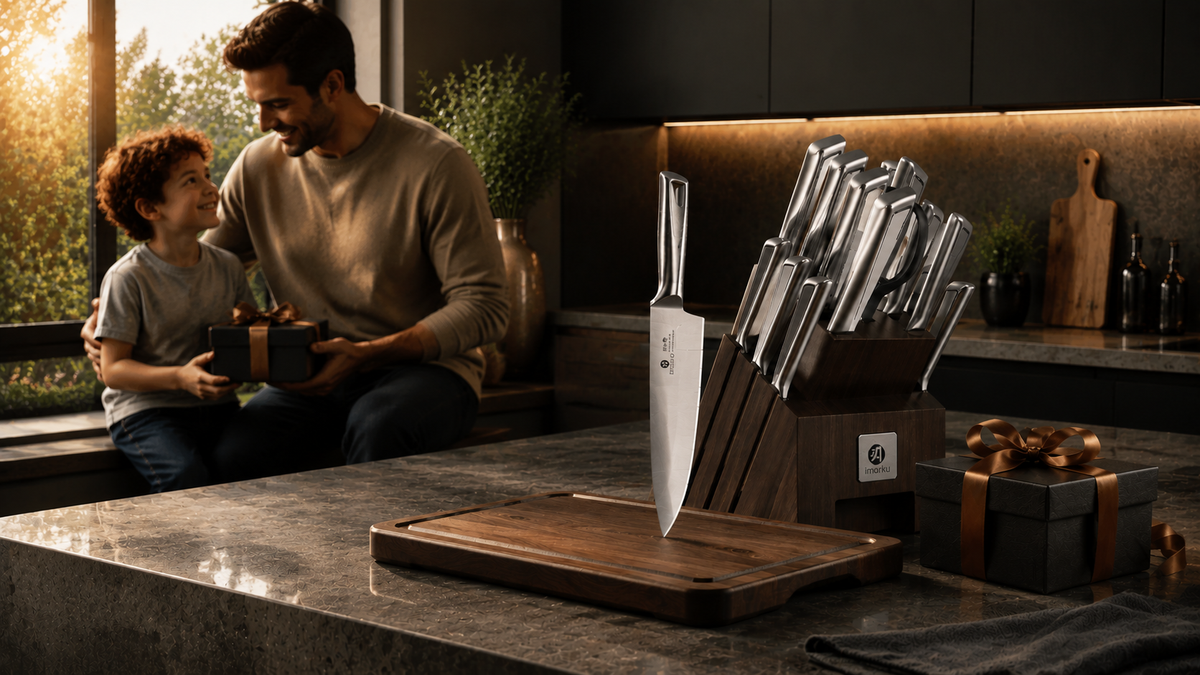
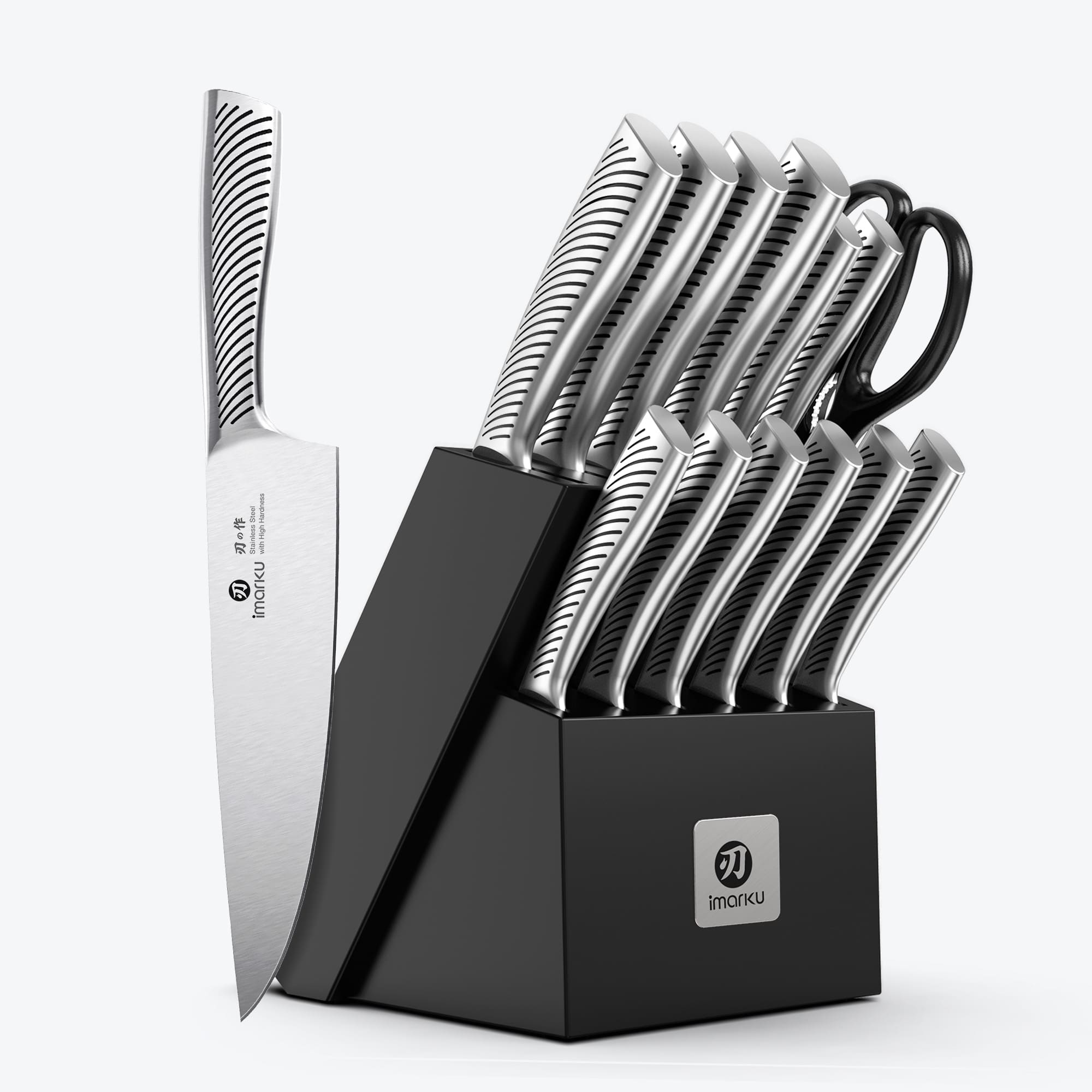
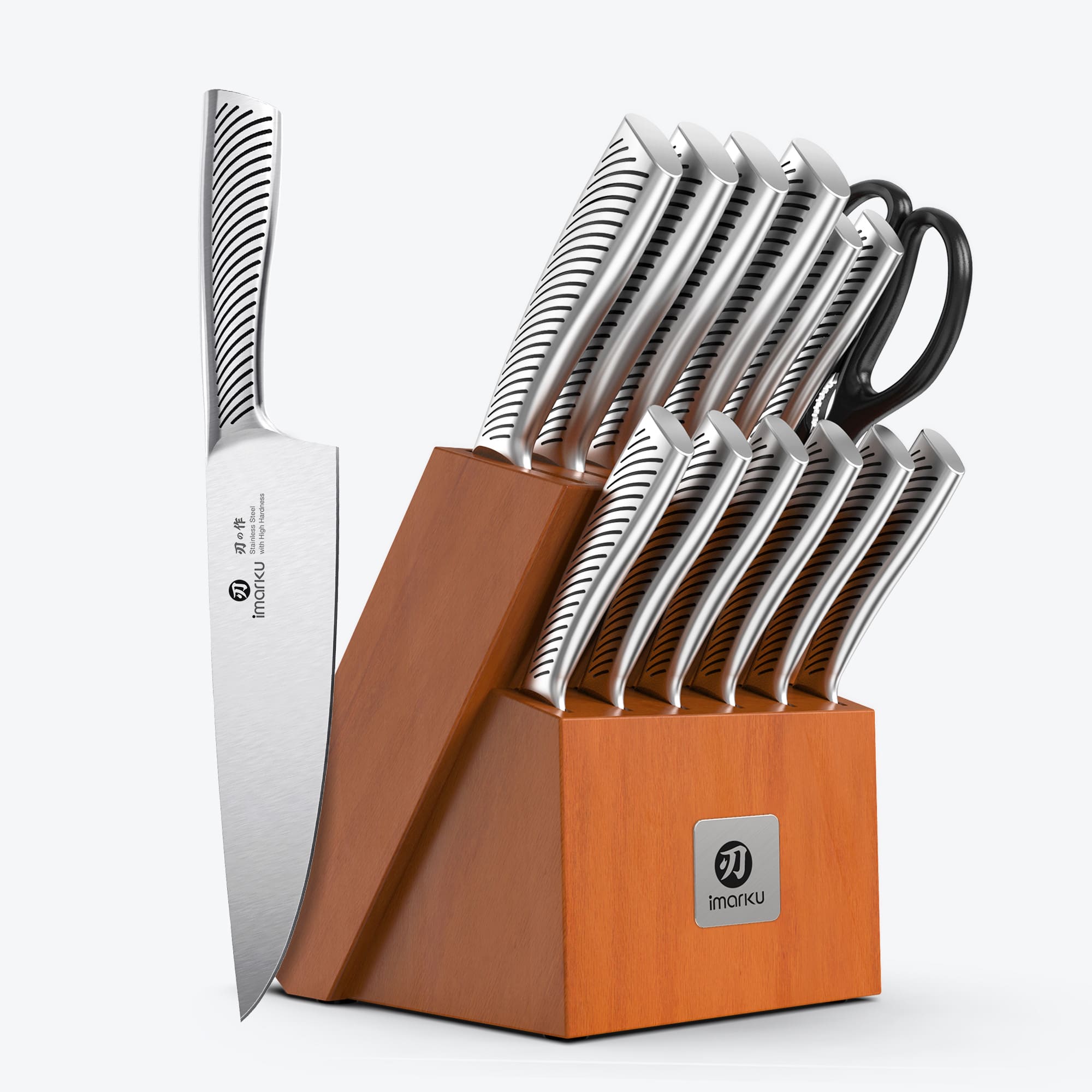
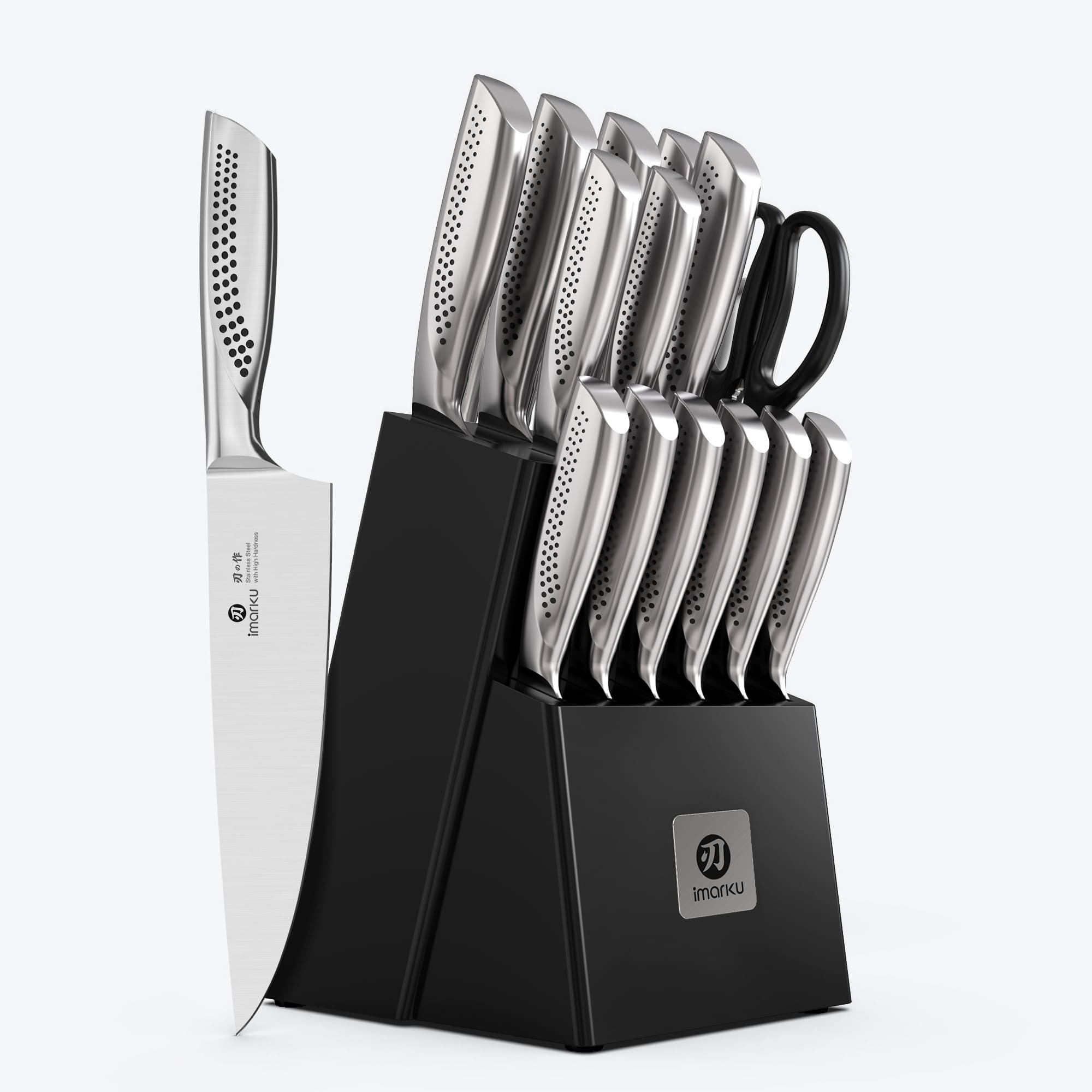
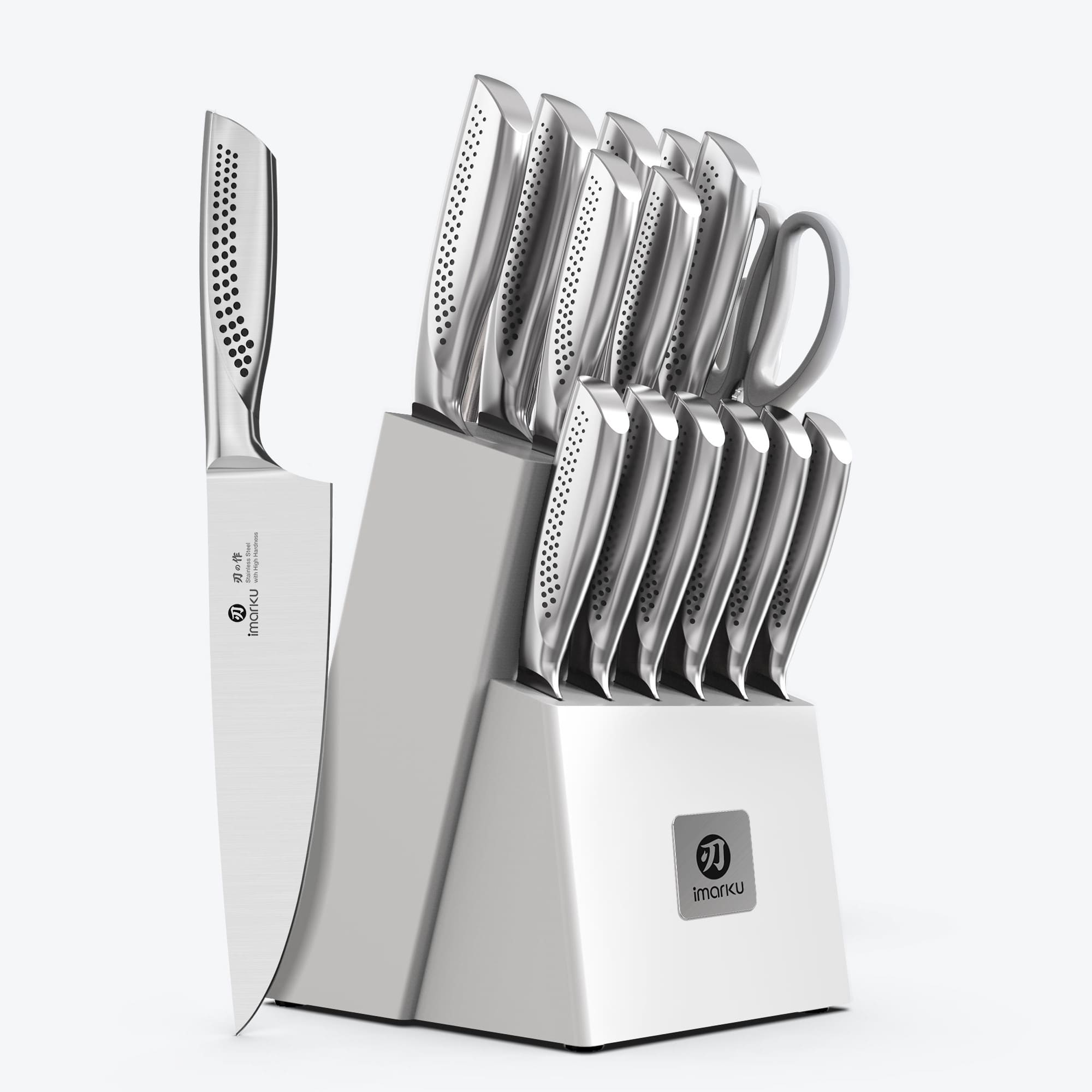
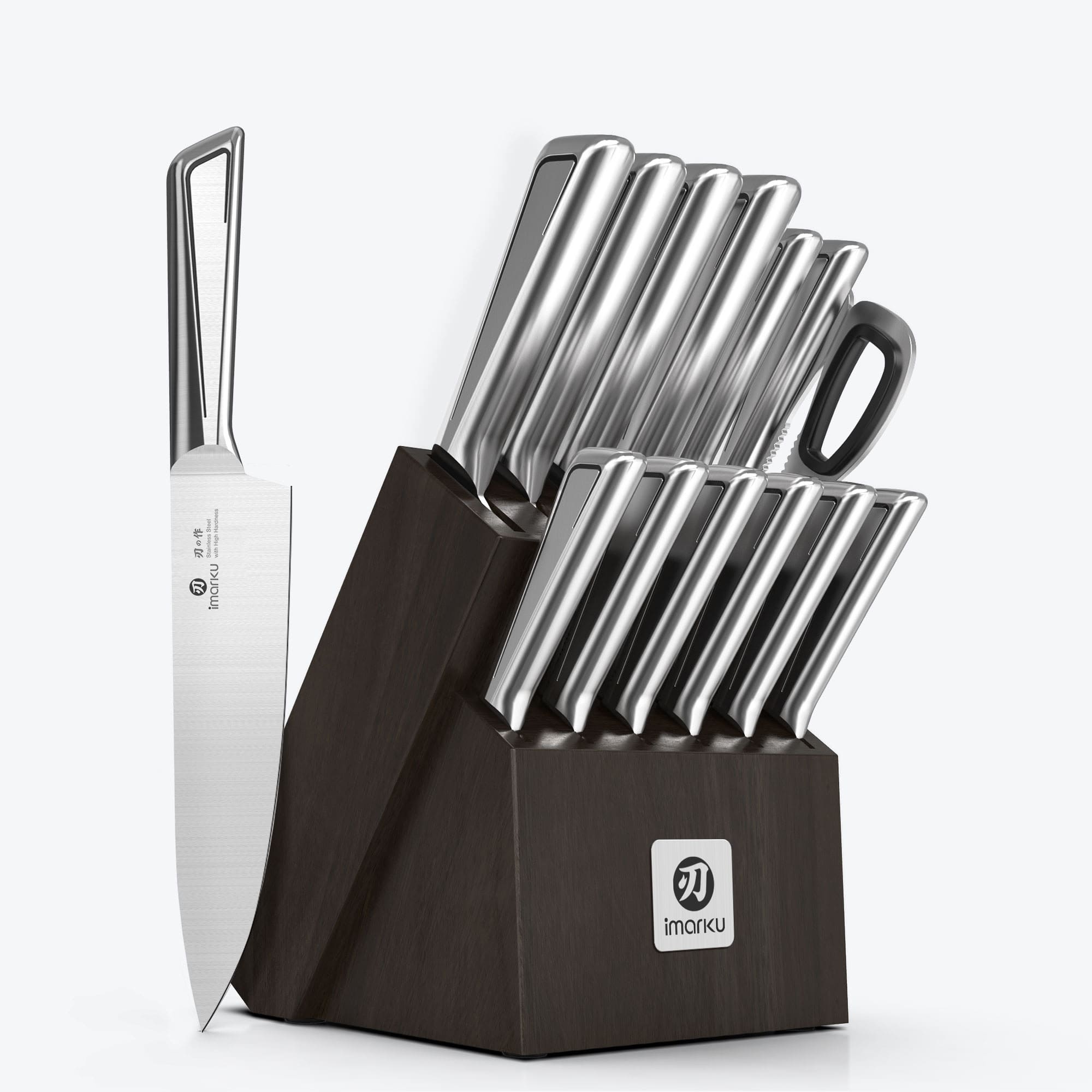
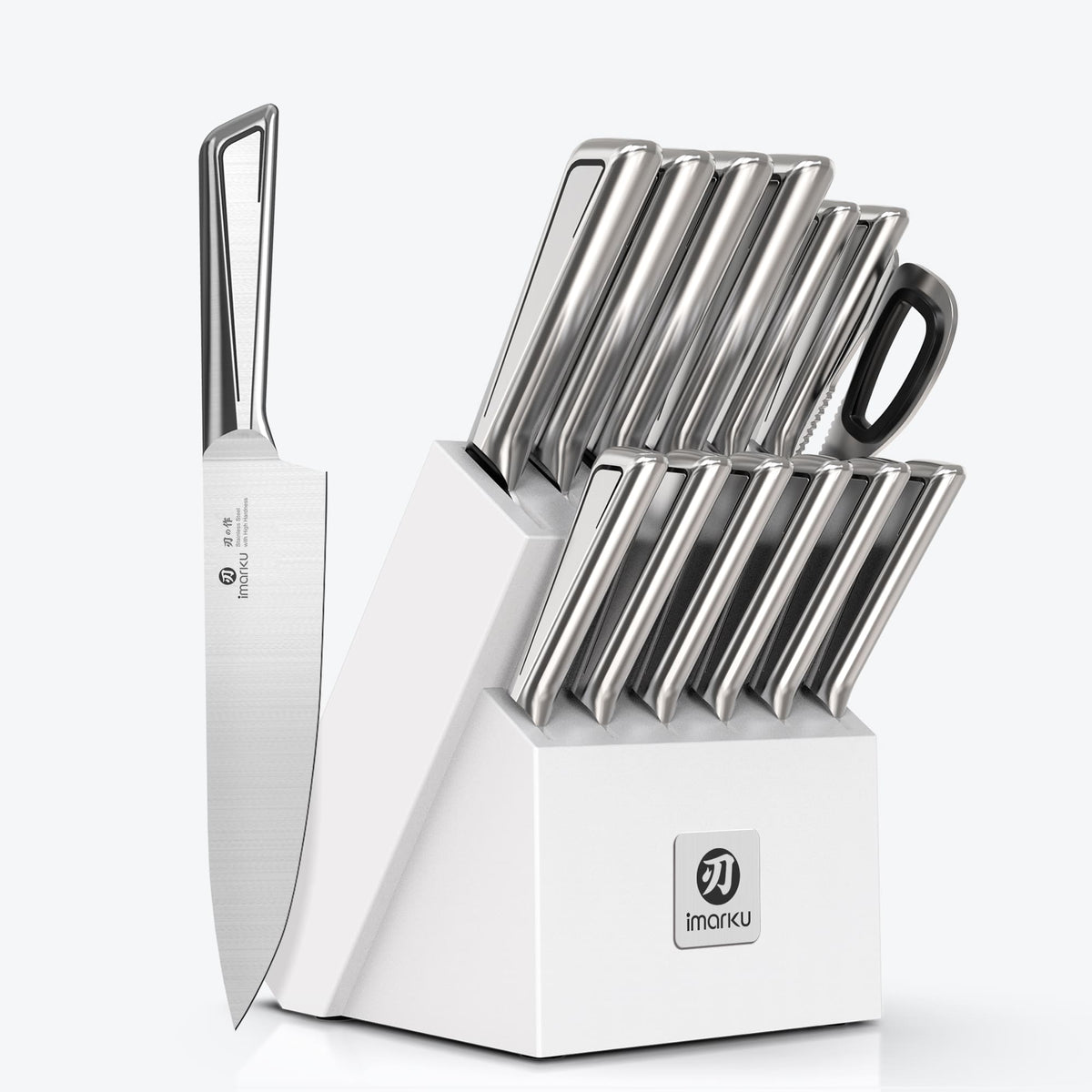
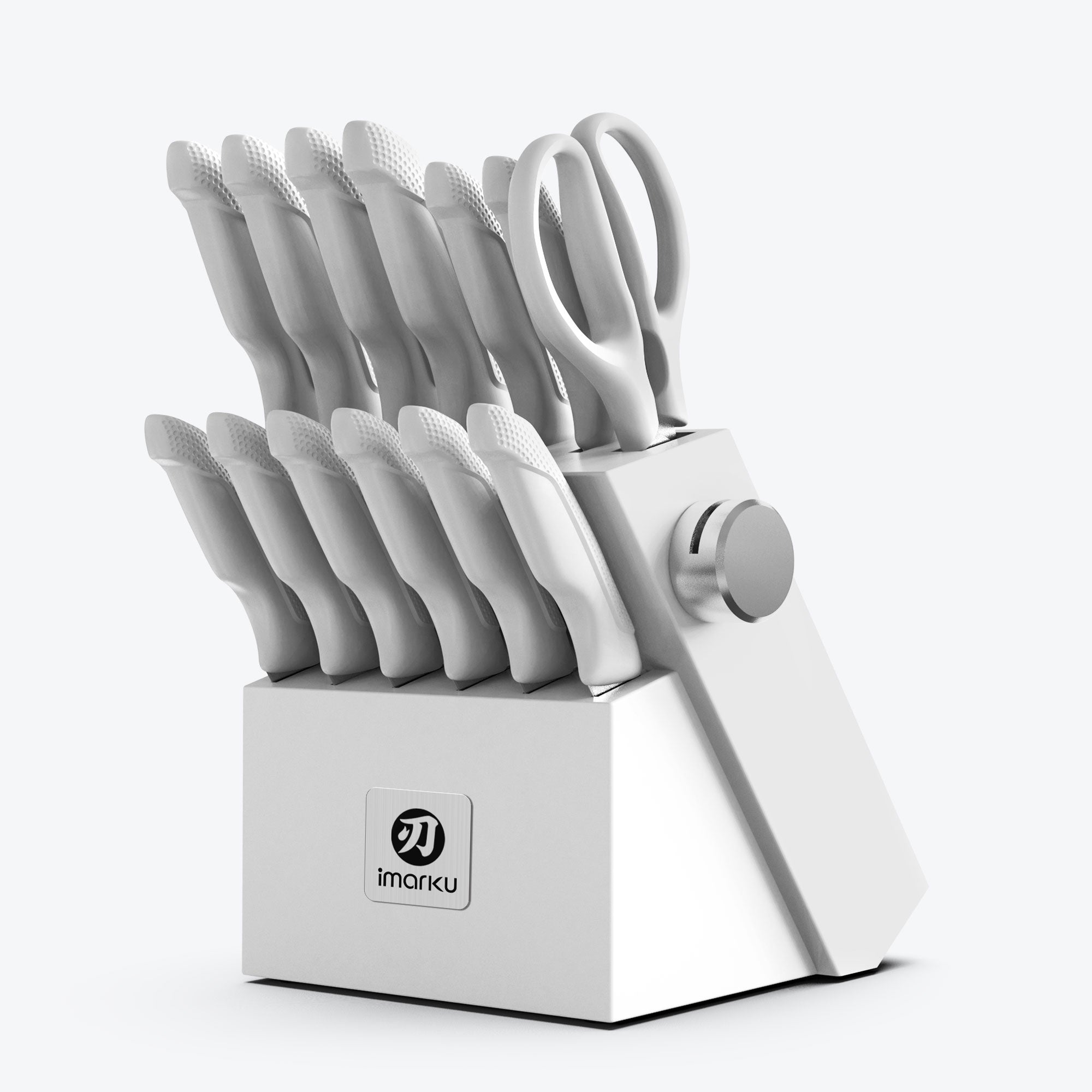
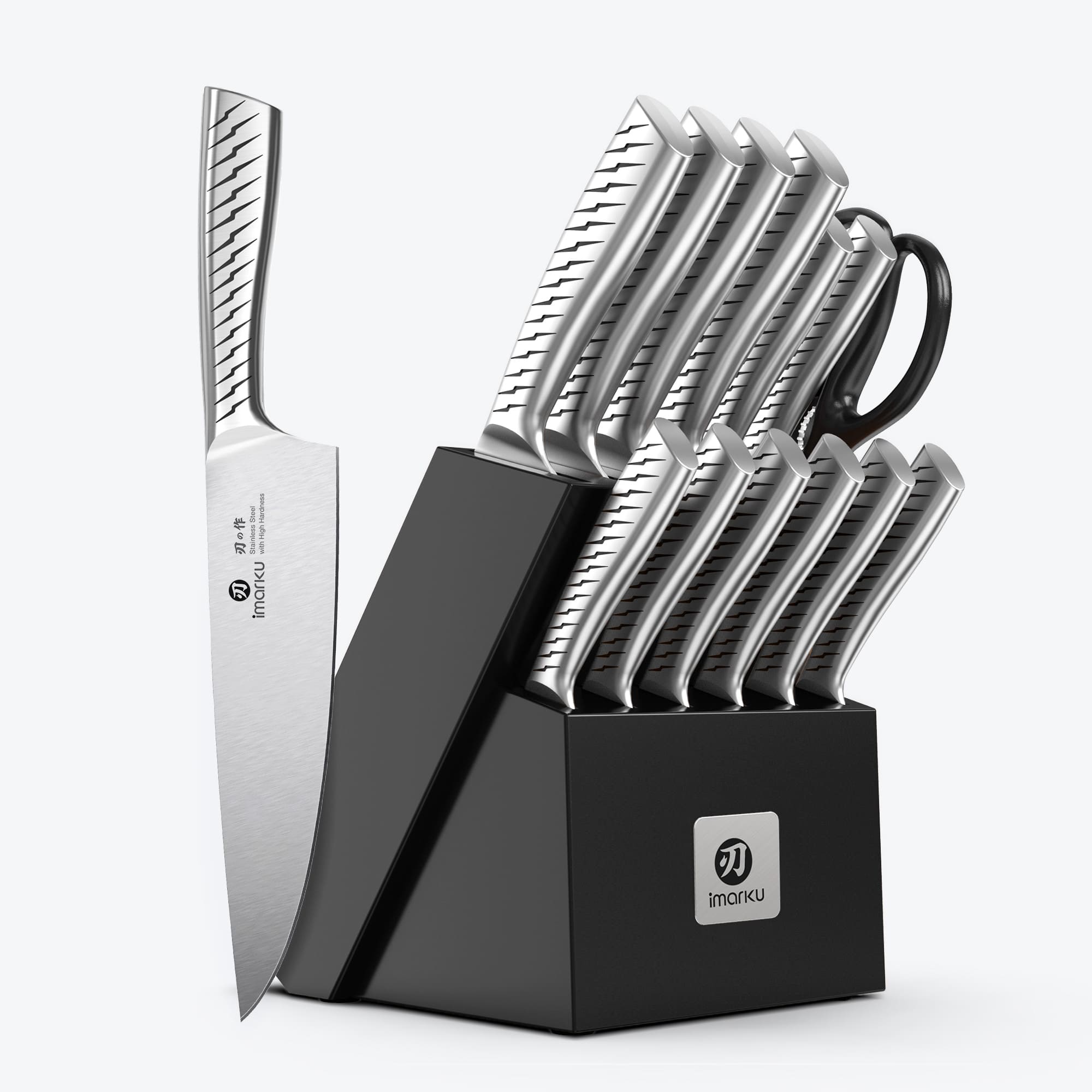
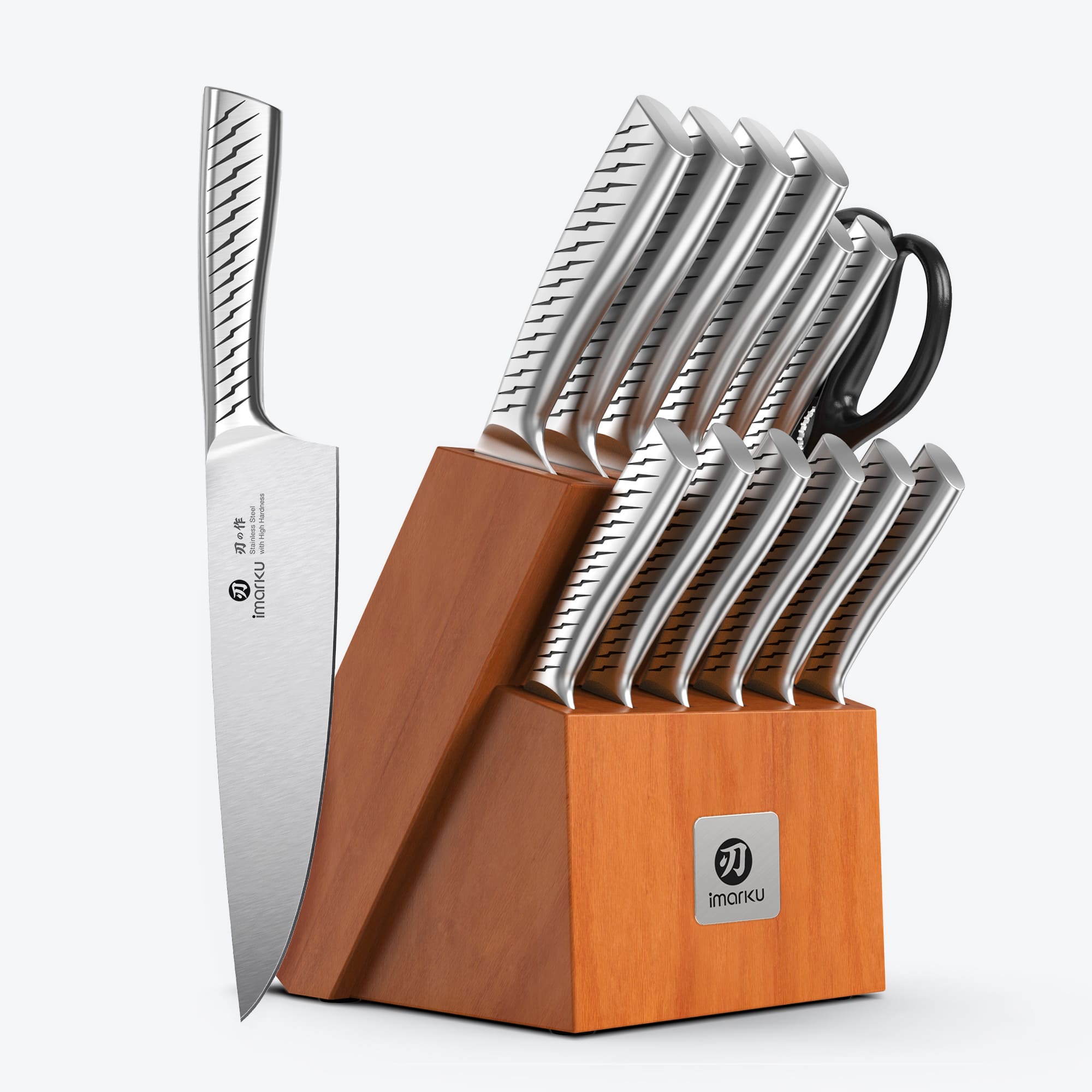
2.14-Piece Knife Set: The One-Stop Pick for Frequent Hosts

If you throw regular parties or take home cooking seriously, this set delivers unbeatable value.
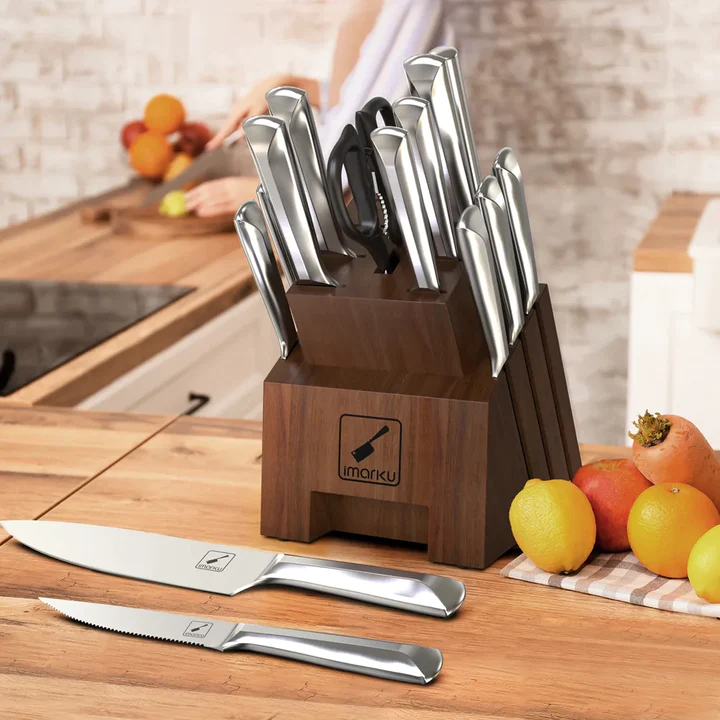
- Includes everything you need: chef’s knife, Santoku knife, boning knife, slicing knife, bread knife, steak knives, kitchen shears, and a honing rod — covering every step from prep to serving.
- The sleek acacia wood knife block looks great on any countertop and keeps blades stored safely, so they don’t get nicked and dull over time.
- The full set costs under $150 — cheaper than buying two premium knives individually. It works for everyday cooking and holiday parties alike.
Many people worry affordable knives won’t last, but Imarku knives are engineered for strong rust resistance. As long as you wipe them dry after use, they’ll serve you well for years. Replacing cheap knife sets every year costs more long run — and a durable knife is also the more sustainable, eco-friendly choice for your summer grilling.
Quick Knife Care Tips to Make Them Last for Years
- Hand wash and dry immediately after use: Wash off BBQ grease and food residue with warm water and dish soap right after cooking, then dry thoroughly before storing to prevent rust. Never put them in the dishwasher — high heat and harsh detergents damage both the blade and the handle.
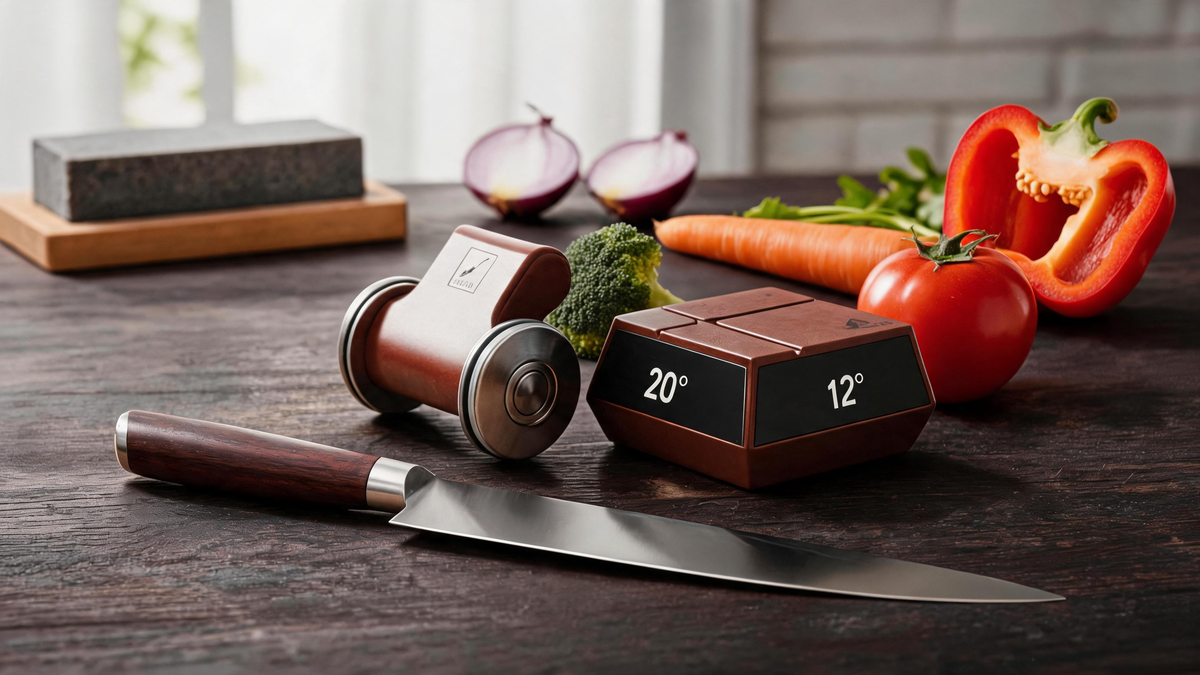
- Hone the blade before each use: You don’t need to fully sharpen your knife every time. A few passes with a honing rod before cooking realigns the edge, keeps it sharp, and extends the time between full sharpenings.
- Don’t chop through hard bones: Regular kitchen knives aren’t cleavers. Hacking through thick bones will chip the blade. Ask your butcher to cut large bone-in pieces for you at the store.

Final Thoughts
The point of a Fourth of July BBQ isn’t to show off the most expensive ingredients — it’s to spend summer days with family and friends, sitting in the backyard with cold drinks and good food.
A great knife isn’t a “luxury upgrade” gimmick. It saves you time, cuts down on waste, and lets you spend less time stuck at the cutting board and more time enjoying the party with your guests.
This Independence Day, instead of cutting corners on ingredients, upgrade the tool you use to prep them. Getting every penny’s worth out of the food you buy is the real way to save money.



Leave a comment
All comments are moderated before being published.
This site is protected by hCaptcha and the hCaptcha Privacy Policy and Terms of Service apply.